USA Bobsledder Kaysha Love: From Mind Runs to Medal Runs
How Team USA bobsled pilot Kaysha Love uses data collaboration and insights from Snowflake to test relentlessly, eliminate guesswork and commit to the fastest race-day decisions.
Peace of mind at 90 m.p.h.
The bobsled chatters at the start, steel runners sliding against ice as Team USA bobsled Olympian Kaysha Love crouches, gloves locked on cold handles, breath measured. Ahead, the track drops into concrete and shadow. There are no second chances here. No corrections once gravity takes over.
She closes her eyes. Her hands lift, then sweep forward in a small, deliberate arc, hips swaying. To an untrained eye, it looks like a warm-up stretch. Her teammates call it a dance. For Love, it’s a rehearsal. The sled hasn’t moved, but in her mind, she’s already halfway down the mountain.
Love calls it a mind run, and tries to do at least 20 before she even gets in the sled. “I take myself through the entire track, run from curve one all the way to the finish.” In bobsledding, memory is muscle. At nearly 90 miles per hour, thought arrives too late. What guides the sled is preparation layered so deeply it feels like instinct.
The demand to be explosive at the start, then composed enough to pilot is “perfect chaos,” Love says. “It’s a mix of trying to rev yourself up at the push, then bringing your heart rate down to be one with the sled.

Snowflake shows us how to use the data to actually make Team USA better. That’s exciting — for the whole team, and for me as a pilot — because it’s a resource we didn’t have before.”
Kaysha Love
A 10-month runway to the Olympic Winter Games
Love was born in Utah and grew up in Herriman, where gymnastics brought an early education in balance, timing and spatial awareness. Love spent 12 years in the sport, learning how to visualize movement and commit to it before the ground arrived.
Injuries forced her out of gymnastics in high school, and track came next. As a sprinter at University of Nevada, Las Vegas, acceleration was a discipline of its own, from the start to the drive phase to the obsession with tenths.
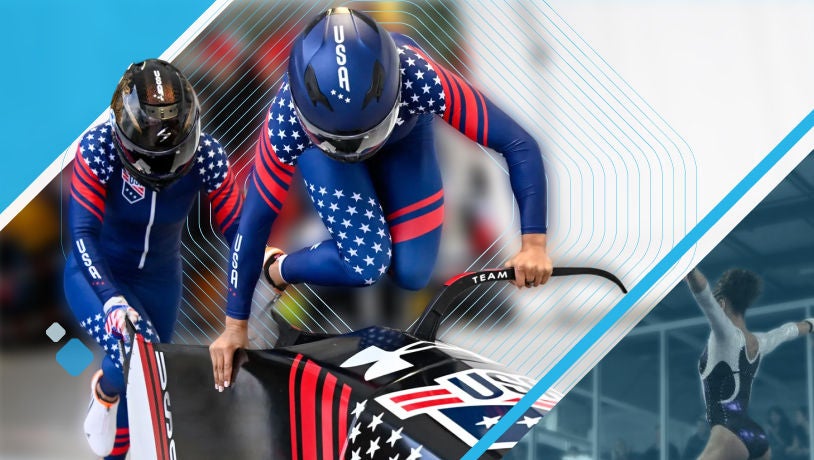
Bobsled arrived as an interruption. Love was still a sprinter when a coach approached her at NCAA Nationals and told her she was in the wrong sport. “I thought he was crazy,” she says. “I had spent eight years running track and this was my dream.”
But the pitch came with an irresistible timeline: “When he told me track was preparing me for bobsled and that the Olympics were in just 10 months, I fell head over heels for a new dream.”
Love’s seventh-ever bobsled race was at the Beijing Olympics. “My only knowledge of bobsled was Cool Runnings. But my coach said, ‘You just need to be strong, fast, powerful and willing to be a sponge because you’re surrounded by the greatest to ever do it.’”
And Love delivered — finishing seventh in the two-woman event as a push athlete. “I was absolutely gutted,” Love says. What stayed with her was not the placement, but the realization that the team relies heavily on the leadership of the pilots.
When she came home from Beijing, she didn’t wait long. “I want to put my destiny in my own hands,” Love said to her coaches. “I want to be a pilot.”
On the fast track to the front seat
Driving school began in Lake Placid at the start of March, just weeks after Beijing 2022. The transition was full of mistakes and crashes. “I remember calling up Brian Shimer [the National Team’s driving coach] and asking him for a reality check,” Love says.
She was prepared to walk away from the front of the sled. What she wasn’t prepared for was Shimer’s answer. “You have a gift in piloting,” he said. “You can’t coach that.”
The work didn’t get easier, but the trajectory sharpened. Among the coaching staff, the pace of her development stood out. “For pilots, it takes eight to 10 years to really develop into a world-class driver,” said USA Bobsled coach Tuffy Latour. “Some get there a little faster. Kaysha Love is a great example. She’s only in her third season as a pilot, and she’s come up the ranks really fast.”
Two years later, the progression became undeniable. In 2025 in Lake Placid, Love won World Championship gold in women’s monobob — her first world title.
Data has been really helpful for me as a new pilot because there’s so many different lines you can take in a curve that will work successfully — but finding the fastest one is the most important. The numbers don’t lie.”
Kaysha Love
The data points that determine the run
In a sport largely dictated by feel, data offers a welcome counterbalance. Ask Love which number matters most, and she answers immediately. “For me, it’s the start time.”
It’s the only metric available in the moment, before the sled is back in the garage and before full velocity data can be reviewed. More importantly, it governs everything that follows. “Speeding up your sled happens at the start,” Love says. “I can’t speed up my sled in the middle of a run, but I can definitely slow it down by hitting walls.”
Start time is measured mechanically, through specialized equipment called timing eyes, at 15 meters and again at 50 meters. The margin is unforgiving. “If two pilots have identical runs but one out-pushed the other by two to three tenths, there’s just nothing the slower pilot can do.”
That reality is what forces a reckoning with feel. In bobsled, a line can feel right. A runner can feel lucky. But Love doesn’t trust that comfort. “Numbers don’t lie,” she says. “I might feel that a certain line is better, but the data can tell you if that line is better.”
With data from Snowflake, she’s seen that conflict firsthand. In Milano Cortina 2026, one line through a curve felt faster from the pilot’s seat. Video overlays and timing data showed otherwise. “Coming from the pilot position, one line felt significantly better,” Love says. “But the numbers proved that the line I thought was slower was actually the faster, medal-contending line.”

We tested so many variables: equipment, runners, the ice. At the end of the day, it all comes down to what the data says. With Snowflake, we can actually see what’s working instead of guessing.”
Kaysha Love
A blue-collar culture shaped by sweat and steel
Bobsled operates largely outside the spotlight, drawing broad public attention only during the Olympic Winter Games. That intermittent visibility makes sustained funding difficult, even at the national level. “Because of that, bobsledding has taken on the identity of a blue-collar sport, and we’re proud of it,” says Love. “We put our blood, sweat and tears into making sure we’re successful.”
Love means that literally. There is no back-of-house crew. “We prep all of our equipment,” she says. “It’s me and my team who are sanding our runners, moving our sleds and driving the truck from location to location.”
Sanding is not optional — or quick. “A set of runners takes anywhere from four to eight hours,” she says. The work is methodical: starting with 100-grit sandpaper, working all the way down to diamond paste, 60 passes down and back on every grit. According to the data, the payoff is real. “A polished runner can be the difference of three-tenths of a second.”
In a sport where medals are often decided by less, that gap is the difference between contending and disappearing.
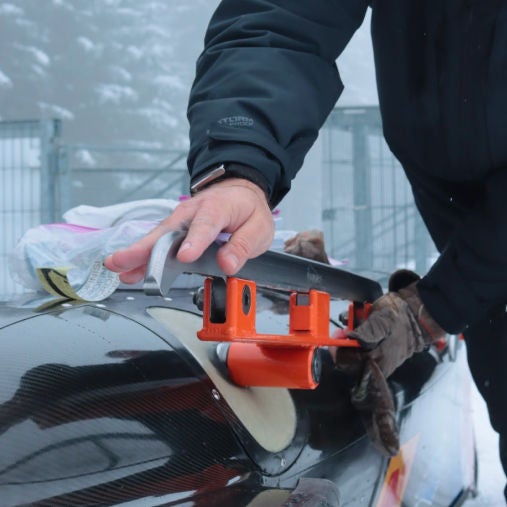
Bobsled athletes do everything. We are the drivers, the athletes and the mechanics."
Kaysha Love
The race she’s been preparing for her whole life
For Love, the stakes of every run extend beyond the clock. “It means everything to represent Team USA,” she says. “It’s the biggest dream come true, and now I get to represent my family, my friends, my country and the sport I love.”
That sense of responsibility sharpens at the start line, and her last mind run ends where the real one begins. At the top of the (real) track, there’s no dashboard, no metrics, no margin left to calculate. Just a sled, a start time, and a coach’s voice cutting through the cold: “This is your race to win.”
stay connected

Milano cortina 2026
Snowflake is the Official Data Cloud Provider for the USA Bobsled/Skeleton team, helping sharpen their competitive edge at the Olympic and Paralympic Winter Games Milano Cortina 2026.

LA28 games
Snowflake is the Official Data Collaboration Provider for Team USA and the LA28 Olympic and Paralympic Games, helping to power the most data-driven Games of all time.
