Gender Pay Gap Report (UK) 2025
Gender Pay Gap Reporting
Snowflake Computing UK Limited (Snowflake) is publishing the findings of its UK Gender Pay Report. Moving forward we will publish this data on an annual basis. The gender pay gap is a high-level snapshot of pay within a company, based on criteria set by the U.K. government. It measures the difference between the average earnings of male and female employees across an organisation, irrespective of their role and grade.
The gender pay gap is different to equal pay. Equal pay is about paying women and men equally for carrying out the same or equivalent role. It is a legal requirement in the UK. Through our ongoing fair pay analyses, we are confident that our male and female employees are paid equally for equivalent work.
Our Results
In line with reporting requirements, Snowflake has reported its gender pay gap using six (6) reporting measures defined by the UK government. Our workforce as of April 2025 consisted of 113 female employees (29%) and 283 male employees (71%).
Hourly Pay Gap as of 5 April 2025
| Pay differences between men and women | 2025 |
| Snowflake Mean (average) Hourly Pay Gap | 26.3% |
| Snowflake Median (middle) Hourly Pay Gap | 30.8% |
Note: Hourly pay includes base salary, bonus pay and other fixed components, if any, paid to relevant employees in the snapshot period. A positive percentage indicates the amount by which women’s pay is lower than men’s.
Like many other companies in our industry, our gap is primarily attributed to a lower representation of women occupying senior sales, technical and management positions within our UK business.
Bonus Gap In the 12-month preceding 5 April 2025
| Bonus pay differences between men and women | 2025 |
| Snowflake Mean (average) Bonus Pay Gap | 48.7% |
| Snowflake Median (middle) Bonus Pay Gap | 53.4% |
Note: The bonus calculations include commissions, variable compensation, corporate bonus, one-time bonuses, and taxable equity events received from 6 April 2024 to 5 April 2025.
This gap is primarily attributed to the higher representation of men than women in senior positions, which typically qualify for greater bonus compensation. Furthermore, our sales team, which is predominantly male, receives commission as a key component of its compensation, which also influences this gap.
| Proportion of all UK employees receiving a bonus in the 12-month preceding 5 April 2025 | 2025 |
| Men | 97.2% |
| Women | 88.5% |
These numbers vary due to the time of year that new hires joined Snowflake and eligibility for bonus payout.
Proportion of men and women in each pay quartile at 5 April 2025
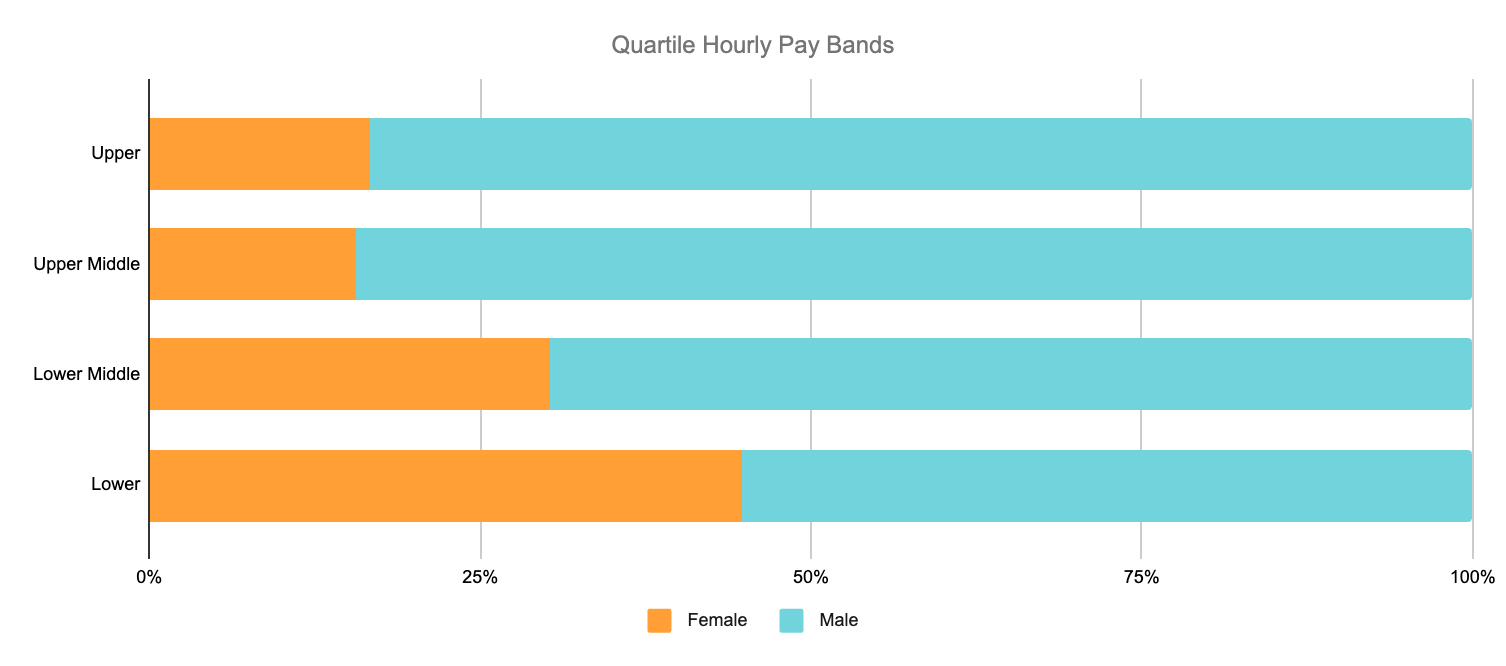
The chart above shows the gender distribution across Snowflake within the UK in four equally-sized hourly pay quartiles, as per the reporting guidelines.
Progress and Commitment
To ensure sustained career parity for all employees, we continue to focus on maturing the following pillars and strategic areas:
- Optimizing Talent Acquisition Avenues: We continue to evolve our recruitment methodologies by leveraging data-driven tools that broaden our reach and improve talent pipelines, specifically increasing our efforts to attract female talent for leadership and technical roles.
- Cultivating a Values Based Culture: Our values represent who we are, at our best, including maintaining industry-leading, family-centric benefits, such as our 26-week maternity and 12-week partner leave policies in the UK. We are also defining and prioritizing the internal development programs needed to retain and promote a high-performing workforce.
- Data-Informed Decision Making: Data is core to Snowflake success. We use data to drive insight into pay decisions and identify opportunities for process improvement. .
Strategic Focus Areas
Looking ahead, we are focusing our efforts in the following areas:
- Targeted Senior Representation: We are increasing our efforts to attract female talent for leadership and technical roles, ensuring a diverse representation in our candidate pools for the most senior positions.
- Enhanced Analytical Oversight: We are enhancing our internal reporting to ensure leaders have clear, up-to-date data for monitoring diversity trends.
- Retention and Advancement Frameworks: We are defining and prioritizing the internal development programs needed to retain and promote a high-performing workforce.
Declaration
I confirm that the data reported here is accurate.
Sam Bailey
EMEA, HR Director
