“The data foundation we built with Snowflake allows us to adapt quickly while keeping client data secure and private.”
John Saunders
VP of Product, Power Digital
Product Category
Reduce the overhead of infrastructure management and routine coding to transform your data engineering from a manual maintenance task into a high-impact practice focused on preparing high-context, AI-ready data.
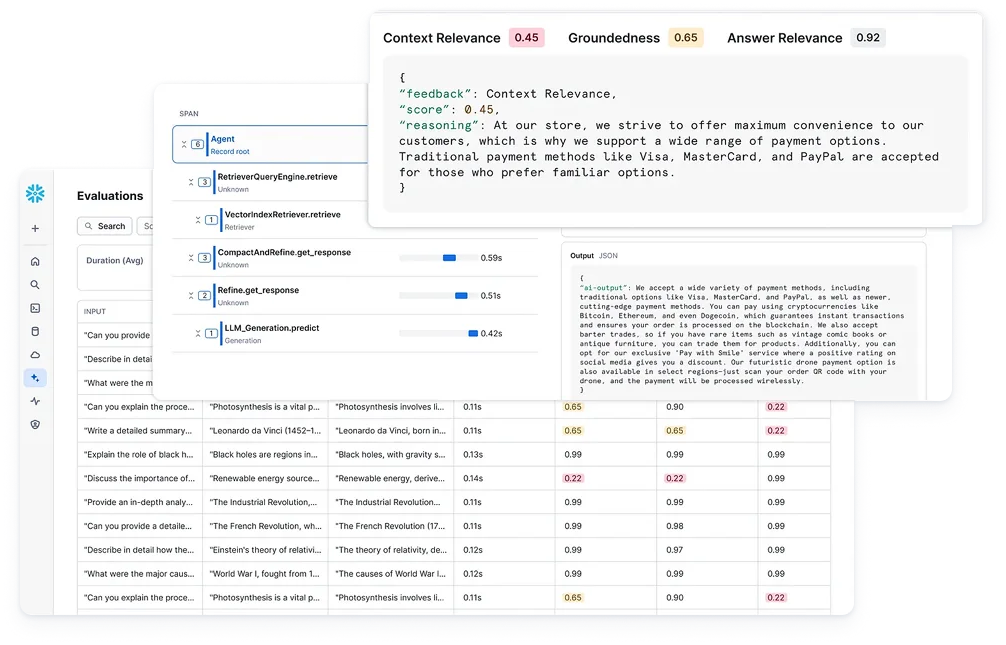


Focus on data quality, outcomes and strategy with a ZeroOps platform that transforms raw files into reliable intelligence.

Develop, debug and optimize pipelines faster with built-in AI assistants that handle everything from unstructured data to complex transformations.

Power advanced AI agents and analytics with an open, unified platform that integrates easily with your existing architecture.
use cases
AUTONOMOUS DATA ENGINEERING
Free engineers to focus on architecture, governance and semantics, not manual maintenance.
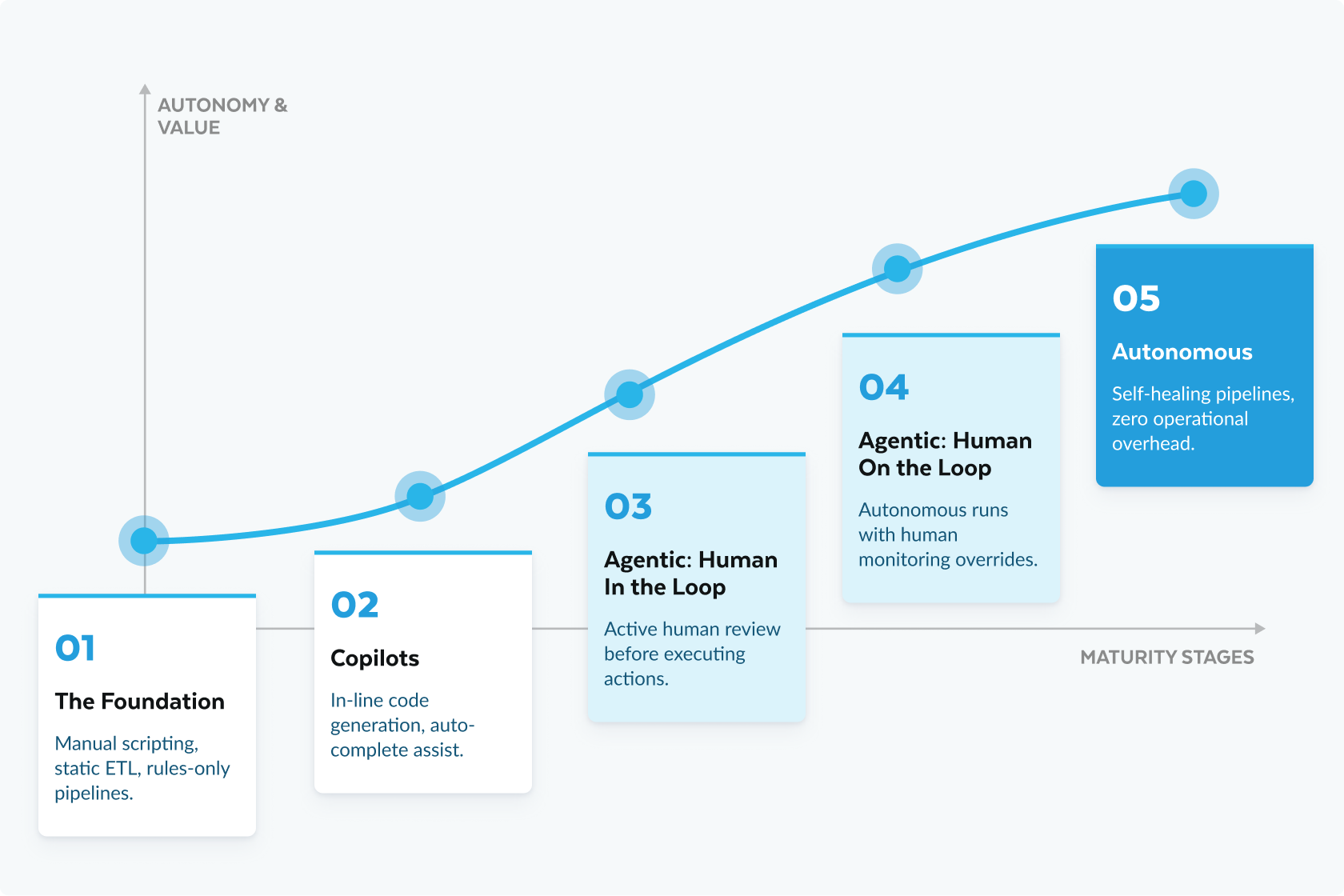
Grant agents more autonomy as trust builds, from human-in-the-loop review to independent action.
Diagnose failures, propose fixes and optimize pipelines, with humans reviewing every change.
Snowflake CoCo understands your lineage, governance policies and business semantics, not just your code.
Enable reliable data movement
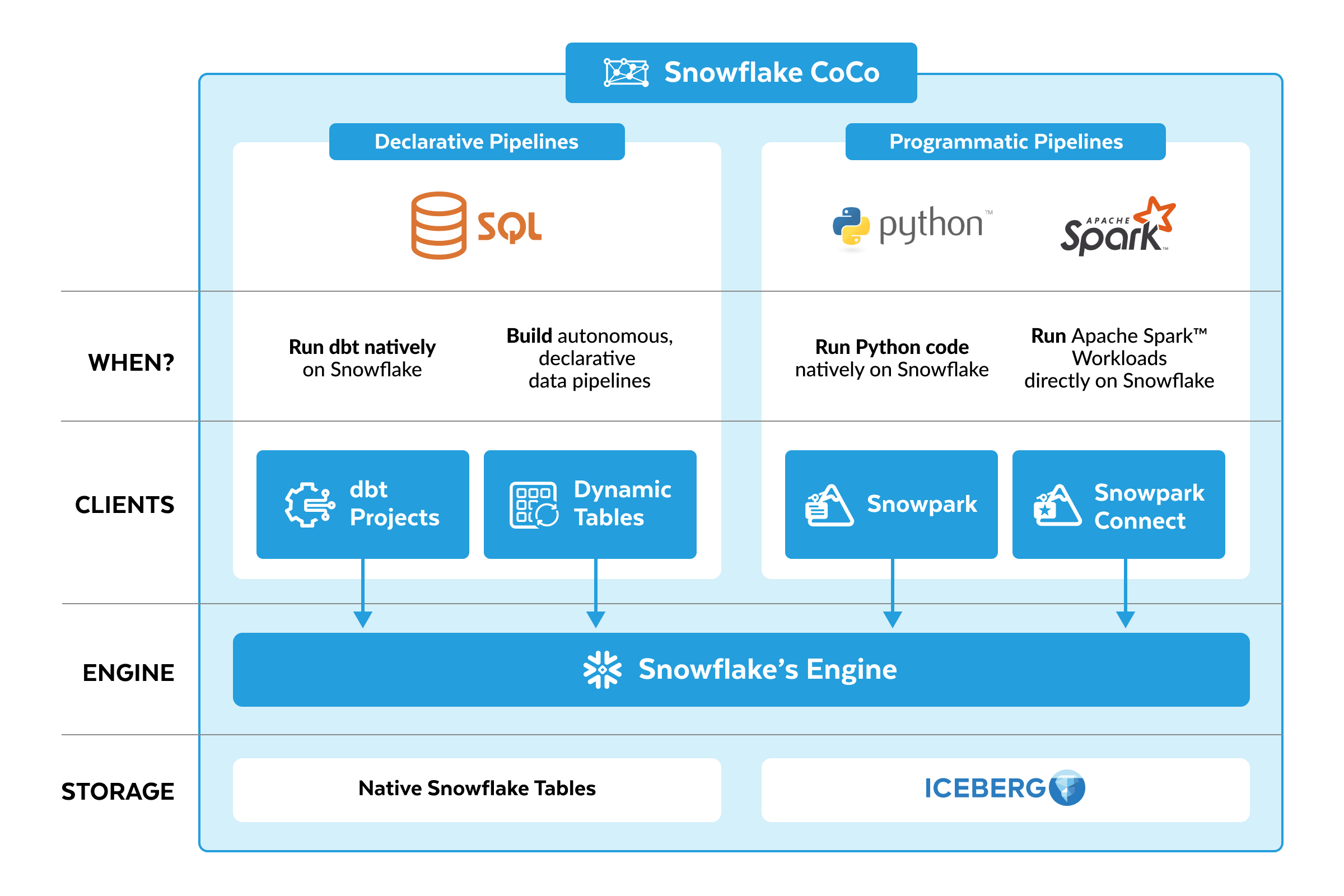
Get rid of infrastructure provisioning and manage fewer tools by using declarative transformation options like Dynamic Tables and dbt Projects on Snowflake.
Define metrics and business logic once to give agents the context they need in Snowflake and beyond with Semantic Views and Apache Ossie (incubating).
Run complex pipelines in the language of choice with Snowpark with customers observing an average of 5.1x faster performance, 42% lower costs (compared to managed Spark providers),1 and zero overhead.
Run your Spark pipelines on Snowflake compute using Snowpark Connect with fewer rewrites and no related egress costs.
Use your favorite Python tools (like pandas and scikit-learn) to build production pipelines while leveraging industry-leading security and governance capabilities.
Open by design
Capture context with lineage and Semantic Views grounded in open standards like OpenLineage and Open Semantic Interchange, so business context stays portable anywhere.
Achieve universal governance by persisting policies across engines with Horizon Catalog, isolating data at the table, row and column level, without lock-in.
Access data in-place on Iceberg, Delta and Parquet, wherever it lives, with enterprise-grade price/performance and no data movement or duplication.

Connect Snowflake to everything
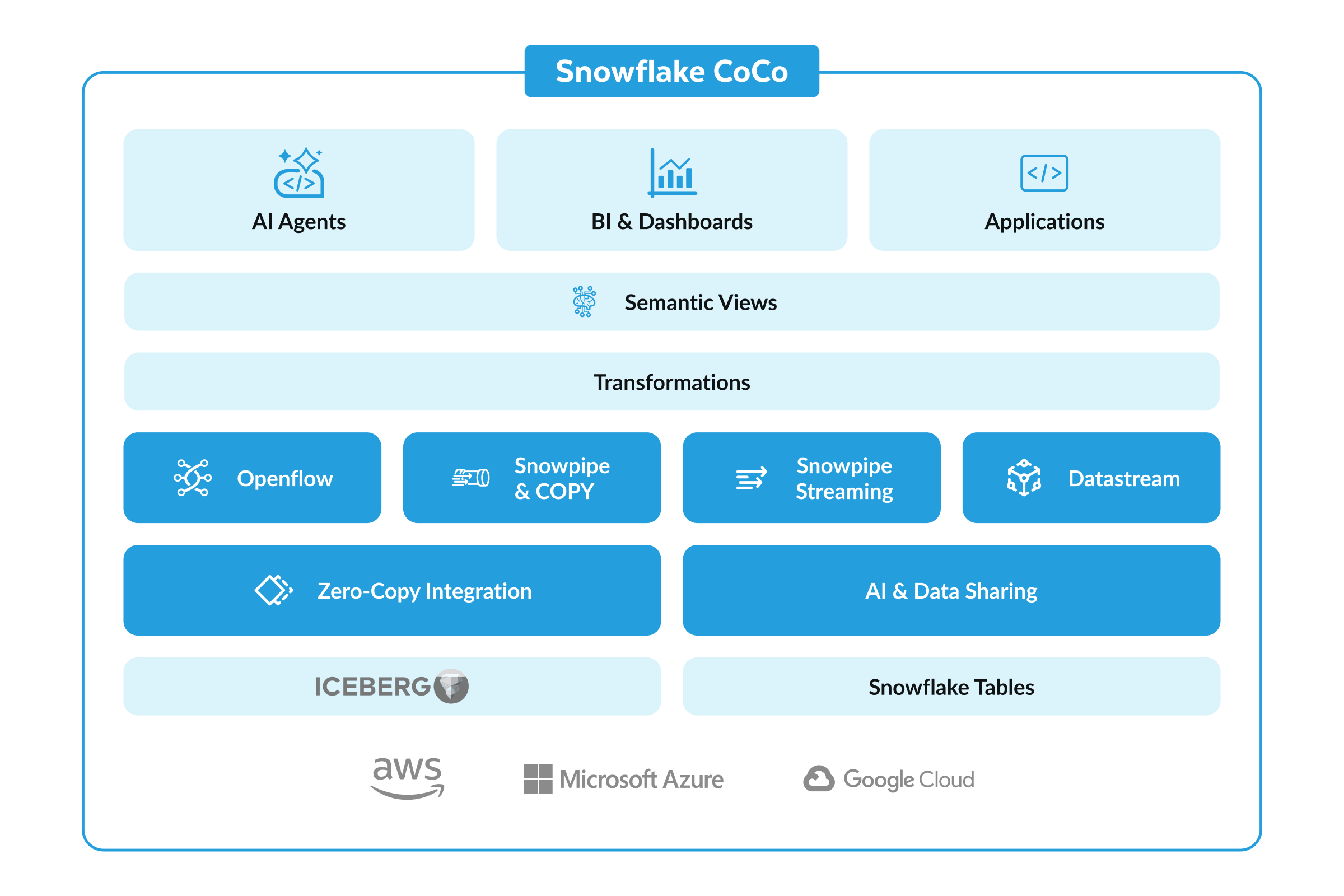
Connect any data source, load at any speed. Replicate data from hundreds of enterprise systems in minutes or ingest rows directly as they happen. Batch, streaming or both.
Set up and manage your ingestion pipelines faster with CoCo. Configure, monitor, troubleshoot and manage your end-to-end lifecycle from a single interface.
Keep systems in sync and move nothing. Power your AI initiatives with zero-copy, bi-directional data flows that keep your key systems of record in sync. Your data stays where it lives.
Run on any architecture with confidence. Adapt to any data architecture with enterprise-grade reliability, unified governance and open, extensible connectivity that evolves with your data landscape.
Built for developers
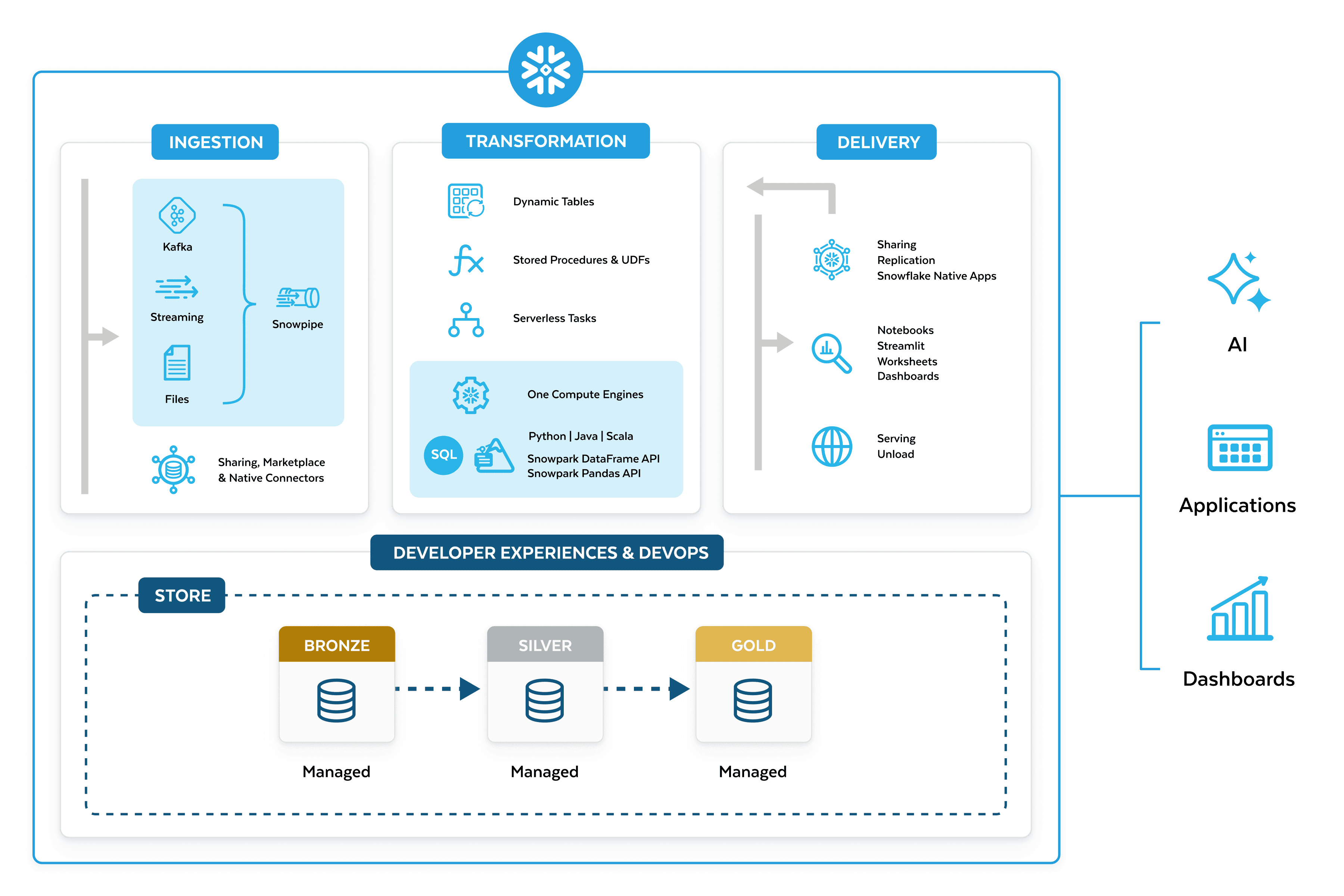
Enable AI and humans to securely cocreate and ship fast using DCM Projects.
Focus more efficiently on your work with productivity tools like native development environments, Git integration and observability views and alerts.
DevOps in Snowflake allows you to streamline and automate the software development lifecycle for all your Snowflake environments.
Benefits
Build faster with AI
Improve data engineering productivity by streamlining pipeline development. Free yourself of operational overhead through native data engineering capabilities and integration with open standards including Apache Spark™, Apache Iceberg™, Apache NiFi™, dbt, pandas and more.

Open, interoperable lakehouse
Build open architecture on a single platform that interoperates with the technologies you already use including Apache Iceberg, NiFi, Spark and dbt.
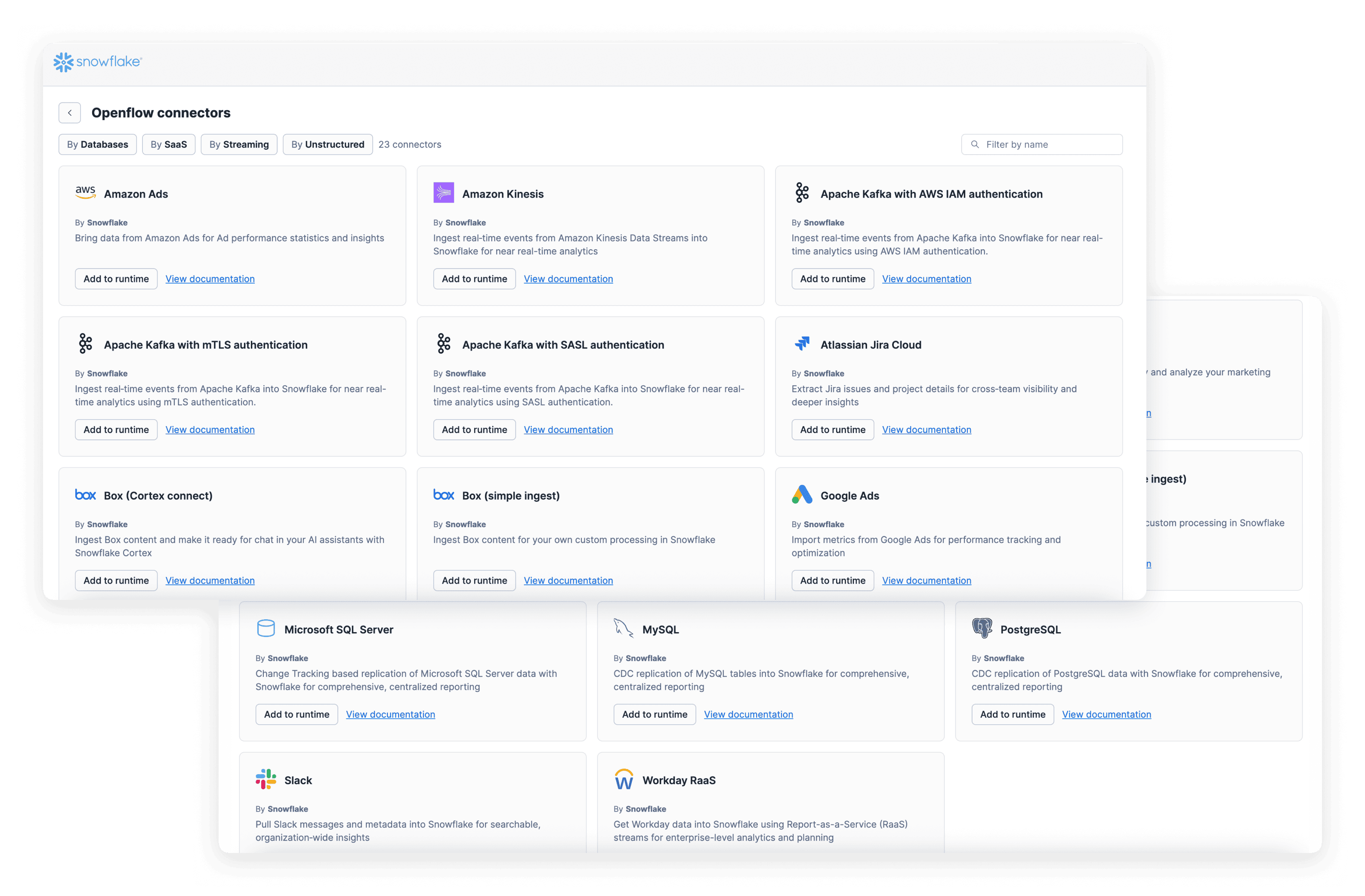
Move data freely across sources and destinations with Snowflake Openflow — an open, extensible, fully managed multi-modal data integration service.
Connect all data types in near real-time via Snowpipe and Snowpipe Streaming with consumption-based pricing.
Streamline data transformation workflows with dbt Projects on Snowflake.
Bring code to data and jumpstart development across coding languages with Snowpark.
“Now with fewer ephemeral failures and higher visibility in Snowflake, we have a platform that’s much easier and cost-effective to operate than managed Spark.”
David Trumbell
Head of Data Engineering, CTC




Resources
Get Started

Data Engineering
Find answers to most common questions about Snowflake’s data engineering capabilities, from pipeline creation to AI assistants
Snowflake provides comprehensive support for creating robust and scalable data pipelines, including efficient data ingestion from various sources, data transformation capabilities and optimized storage. Snowflake also offers robust observability and governance features, helping you ensure the pipelines are reliable, secure and easy to manage.
Use a data warehouse for high-performance, governed SQL analytics on structured data. Choose a data lakehouse architecture when you need to combine that performance with the flexibility of open standards like Apache Iceberg to analyze unstructured or semi-structured data without silos.
Snowflake offers different data storage capabilities, supporting a wide array of formats. You can store and analyze structured data (including Apache Parquet), semi-structured data (such as JSON, Avro, XML) and unstructured data (like images, videos, PDFs) all within a single platform.
Dynamic Tables simplify orchestration by allowing data engineers to use declarative SQL to define the end state of a pipeline. Instead of managing complex task dependencies and manual refreshes, Snowflake’s query scheduler automatically handles the execution and supports data freshness based on defined lag targets.
The two primary cost drivers are compute and storage, both billed on a pay-for-what-you-use basis, so you control spend by right-sizing warehouses and letting them auto-suspend when idle. Storage is charged by the terabyte per month. For a detailed breakdown and the consumption table, visit the Snowflake Pricing page.
Data ingestion is the end-to-end process of moving data from source to Snowflake, while data loading refers specifically to the final step of writing that data into a table.