

Data Security Solutions: How to Compare Coverage, Enforcement and Operational Cost
Security teams rarely have a shortage of controls. The challenge is whether those controls are enforced in the right places, cover the data consistently and actually reduce the amount of operational work security teams must do.
DATA SECURITY SOLUTIONS DEFINED
Data security solutions are the capabilities and tools organizations use to discover, govern, protect and monitor sensitive data across the systems and access paths where it’s stored, queried, shared and moved.
The data security solutions market is often organized around categories, such as encryption, data loss prevention, access control, posture management, masking and key management. This makes the landscape easier to sort through, but it doesn’t necessarily tell you how well those controls will work across the data estate you actually have.
Looking at data security this way also makes tool sprawl easier to see. In a 2025 Vanson Bourne study commissioned by Barracuda, 65% of security decision-makers said their organizations were juggling too many security tools or vendors, while 53% said their tools couldn’t be integrated with one another. As controls accumulate, organizations have more integrations to maintain, more places where policies have to stay aligned and more opportunities for coverage to diverge.
Evaluating controls by what they protect — and where that protection actually holds — can reveal where tools overlap, where policy depends on repeated integrations, and where coverage starts to break down.
The scope of data security solutions
Data security solutions include the capabilities and tools organizations use to protect sensitive data at rest, in transit and in use. The market spans discovery and classification; access control; encryption, masking and tokenization; data loss prevention (DLP); posture management; backup and recovery; key management; monitoring and audit.
Underneath that category list, most controls are doing one of four jobs: discovering sensitive data, enforcing access, limiting exposure or preserving enough telemetry to investigate what happened.
Those jobs are tightly connected in production. Suppose a data classification process identifies a column containing customer account numbers. That classification might drive a masking policy for support users, an access policy restricting the column to a finance role, and a DLP rule watching for the data to leave an approved environment. Audit records then show which identity accessed the column and what operation it performed.
Where a control runs determines what it sees — and what it can actually do. Query-time masking sits in the request path, so it can evaluate the caller, object and policy before returning a value. Data security posture management (DSPM) looks across the environment using metadata, permissions and relationships to identify exposure conditions. Endpoint DLP operates at another point in the path, monitoring or restricting sensitive data when it reaches an endpoint or moves through applications and other destinations. The same customer table might be in scope for all three controls, but each sees a different part of the data path and has different enforcement authority.
AI workloads bring more machine identities into the architecture. An agent might authenticate, query governed data, invoke a tool under another credential and take a downstream action in one run. Its privileges, credential lifecycle, authorization boundaries and trace data have to fit alongside the controls already applied to human users and service accounts.
For a data team reviewing its security stack, a solution inventory won’t provide a complete picture. To get an accurate view of how well your data is protected, follow a few sensitive data sets through the estate. Which controls touch them? Where are those controls enforced? What controls survive a clone, export or external query path? What changes when the caller is a service account or agent? Those paths tend to expose both gaps and duplication faster.
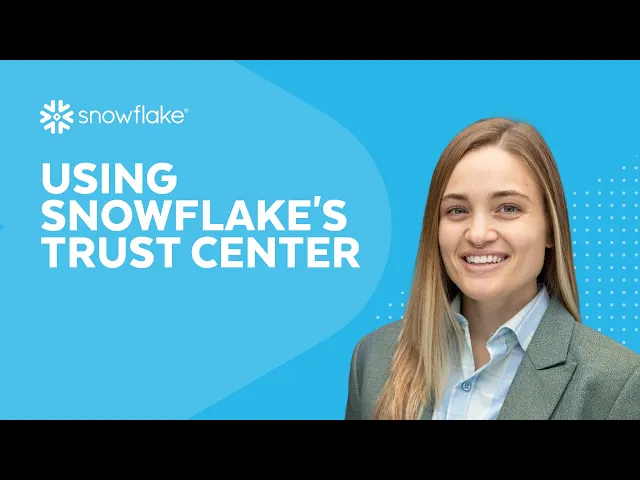
See how Snowflake Trust Center helps teams identify, prioritize and remediate security risks using scanner packages, guided remediation and account-level security checks:
The core categories of data security solutions
Once teams understand the jobs their controls need to perform, the major solution categories help map coverage across the estate. Products often span more than one category, so the useful question is what each capability contributes to the protection path.
Data discovery and classification
Discovery establishes where sensitive data lives; classification attaches context that downstream controls use to decide how that data should be handled.
A PII tag, for example, might feed masking, access policy, DLP and DSPM. When several controls depend on the same classification, consistency is vital from an operational standpoint — if three products scan the same column independently, they could produce three different labels and three different downstream policy decisions.
Reusing an authoritative classification result reduces both duplication and policy drift.
Access control
Access controls determine which users, applications, service accounts and other identities may reach specific data and what they’re allowed to do with it.
Depending on the system, that might include role-based access control (RBAC), row-level security, column-level controls or policies derived from attributes attached to the identity, data or session.
When reviewing access control, look beyond the existence of a policy. Check which identity the system evaluates, where the authorization decision occurs and whether every relevant access path passes through that decision point.
Least privilege also requires maintenance. Roles accumulate permissions, service accounts outlive projects and application access patterns change. Periodic review of actual access against intended access is part of keeping the control effective.
Encryption and key management
For encryption, the architecture around the keys deserves as much attention as the fact that encryption is present. Teams need to know who controls the key material, which principals can use it, how rotation and revocation work and what appears in the audit trail. Those details define the trust boundary around data encrypted at rest or in transit.
If a key is revoked, rotated incorrectly or unavailable, teams need a recovery path that doesn’t undermine the control they need to maintain.
Data masking and tokenization
Data masking and tokenization both reduce exposure of sensitive values, but they solve different problems.
Dynamic data masking changes what a caller receives at query time. A support user might see only the last four digits of an account number while an authorized finance workflow receives the full value, for example.
Tokenization replaces a sensitive value with a non-sensitive token. Depending on the implementation, an authorized process may use a token vault, mapping service or other controlled mechanism to recover or reference the original value.
Choosing which to use when depends on where the transformation occurs and which workflows still require the raw value. Teams also need to consider what happens when data is copied or consumed by another application.
Data loss prevention
Data loss prevention identifies and controls sensitive data across endpoints, applications and network or cloud channels, including how that data is used and moves.
Depending on where a DLP control is deployed, it might inspect an upload, flag sensitive content in an outgoing message or block a transfer that violates policy. Endpoint DLP sees a different part of the path from a data-platform control, so coverage needs to be mapped accordingly.
Classification is typically the connective tissue. If DLP and the data platform use different definitions of sensitive data, the same object may be treated differently depending on where it appears.
Data security posture management
DSPM gives teams a view of where sensitive data resides, which identities can reach it and where risky exposure conditions exist across the environments being monitored.
A useful DSPM deployment does more than build an inventory. It helps prioritize combinations that deserve attention: sensitive data with broad access, forgotten copies, unmanaged locations or permissions that no longer line up with intended use.
A DSPM finding still needs a remediation path. If the tool identifies a table with excessive access, the underlying role, policy or application path has to change, whether that change is automated through an integration or handled by the responsible team.
Backup and recovery
Backup and recovery controls preserve trusted copies so teams can restore data after deletion, corruption, ransomware or another disruptive event.
Those copies remain part of the security estate. A backup containing regulated customer data needs appropriate access controls, encryption and retention policies even if nobody queries it during normal operations.
Monitoring and audit
Monitoring and audit controls record enough activity for teams to investigate access, detect suspicious patterns and produce evidence for internal or regulatory review. At a minimum, teams need to answer key questions: Which identity accessed the object? What operation did it perform? When did the event occur? Which policy applied?
When audit evidence is split across several tools, correlation is also part of the operational workload.

Where a data security control runs affects what it covers
A control only has authority at the point where it’s enforced. That sounds obvious, but it’s easy to overlook once the same sensitive data is queried or moved through several systems.
Take a masking policy on a sensitive table. When that table is queried through a governed access path, the platform evaluates who’s making the request and applies the masking rule before returning the data. Because the policy is enforced at query time, the control acts directly on the access request rather than detecting the issue after the fact. An external scanner can identify the exposure, but remediation still needs to change the underlying configuration, policy or access path.
Platform-native controls and specialist tools have different roles. Controls enforced close to the data are well suited to governing access inside the platform and across supported query paths. External tools make sense where the security boundary extends beyond the data platform — endpoints, email, SaaS applications and other environments all need their own controls.
The issue for data security teams is how much tool complexity represents necessary coverage. Research from the IBM Institute for Business Value, Palo Alto Networks and Oxford Economics found that the average organization runs 83 security solutions from 29 vendors, while 52% of executives identified complexity as the biggest impediment to security operations. Using platform-native controls where they meet the requirement can reduce duplicated policy and integration work, while specialist tools continue to cover parts of the estate the platform doesn’t govern.
COMMON PITFALL
Don’t assume two controls that cover the same data provide the same protection. A query-time policy, DSPM scanner and endpoint DLP control see different parts of the data path and have different enforcement authority.
How data security solutions are delivered and deployed
Once teams know which controls they need, the next question is how those controls will be operated and where they need to work. That affects staffing, integration effort and the ongoing cost of keeping policy aligned with the data estate.
Data security software
Data security software includes scanners, policy engines, consoles and related products that an organization deploys, configures or operates.
Implementation work varies by product. Depending on the control, teams may need to configure classification rules, policies, alerting, integrations and remediation workflows. After deployment, those configurations still need maintenance as schemas, access patterns and the surrounding environment change.
That operating cost belongs in the buying decision. A product that generates a high volume of findings with little context for prioritization can increase the security team’s workload even when the detections themselves are accurate.
Cloud data security solutions
Cloud environments distribute data across accounts, regions, object stores, managed services and, frequently, multiple providers. Each boundary can introduce another identity model, policy engine or enforcement point.
Cloud data security solutions help teams discover sensitive data across cloud services, assess exposure, enforce or integrate access controls and monitor how data moves between environments. Depending on the product, that can include DSPM, DLP, identity-aware access controls and policy enforcement across cloud-native data stores and services.
How to evaluate data security solutions
Evaluating a data security solution starts by following representative sensitive data through the architecture your organization uses. Capability checklists help narrow the field, but a proof of concept should show what happens against the identities, copies and access paths the organization actually has.
Start with where sensitive data lives
Choose several representative data sets and trace them. For a customer table, that might include the production object, development copies, replicas, exports, backups and downstream applications. Record which identities access each version and through which interface.
The exercise often exposes coverage gaps quickly. One tool might protect the production table while a copy in object storage sits outside its scope. Another might discover the copy but have no authority to change the access policy around it.
Identify the enforcement point
For every control under consideration, ask where the actual decision occurs. Does a policy run when the query is processed? Does a scanner inspect the environment periodically? Does an endpoint agent evaluate the data only after it leaves the platform?
Then test alternate paths. If a supported external engine queries the same object, does the policy still apply? If another application reaches the data through a different interface, which identity is evaluated?
Vendor coverage claims are much easier to interpret once those paths are explicit.
Separate prevention, detection and reporting
During evaluation, identify what happens after a policy condition is met. Some controls block the action immediately, while others simply create an alert.
Run a representative finding through the complete workflow. Where does the alert go? Does it contain enough context to assign an owner? Which system makes the remediation? How much analyst work sits between detection and closure? That path is part of total cost of ownership.
Check whether controls reuse security context
If several products rely on the same classification, ownership or lineage information, find out whether they consume a shared source or maintain their own copies.
If each tool independently scans and labels a column differently, the organization has multiple classification systems to tune and reconcile. Shared security context reduces that repeated work and gives downstream controls a more consistent basis for policy.
Test what happens to copies
Create the situations that will eventually appear in production. Clone or replicate a table. Export part of it. Share it with another environment. Query it through another supported interface.
Then inspect what remains intact: classification tags, access policies, masking rules, audit coverage and lineage.
Claims that a policy “follows the data” should be tested against specific object types and access paths. The mechanism is what tells you whether the protection actually travels.
Evaluate triage cost
The value of a tool isn’t determined by the number of findings. A product producing fewer findings with stronger context will often demand less operational effort than one optimized for raw coverage.
Take a representative sample of findings and work through them. How many are duplicates? How many lack enough context to assign? How often does an analyst have to open another console to understand what happened? How long does it take to identify the owner who can change the policy or data object?
Define remediation ownership
Data security frequently crosses team boundaries. Security may define the policy and accept risk, while the data team operates the system where the control is enforced. An application team may own the access path that created the exposure.
Assign remediation ownership before deployment. If a tool identifies broad access to a sensitive table, someone should already know who decides whether that access is legitimate, who changes the relevant role or policy and how an exception is documented.
Use compliance obligations as inputs to the evaluation
Requirements such as PCI DSS, HIPAA and GDPR should feed directly into the control criteria. For each obligation, identify the behavior or evidence the organization needs. Then test whether the solution provides the necessary enforcement, logging, access controls or workflow against the regulated data itself.
Analyst research and peer reviews are useful for scoping the market and building a checklist, but a proof of concept will better answer organization-specific questions: how the product behaves against your identities, policies, data stores and access patterns.
QUICK TIP
Pick one representative sensitive data set and trace every relevant access path before comparing products. It will surface enforcement gaps, duplicated classification and remediation handoffs much faster than a feature checklist alone.
Securing data for AI and agent workloads
AI changes who — or what — is requesting enterprise data and how far a single request can travel. An AI agent may authenticate, retrieve sensitive data, call another tool under a different credential and use the result to trigger a downstream action — all inside a single run.
AI security introduces more points in the chain to inspect: Which principal is querying the data? What privileges does it have? When the agent invokes a tool, whose credentials are used? Does the downstream call inherit the original authorization boundary, or does it cross into another one? Can the team reconstruct the sequence later from the trace?
Agent privileges should be scoped to the data and actions required for the task. Credentials need rotation and revocation. Audit records need to show the data accessed and tools invoked, while trace data gives teams the intermediate steps needed to understand how one action led to the next.
Many organizations are still catching up on AI access controls. IBM’s 2025 Cost of a Data Breach Report found that 97% of organizations that experienced an AI-related breach lacked proper AI access controls, while 13% reported a breach involving AI models or applications.
Model-level protections sit alongside those data controls. Prompt injection, indirect prompt injection, model theft, membership inference, data poisoning and other adversarial techniques require testing at the model and application layers as well. Frameworks such as MITRE ATLAS give teams a structured way to think through those attack techniques while data security controls continue to govern what enterprise information the system is allowed to reach.
Shadow AI raises another problem. When employees or applications send sensitive information to unapproved AI services, the data has crossed outside the organization’s normal data governance path. The IBM research found that 20% of organizations reported a breach involving shadow AI, and organizations with high levels of shadow AI saw average breach costs $670,000 higher than those with low or no shadow AI.
Why teams consolidate data security on Snowflake
Security operations are simpler when classification, policy enforcement and audit work from the same governed data instead of being stitched together across separate products.
Within Snowflake, classification, tags, masking policies, row access policies and RBAC operate against governed data in the platform. A classification tag attached to sensitive data can feed downstream policy without requiring each control to rediscover the object independently.
Snowflake Horizon Catalog extends governance across data inside and outside Snowflake. For supported Iceberg access paths, Snowflake can enforce masking and row access policies when data is queried from external engines, although the enforcement mechanism and feature availability depend on how the engine accesses the table.
Horizon Context adds semantic and business context for people and AI systems working with governed data, while Snowflake Trust Center surfaces posture findings and remediation guidance within the Snowflake environment.
Other controls sit around the trust boundary. Tri-Secret Secure combines Snowflake-managed and customer-managed encryption keys, while network and authentication policies control how identities connect to the platform.
Copy reduction also changes the security workload. Snowflake Secure Data Sharing lets Snowflake accounts share live data without copying or transferring it between accounts, while Data Clean Rooms let organizations collaborate under controls that define which analyses can be run against shared data. Fewer standalone copies mean fewer objects to discover, classify, authorize and monitor separately.
Design for fewer policy boundaries
As data estates grow, the security challenge is less about adding another control than keeping existing controls consistent across the places data is stored, queried and shared.
Effective architectures reduce the number of times teams have to recreate classification, access policy and audit context from scratch. While this doesn’t eliminate the need for specialist tools, it does give them a clearer role. Platform-native controls govern the data paths they can enforce directly, while external products cover the parts of the estate that sit outside that boundary. Over time, that makes the stack easier to reason about, easier to operate and less dependent on stitching the same security logic together in multiple places.
KEY TAKEAWAY
Evaluate data security controls against the architecture they will actually run in: which data and identities they cover, where enforcement happens and what work has to be repeated when data crosses into another policy boundary.
Frequently Asked Questions
Your common questions about data security solutions, answered by Snowflake experts.
Do I need DSPM if I already have DLP?
DSPM and DLP address different parts of data security. DSPM maps sensitive data, access relationships and exposure conditions, while DLP focuses on how sensitive data moves and whether that movement violates policy. They can overlap in classification, so teams should look for opportunities to reuse shared sensitivity metadata.
Can I consolidate data security tooling without a rip-and-replace?
Data security tooling can be consolidated incrementally by identifying duplicated work first, such as overlapping classification, posture scanning or policy logic. Once a shared control has been tested against real data and access paths, redundant tooling can be retired without replacing the entire stack at once.
Why do data security tools fail after deployment?
Data security tools often underperform when the surrounding operating model is ineffective. Common problems include untuned classification, alerts with no remediation workflow and findings with no clear owner. Testing the full path from detection through remediation helps teams identify that operational burden before deployment.
Who owns data security: the security team or the data platform team?
Data security ownership is usually shared. Security teams often define policy, risk requirements and exceptions, while data platform teams operate many of the systems where controls are enforced. Application owners may also own specific access paths. Remediation ownership should be explicit for every finding or policy exception.
Explore Data Security Resources
Explore Data Security Topics
Deep dives into every aspect of data security
