

Prescriptive Analytics: How Objectives and Constraints Shape Recommended Actions
Prescriptive analytics answers a deceptively simple question: What should we do next? Getting to a useful recommendation requires defining the decision criteria, the outcomes that matter and the limits any proposed action must respect.
PRESCRIPTIVE ANALYTICS DEFINED
Prescriptive analytics is the use of analytical techniques to determine which available action best serves a business goal while accounting for relevant limits, trade-offs and expected outcomes.
Prescriptive analytics often produces a straightforward output: ship these units here, run these jobs in this order, change this setting, offer this customer this incentive. But behind that recommendation is a strategy for how the decision should be made.
An inventory team, for example, may agree that it wants to reduce stockouts. The next step is to specify the operating conditions, constraints and priorities the allocation needs to reflect. How much inventory is actually available? Which locations can receive it? Should strategic customers receive priority? How much transportation cost is acceptable to protect service levels? How often can the allocation change?
Those factors shape the recommendation. If the decision problem leaves out an important limit or priority, the optimizer may still produce a technically valid answer — just not a useful one. Teams need to specify the objective, available actions and constraints clearly before choosing an optimization method, simulation approach or model.
What is prescriptive analytics?
Prescriptive analytics uses data and analytical methods to compare possible actions and recommend the one that best fits a defined set of objectives and constraints.
A prescriptive problem has five basic elements: a decision to make, one or more objectives, a set of available actions, constraints that rule out some of those actions, and a way to estimate what each option is likely to produce.
That last input often comes from predictive analytics. A retailer might forecast demand by location, for example, then use that forecast as an input when deciding how to allocate a limited amount of inventory. The forecast estimates what’s likely to happen, while the prescriptive process uses that estimate with the objective, available actions and constraints to recommend an allocation. But a predictive model isn’t required. Depending on the problem, the information used to evaluate likely outcomes might come from causal models, current operating conditions, known mathematical relationships or a combination of these inputs.
Once those inputs are available, the method used to compare actions depends on the structure of the decision problem. Teams might use mathematical optimization, simulation, business rules, heuristics or a combination of techniques.
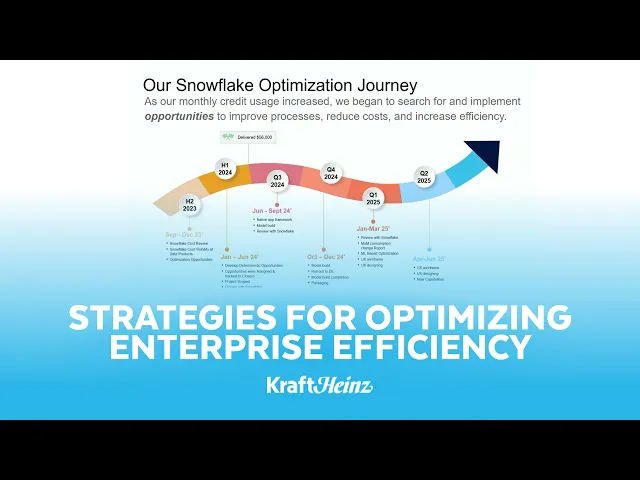
Learn how Kraft Heinz uses an AI-driven optimization solution to identify opportunities, recommend changes and track the savings those decisions produce:
How prescriptive analytics works
A prescriptive workflow represents a decision as an analytical problem. Different parts of the workflow answer different questions: what outcomes are plausible, which actions are feasible, which action best serves the objective and whether the result was actually better once the action was taken.
A practical prescriptive workflow follows four stages:
- Define: Formulate the decision problem by specifying the decision, objective, available actions and constraints.
- Evaluate: Estimate what the feasible actions are likely to produce and compare the alternatives.
- Recommend and act: Produce a recommendation, determine whether approval is required and carry out the selected action.
- Learn: Compare the expected result with the observed outcome and use that information to improve the system.
Define the decision criteria
Start with the action that someone — or some system — has authority to take. “Improve supply-chain performance,” for example, is too broad to optimize directly. “Allocate available inventory across distribution centers each morning” defines an actual decision. From there, the organization can specify the objective, available actions and constraints.
The objective translates the desired business outcome into something the system can evaluate, such as margin, throughput, service level, cost to serve, energy consumption or risk-adjusted return. Some decision problems have a single objective. Others involve several objectives that need to be considered together.
It’s common that several objectives compete with one another. For example, faster delivery might increase transportation costs, or maximizing machine utilization might reduce the time available for preventive maintenance. In those cases, teams need to decide which requirements should operate as hard constraints and which can be counted as trade-offs. When several objectives remain, they can be weighted explicitly or evaluated as a set of alternatives that show the trade-offs among them.
Research shows how much the choice of objectives can affect the result. In a 2024 study of 945 structured decisions, researchers found that removing 20% of the objectives changed the most promising alternative in 28% of cases.
Next, define the choices the system is actually allowed to make and the rules those choices have to satisfy. In the inventory-allocation example, the available actions might be different ways of distributing stock across locations. Constraints could include how much inventory is on hand, how much each location can hold, contractual service commitments and delivery windows. Any option that violates one of those requirements is removed from consideration.
Once the objectives, available actions and constraints are explicit, the system has a decision problem it can evaluate. If several options satisfy the constraints, the optimization method compares them based on the objective — or, when multiple objectives are in play, shows the trade-offs among the strongest alternatives.
Evaluate possible actions
For some decisions, the system needs an estimate of how the action itself will change the outcome. A propensity model might identify customers who are likely to purchase, but that’s different from estimating the incremental effect of sending them an offer. Experiments or causal models can provide that treatment-effect estimate.
The method used to compare the options follows the structure of the decision problem. Mathematical optimization is common in allocation, routing and scheduling, where many possible combinations have to satisfy explicit constraints. Simulation helps teams examine how complex systems behave under uncertainty. Business rules and heuristics suit more bounded problems where transparent logic or a good approximation is sufficient.
Some workflows combine several techniques. A retailer might use ML to forecast demand, simulation to test how uncertain demand affects inventory positions and optimization to select an allocation.
Recommend and act
After evaluating feasible alternatives, the system produces a recommended action. A good recommendation exposes enough of the reasoning for a person or downstream system to evaluate it. Depending on the use case, that might include the proposed action, expected impact, important assumptions, binding constraints, relevant alternatives, and confidence or uncertainty around the estimate.
How the recommendation proceeds from there depends on the consequences of the decision. For example, a low-risk inventory transfer within predefined limits might proceed automatically, while a recommendation to alter a safety-critical manufacturing process would require human review. Novel situations, weakly observed conditions and decisions that are difficult to reverse typically warrant stronger approval controls as well.
For automated actions, teams also need clear guardrails around what the system is authorized to do, along with escalation and rollback mechanisms when conditions move outside those boundaries.
Prescriptive analytics spans a spectrum from simple decision support to bounded automation. Decision rights, reversibility, business risk and confidence in the recommendation all help determine where a particular action belongs on that spectrum.
Learn from the outcome
Teams should capture whether a recommendation was accepted, modified or rejected, then compare the expected result with what actually happened. A gap between expected and observed outcomes could point to a weak forecast, a missing or outdated constraint, stale operating context or an objective that no longer reflects the business priority.
Outcomes can also expose problems with the target. A system might improve the metric it was given while degrading another business outcome that never made it into the objective or constraints.
Overrides are another useful signal. If people repeatedly reject a recommendation, the reason can reveal something the system has missed. In a study of clinical decision support, repeated override comments helped researchers identify a logic error that caused the system to miss previous insulin administrations.
Over time, these records give teams a basis for refining models, constraints and recommendation policies. They also help identify recommendations that actually achieve the intended business outcome.
QUICK TIP
If an outcome isn’t negotiable, consider expressing it as a constraint rather than another objective. For example, “Minimize transportation cost while maintaining a 95% service level” gives the optimizer a clearer boundary than asking it to minimize cost and maximize service simultaneously.
Prescriptive analytics examples across industries
The strongest prescriptive use cases are usually decisions that recur, have measurable outcomes and involve real trade-offs among feasible actions. The examples below show how that plays out across operational, customer and risk decisions.
Supply chain and inventory
Supply-chain decisions often depend on both what’s expected to happen and what’s true right now. A distributor allocating limited inventory across warehouses, for example, might use a demand forecast alongside current stock, warehouse capacity, lead times and transportation costs to determine where inventory should go.
Route optimization has a similar mix of inputs. Predicted travel times can estimate how routes are likely to perform, while vehicle capacity, driver hours, current locations and customer delivery windows determine which routes are feasible. The optimizer uses both sets of information to recommend a route plan that satisfies the operating constraints.
Manufacturing
Manufacturers use prescriptive analytics for production scheduling, maintenance planning and process optimization.
A system might recommend a production sequence designed to increase throughput while accounting for machine capacity, changeover time, material availability and maintenance windows. Predictive models can contribute estimates such as failure risk or expected quality, while simulation or optimization helps compare the feasible options.
Human overrides are especially useful in this setting because operators may know something the system doesn’t. An unusual vibration, a maintenance condition or a temporary line constraint may justify changing a recommendation. If similar overrides recur, they can point to information or constraints that should be represented in the decision problem.
Retail
Retail prescriptive use cases often center on pricing, replenishment and inventory placement.
For a markdown decision, a price-response model might estimate expected sales at several price points. The retailer then has to choose a price that balances the objective — such as sell-through or margin — against constraints such as inventory age, pricing rules, available stock and brand requirements.
This is a good example of why the forecast alone can’t produce a recommendation. A retailer trying to clear seasonal inventory before a deadline may choose a different markdown from one that puts more weight on preserving unit margin.
Marketing and customer engagement
Marketing and customer engagement involve repeated decisions about which audience to target, which offer or message to use, which channel to use and when to act.
A propensity model could estimate how the customer is likely to respond to each option, while consent rules, eligibility, communication frequency, budget and expected profitability limit which actions are allowed. The prescription selects among the remaining options based on the business objective.
The predictive model estimates response. The prescriptive layer evaluates what to do with that estimate under the rules governing the interaction.
Finance and risk
Financial organizations apply prescriptive analytics to portfolio allocation, collections, credit limits and hedging.
A portfolio optimization process, for example, might seek a target return while remaining inside concentration, liquidity, regulatory and risk-tolerance boundaries. Forecasts and risk models provide estimates of future behavior, while the optimization process evaluates possible allocations subject to those constraints.
Collections systems use a related structure. Expected recovery, account characteristics and risk estimates inform the decision, while contact policies, operational capacity and regulatory requirements limit the actions available.

What AI changes in prescriptive analytics
Machine learning has long played a role in prescriptive analytics by estimating demand, risk, failure probability, customer response and other outcomes used in the decision problem.
Generative AI has changed how people can work with prescriptive systems. A user can ask a question in natural language, pull in relevant business context and have the recommendation or trade-offs explained to them, without having to interact directly with each underlying model.
AI agents can also act on the user’s behalf — retrieving data, calling models or optimization services and, when authorized, carrying out actions in downstream systems. Access must follow the specific resource or action involved. An agent might be allowed to read a forecast but not change a production schedule, for example, or it might be able to prepare an order that requires human approval before submission.
How to implement prescriptive analytics responsibly
Responsible implementation means governing the full path from recommendation to action. Teams need to be explicit about what the system is optimizing, when a person should review or override a recommendation, how performance will be monitored and what information must be retained to reconstruct the decision later.
Those controls become more important as recommendations move closer to automated execution.
Make the objective and trade-offs explicit
An optimization system is literal about the target it receives. If a retailer tells a system to minimize inventory costs, for example, the technically optimal solution might produce stockouts that damage customer experience. Adding a service-level requirement changes the feasible solution options.
For this reason, the decision owner should approve the objective, major constraints, acceptable trade-offs, automation thresholds and escalation paths. Data scientists and engineers implement the system, while accountability for the business decision remains with the people responsible for the outcome.
Prescriptive systems can also optimize a proxy that only partially reflects the business outcome, so the monitoring process should look for situations in which the system improves the formal target while degrading an unmodeled outcome.
Match automation to the decision
Automation should be governed by explicit thresholds rather than handled as an all-or-nothing choice. Teams can define which recommendations may proceed automatically, which require approval and which should be blocked or escalated when conditions fall outside predefined limits.
Those rules should be tied to the decision itself — for example, the size of a financial exposure, the magnitude of a production change or whether a recommendation falls outside a known operating range. For automated actions, teams should also define stop conditions and rollback procedures where reversal is technically possible.
Monitor the full decision loop
Model accuracy provides only one view of system performance. Prescriptive systems also depend on current inputs, appropriate constraints, functioning execution paths and human adoption. Monitoring should therefore include input drift, predictive performance, recommendation distributions, constraint violations, overrides, action completion and realized outcomes.
Where possible, teams should evaluate what would likely have happened under a different action. Controlled experiments can estimate that effect by comparing outcomes across randomized actions, while causal inference methods can estimate counterfactual outcomes when an experiment isn’t practical. A recommendation being accepted by someone often doesn’t tell you whether it actually improved the result.
Preserve an audit trail
For important decisions, teams should retain enough information to reconstruct what happened: the decision request, inputs used, alternatives considered, relevant model outputs, objective, binding constraints, selected recommendation, confidence or uncertainty, approver or automation policy, resulting action and eventual outcome.
That record supports troubleshooting and evaluation, while also giving governance teams a clearer view of how an analytical recommendation turned into a business action.
A governed prescriptive analytics architecture on Snowflake
A prescriptive workflow depends on several kinds of information and logic working together: the current state of the business, estimates of what may happen next, rules or optimization logic for comparing actions and a way to bring the recommendation into the operating workflow.
Snowflake Horizon Catalog provides the governance foundation for the data used in analytics, including access controls, lineage and data quality. Horizon Context adds governed business meaning — definitions, metrics and relationships that applications and AI systems can use consistently — while Semantic Views represent that logic in a form Snowflake can query and apply.
When the decision depends on uncertain future conditions, Snowflake ML can provide inputs such as demand forecasts, failure probabilities or customer-response estimates. For problems that require optimization or simulation, teams can run custom solver logic in Snowpark Container Services.
Once the system produces a recommendation, a Streamlit in Snowflake application can support scenario comparison, review and approval, while Cortex Agents can use custom tools to retrieve context and call approved functions, including ones that trigger actions in other systems under the permissions you define. Recording the action and resulting outcome gives teams data to evaluate and refine the decision process over time.
From recommendation to result
A recommendation is only the midpoint of a prescriptive workflow. The real test comes after the action is taken: whether it produced a better outcome under the conditions and constraints the organization actually faced. Feedback is part of the system. By tracking what was recommended, what was actually done and what happened next, teams can refine the models, constraints and decision logic that shape the next recommendation.
KEY TAKEAWAY
Prescriptive analytics depends on how the decision is framed. The objective or objectives, available actions, constraints and estimates of likely outcomes determine which recommendations the system considers feasible — and which it prefers.
Frequently Asked Questions
Your common questions about prescriptive analytics, answered by Snowflake experts.
What is the difference between predictive and prescriptive analytics?
Predictive analytics estimates what’s likely to happen, while prescriptive analytics evaluates what action to take in response. A retailer might predict demand for a product next week, for example. Prescriptive analytics combines that forecast with inventory, cost, capacity and service-level constraints to recommend how much stock to send to each location.
Does prescriptive analytics require AI?
No. Prescriptive analytics requires a way to evaluate possible actions against an objective and constraints, but that evaluation doesn’t inherently require AI. Many systems use mathematical optimization, simulation, rules or heuristics. Machine learning is frequently used when likely outcomes — such as demand, failure or customer response — must be estimated from data.
What is a simple example of prescriptive analytics?
A delivery company needs to choose routes for a group of drivers. Its objective might be to minimize travel time while meeting customer delivery windows. Available vehicles, load capacity, delivery locations and time windows constrain the options. A routing optimizer evaluates feasible routes and recommends the combination that best satisfies the objective.
Are recommendation systems always prescriptive?
No. A recommendation system might simply rank products, content or other options according to predicted relevance. A system is prescriptive when it evaluates permitted actions against an explicit objective and constraints. A next-best-offer system, for example, could combine predicted customer response with eligibility, budget and communication-frequency rules before recommending an action.
Explore Analytics Resources
Explore Analytics Topics
Deep dives into every aspect of analytics
