Nov 3, 2026/6 min readAt Snowflake
A New Gear for USA Cycling: Data Collaboration with Snowflake

Four riders, taking turns at the front to shield their teammates from the wind. Four thousand meters. Sixteen blisteringly fast laps. In Paris, the U.S. women’s team pursuit squad won the country’s first gold in the event — a mere six-tenths of a second ahead of New Zealand.
Behind that narrow margin were two years of preparation. Through Project 4:05, USA Cycling studied how to get four riders around the track in less than four minutes and five seconds: who should lead, for how long and in what order.
“We completely deconstructed it to every variable possible,” says Brendan Quirk, CEO of USA Cycling. “Power, aerodynamics, what the sequencing is of the riders, how many laps each pulls for.”
It worked. But Quirk is candid about how it got done: volunteer and deeply discounted data science help, with no unifying system to bring the data together. “That’s not scalable,” he says. “We needed a data and AI partner who would come help us wrap our arms around this, take all this disparate data, put it in one layer, put AI on top of it so we could work quickly.”
That’s where Snowflake comes in.
I’m proud to announce that Snowflake is now the Official AI Data Cloud & Collaboration Partner of USA Cycling. The partnership will support the organization’s preparations for the LA28 Olympic and Paralympic Games, covering all five Olympic disciplines (road, mountain bike, track, BMX racing and BMX freestyle), plus Paralympic road and track.
“This is not another sponsorship. This is a game-changing partnership,” says Quirk. “Our high-performance team is on cloud nine that they’re able to get access to the systems and to the people of Snowflake.”
“Data can be extremely powerful or honestly kind of overwhelming.”
Riley Amos
Elite Men's National Team Member, Paris 2024 Olympian, USA Cycling
A data-rich sport ready for one view
Every ride produces streams of power, heart rate, cadence and speed. Wearables track sleep and recovery. Telemetry on mountain bike suspension maps how the bike moves over terrain. High-speed, multiangle cameras capture race footage.
Collecting that data is the easy part. Connecting it is harder.
“We have far more data than we can process,” Quirk says. “So if we can have a system by which we can collect data and make it immediately usable in a fast way for our coaches and for our athletes, that’s like gold. It’s gold for gold.”
Today that information lives across seven to eight separate tools. Alec Pasqualina, Director of Mountain Bike at USA Cycling, describes “this messy landscape of different things that we use all in different places,” where one person has to check everything. For a lean team, Pasqualina says, the deeper analysis of sleep, nutrition and recovery is often the first thing squeezed out when schedules get busy.
What the partnership makes possible
Working with Snowflake, USA Cycling plans to bring its performance data together on a single, secure foundation, aligned with the Athlete 360 initiative from the U.S. Olympic & Paralympic Committee (USOPC). That foundation opens the door to:
- Trackside race analysis: In Team Pursuit and BMX Racing, athletes often have only minutes between rides to make adjustments. USA Cycling will pair race video with power, speed and timing data so coaches can show athletes exactly what to change, from pacing to equipment, to improve the outcome of the next ride.
- Forecasting the LA28 medal landscape: USA Cycling's medal forecasting model, first used for the Paris Games, will expand to Olympic and Paralympic cycling and update as results come in. Leaders will see where the team is best positioned to reach the podium and how to direct funding, staff and support to increase medal count.
- One platform for every performance decision: USA Cycling will bring its performance data, race results and training metrics into one secure, governed platform on Snowflake. Athletes, coaches and performance directors will work from the same information and ask questions in natural language, turning data into training changes that lead to faster times and higher scores. “They’re Swiss Army knives,” Quirk says. “But they’re not programmers. So being able to use natural language is not just a luxury, it’s an absolute need.”
- Decoding the scorecard in BMX freestyle: Using Snowflake Cortex AI, USA Cycling will link competition footage to judges' scores to show which tricks score most reliably and where a run is leaving points on the table, so riders can build higher-scoring runs.
“We needed a data and AI partner who would come help us wrap our arms around this, take all this disparate data, put it in one layer, put AI on top of it so we could work quickly.”
Brendan Quirk
CEO, USA Cycling
Clarity on race day
For the athletes, the hope is clearer answers from the data they already collect.
“Data can be extremely powerful or honestly kind of overwhelming,” says Riley Amos, who raced cross-country mountain bike for Team USA in Paris. “I’m excited to see how we can really use this program and technology to see through the clutter a little bit.”
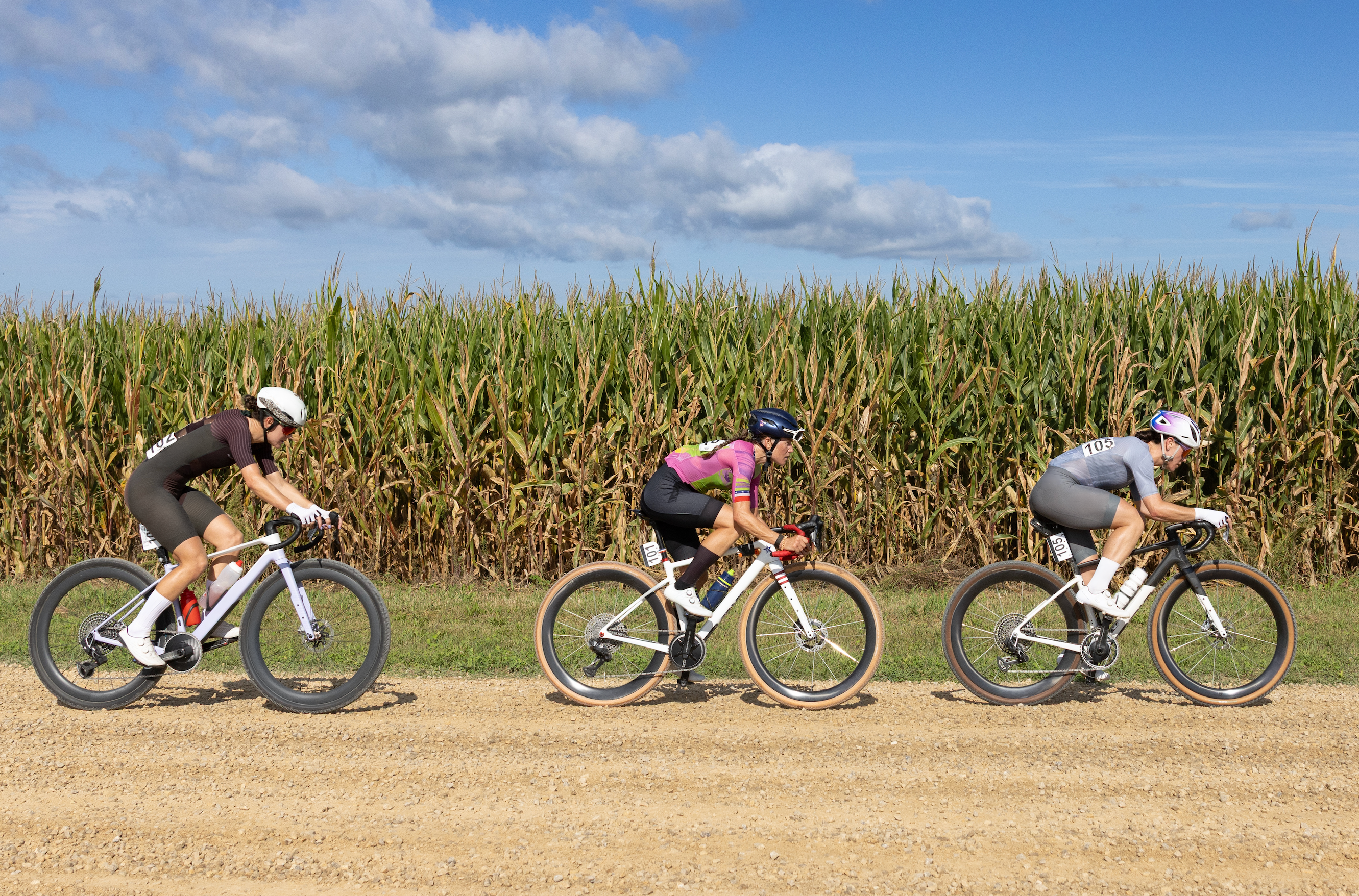
That clarity is especially essential when margins are unforgiving. In cross-country racing, the top five often finish within about a minute of each other after an hour and a half on course. “Data really helps me be as efficient as possible while I’m riding,” says Team USA mountain biker Gwendalyn Gibson.
And for Makena Kellerman, who won back-to-back Under-23 Short Track World Cups this season, data is about confidence: “I just trusted that I could hold that power level, and I trusted my training and I was able to perform.”
Pasqualina sees an even bigger opportunity in looking back at an athlete’s best days, then asking what they did the week and the month before. In a sport where an Olympic race comes down to a single day, he puts it simply: “We’re really excited for Snowflake to help us simplify our data and put it into action for our best performance on our best days.”
Building a connected Team USA
USA Cycling now joins USA Bobsled/Skeleton in building on Snowflake. That’s what excites me most about this moment: What one governing body learns can help others move faster.
Quirk sees it the same way. “I’m also excited to share what we learned with the USOPC and other national governing bodies that make up Team USA,” he says. “There’s an opportunity here to improve our own program and help other sports do the same.”
The stakes for the LA28 Olympic and Paralympic Games are high. Pasqualina points to the growth of American cycling that came in 1984 and believes another home Games can be “the biggest catalyst for enthusiasm and for growth of our sport.”
Quirk has set a bold goal for his athletes: 10 Olympic medals and 12 Paralympic medals on home soil. “Every day closer to the Games, the window is getting smaller,” he says. “The time is now.”
As the Official Data Collaboration Provider for Team USA and the LA28 Olympic and Paralympic Games, Snowflake is committed to helping make them the most data-driven Games in history. For USA Cycling, that means helping coaches and athletes make better use of the information behind their preparation.
We’re thrilled to be part of the team. See you in LA.
