

Webinar
Unite transactional and analytical data in a single database, with Snowflake security and governance capabilities built in. No separate systems. No data movement required.
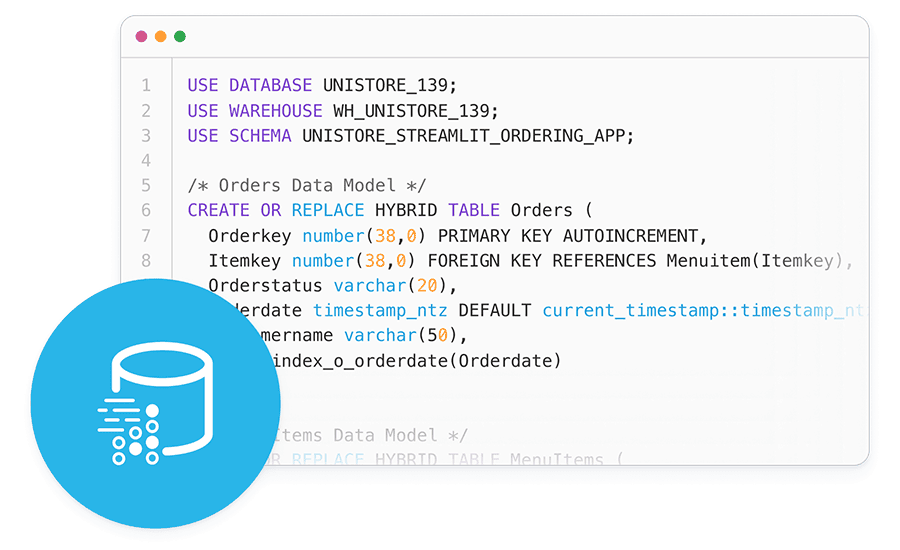

Overview
Run transactional workloads directly in Snowflake right alongside your analytics.

Retire siloed transactional databases and the ETL pipelines between them.

Apply one governance and security model to every row, whether it’s written by an app or read by an analyst.

Query transactional and analytical data in the same statement without replication or waiting for data to land.
How It Works
Unistore’s hybrid tables store your data so you can handle fast, row-level reads and writes natively in Snowflake.
They work alongside your existing Snowflake tables, and you can query across both in a single statement.

Use Cases
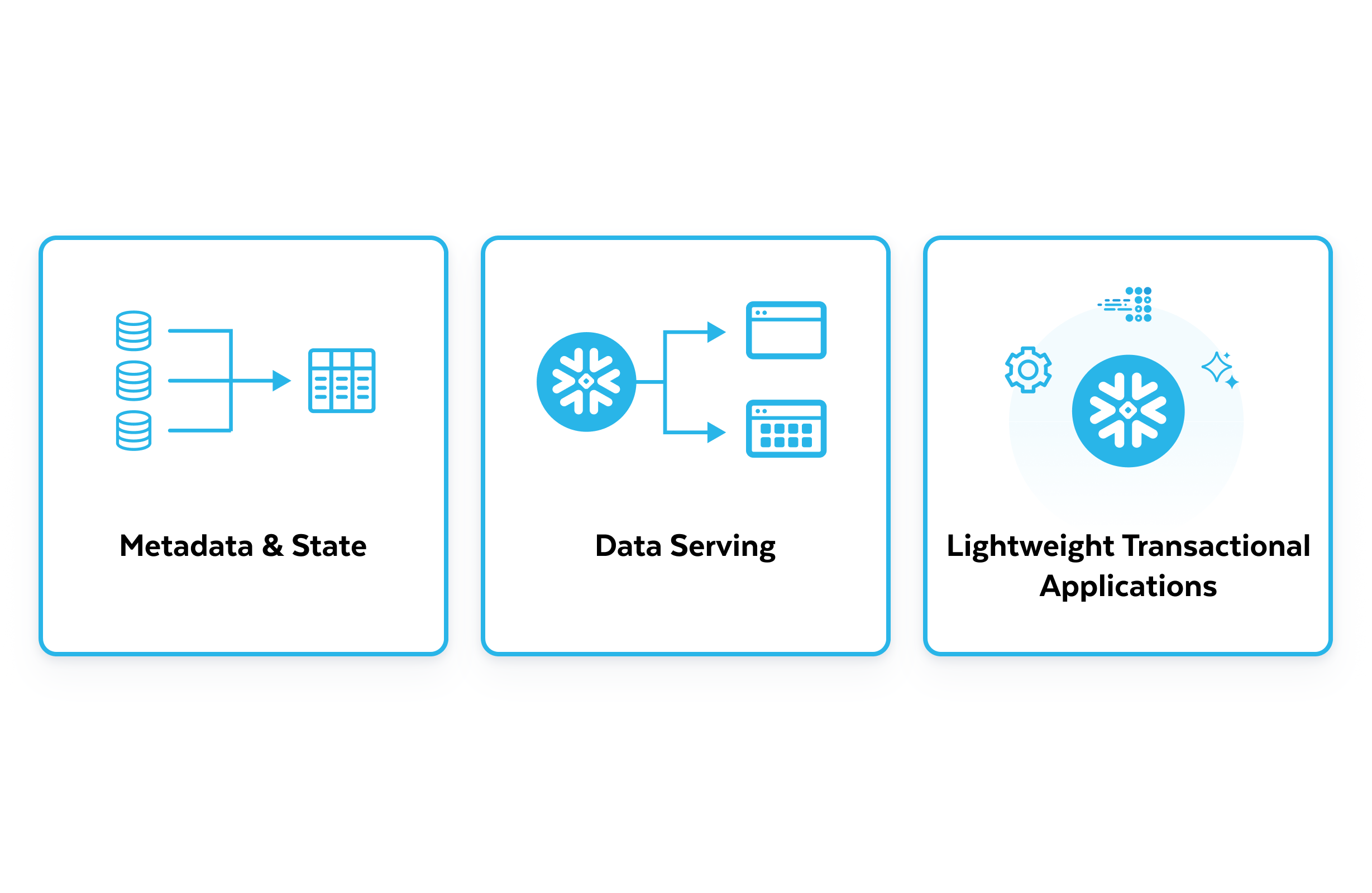
Track the status of your workflows and data pipelines directly in Snowflake, with consistent updates across tables.
Customers

MarketWise Reduces Costs and Ops Burden While Accelerating Insights with Snowflake Hybrid Tables




Snowflake Unistore
Have questions about Snowflake Unistore? We've got answers. Here are some of the most common questions to help you understand how it works and how you can get started.
Unistore is Snowflake's capability for running transactional and analytical workloads in a single database. It uses hybrid tables to support fast row-level reads and writes alongside your existing Snowflake tables.
Hybrid tables are a Snowflake table type optimized for transactional workloads, with fast single-row lookups, inserts, updates and deletes. They can be joined with standard Snowflake tables in the same query.
Common use cases include workflow and pipeline state management, low-latency data serving and lightweight transactional apps like call center tools or document processing workflows.
Hybrid tables use a compute-and-storage billing model. Pricing is based on warehouse usage and storage consumed.