Blog
Improve AI Performance, Quality and Cost with Agent Observability
Learn how Agent Observability helps teams trace, debug and evaluate AI agents while linking agent behavior to cost and quality.
Use Case
See what your AI agents are doing, what drives their cost and whether they deliver. Bring behavior, performance and quality into one view while keeping your telemetry cost-effective at scale.
Overview
Latency and error rates can’t tell you which tool an agent chose, what the path cost in tokens or whether the answer held up. Agent traces put cost, behavior and performance in a single place.

Capture the right telemetry, explore conversations and sessions and connect agent behavior with underlying applications and services.

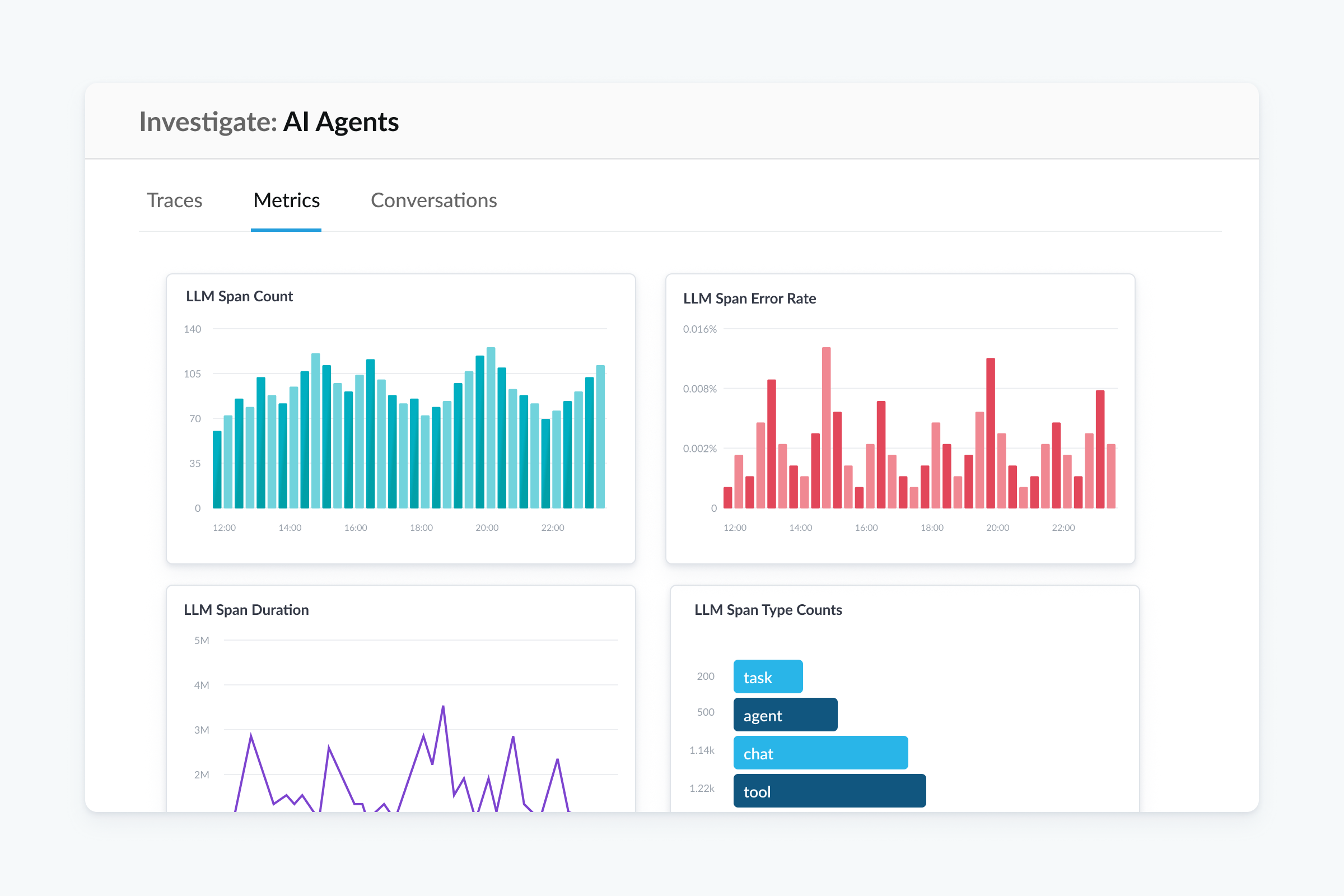
Monitor errors, latency and cost in production. Isolate the source of cost spikes and find optimization opportunities.

Retain full-fidelity agent traces at scale, so you don’t have to choose in advance which failures you’ll be able to investigate.
Benefits
Agent traces
Cost, performance and usage
Telemetry economics
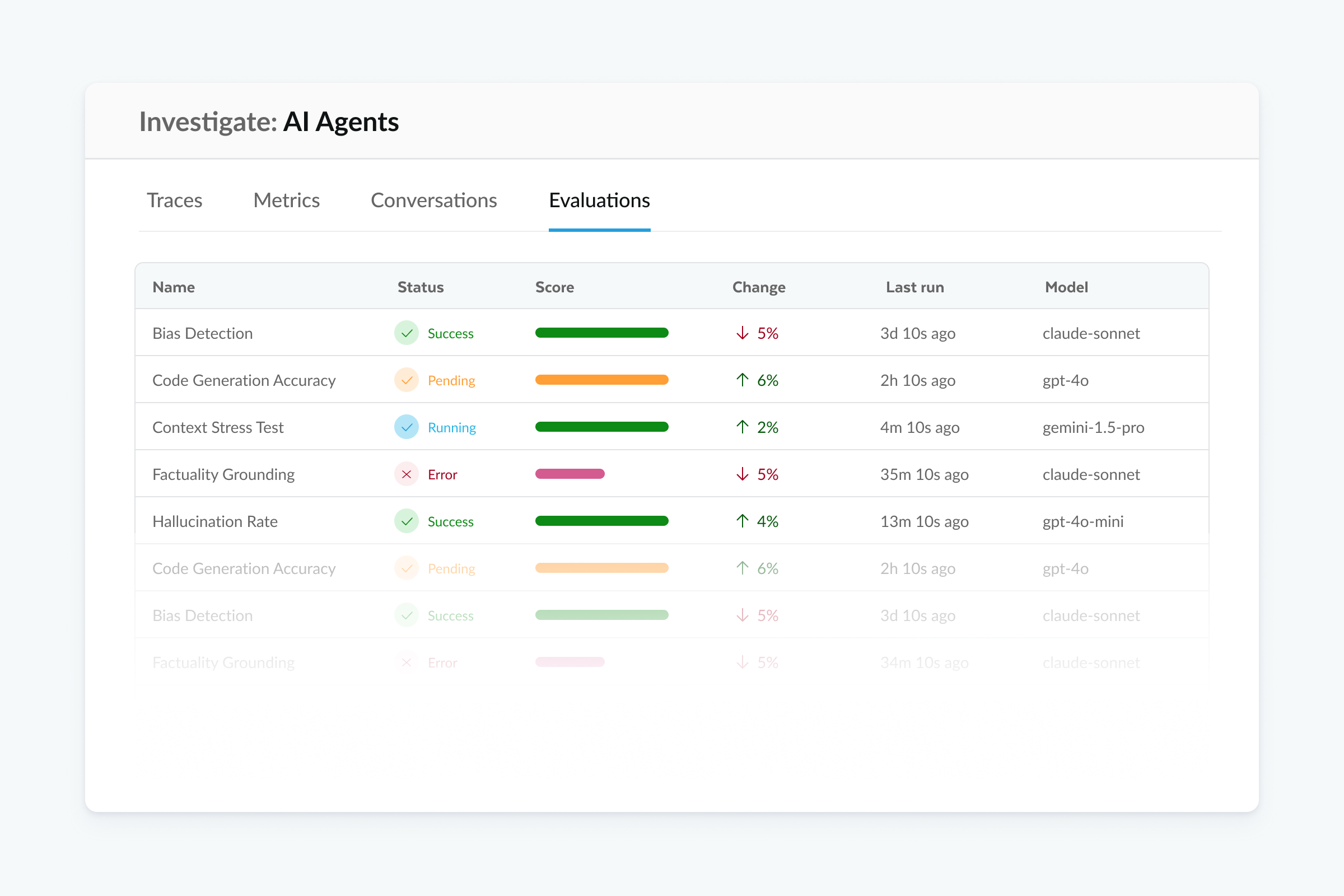
Evaluations
Resources
Get Started
Performance at scale
Faster troubleshooting
Lower cost with an open data lake

Agent Observability
Learn how Observe by Snowflake helps teams monitor and optimize their AI agents with visibility into performance, costs and behavior.
Agent observability gives teams visibility into the performance, cost, quality and behavior of AI agents and LLM applications. It combines traces, metrics and evaluations to show how agents respond, which models and tools they use, what drives token consumption and whether they produce the intended outcome.
AI agents are expensive, unpredictable and difficult to debug with traditional tools. Their workflows produce longer, larger and more complex traces across prompts, model responses, retrievals, tool calls and retries. They can also complete without a software error while still hallucinating, misusing a tool or failing to accomplish the intended task, making latency, error and availability metrics insufficient on their own.
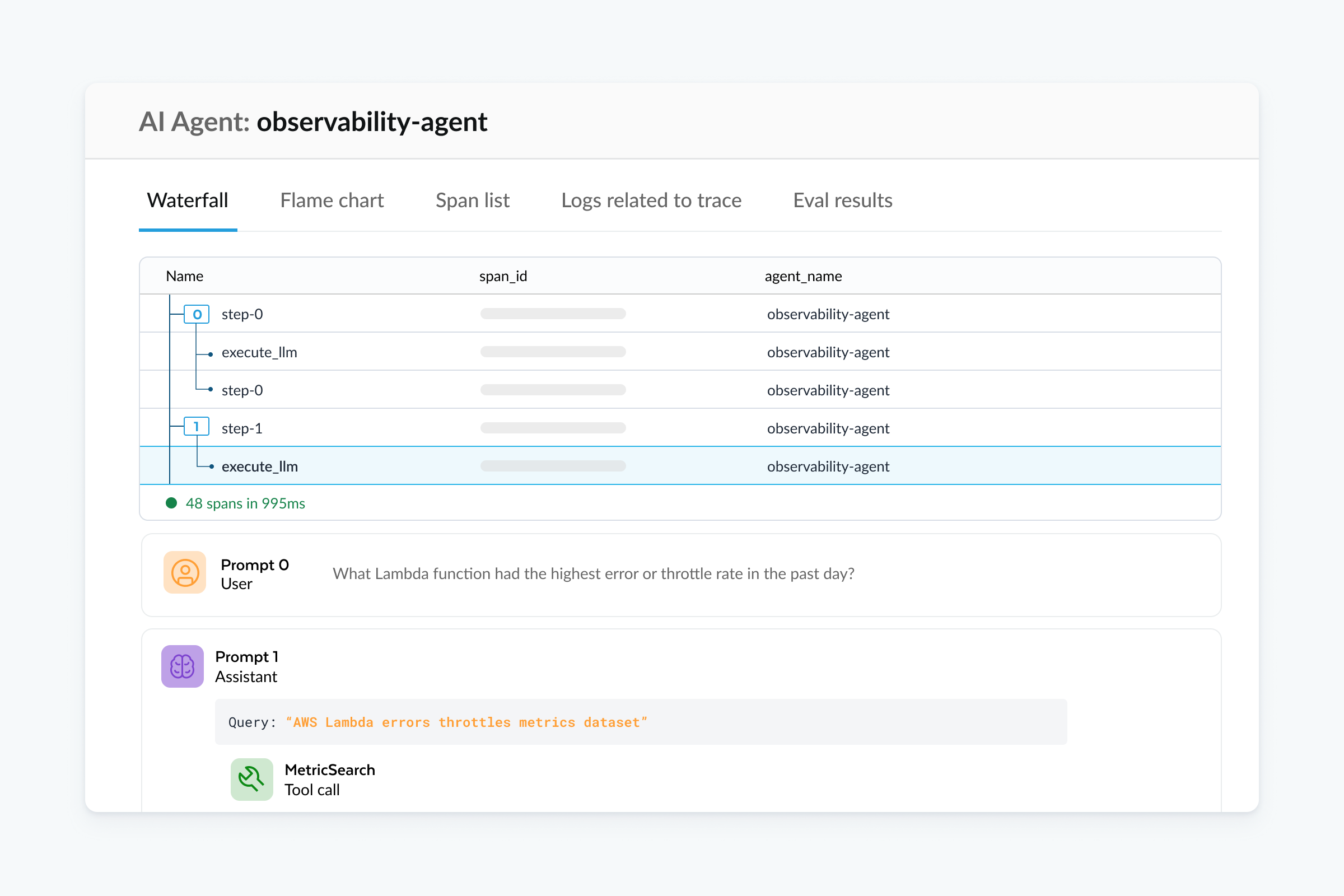
Observe captures the full agent workflow and organizes it into searchable conversations, sessions and traces. This gives teams the context to investigate how an agent reached an outcome, metrics to understand performance and token usage, and evaluations to detect quality failures. Built on Snowflake, Observe keeps this high-volume, context-rich telemetry searchable and cost-effective as agent usage grows.
LLM observability focuses on model interactions such as prompts, completions, latency and token usage. Agent observability covers the broader workflow, including retrievals, tool calls, sub-agents, retries and multi-turn conversations. Observe supports observability for both LLM applications and more complex agent workflows.
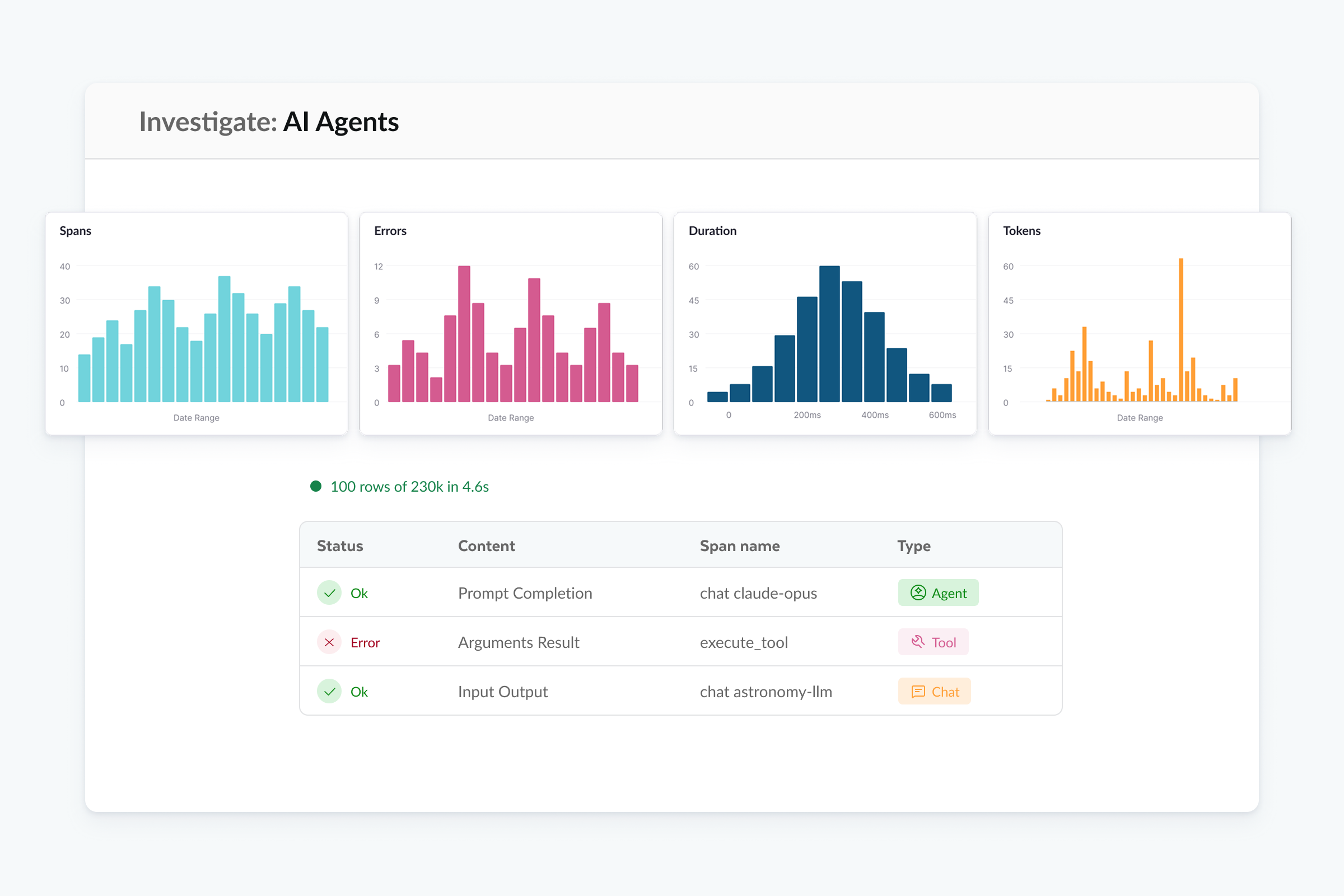
Teams can run online LLM-as-judge evaluations against production traces to identify hallucinations, guardrail failures and poor-quality responses. When an evaluation surfaces a problem, they can drill into the underlying conversation and trace to inspect prompts, model responses, retrievals and tool calls and understand where the behavior began. Teams can also send offline evaluation traces and metrics from their existing development workflows to Observe for visualization, comparison and regression tracking over time.
Observe tracks API spend and token usage across LLM providers, helping teams identify cost spikes and usage patterns as they emerge. Teams can also break down input and output token consumption by model, provider, agent, workflow or application feature, then compare cost and performance to inform model selection, routing and other optimization decisions.
Tools focused on agent development often provide infrastructure for prompt experimentation, evaluation datasets and test execution. Observe focuses on storing, searching, monitoring and analyzing high-volume telemetry generated by agents in production and testing, while allowing teams to keep their preferred development tools and evaluation harnesses.


