Jun 17, 2026/4 min readProduct and Technology
Exploring Agent Discovery: Snowflake and the Agentic Resource Discovery Specification

Today, Snowflake is announcing our support for the Agentic Resource Discovery (ARD) Specification, an open protocol that standardizes how AI agents and tools are cataloged, searched and discovered across an enterprise. Developed in collaboration with Microsoft, GoDaddy and many others, ARD addresses a real and growing issue: how to discover all the agents available to an enterprise user through whatever interface they are using.
From deploying agents to finding them
AI clients can already invoke external tools, MCP servers, APIs, workflows and agents. The natural next question is: how does an AI client automatically find the best capability for a given task, across everything an organization has built and approved?
That is the discovery layer, and it is what turns a collection of individual agents into an interconnected, enterprisewide capability network. When discovery works, the agent a data team ships on Monday is available to a sales rep on Tuesday through Snowflake CoWork, Snowflake CoCo, Microsoft Copilot or any AI interface, without anyone manually wiring it up.
ARD creates that discovery layer for AI capabilities. A client describes a task in natural language, and ARD returns matching agents along with what each agent does, who provides it and how to reach it, ranked by relevance.
How ARD works
ARD is a lightweight, domain-anchored discovery specification. It defines how agentic resources, MCP servers, A2A agents, Skills, and traditional API tools are cataloged, searched and dynamically discovered across composable, federated networks of discovery services.
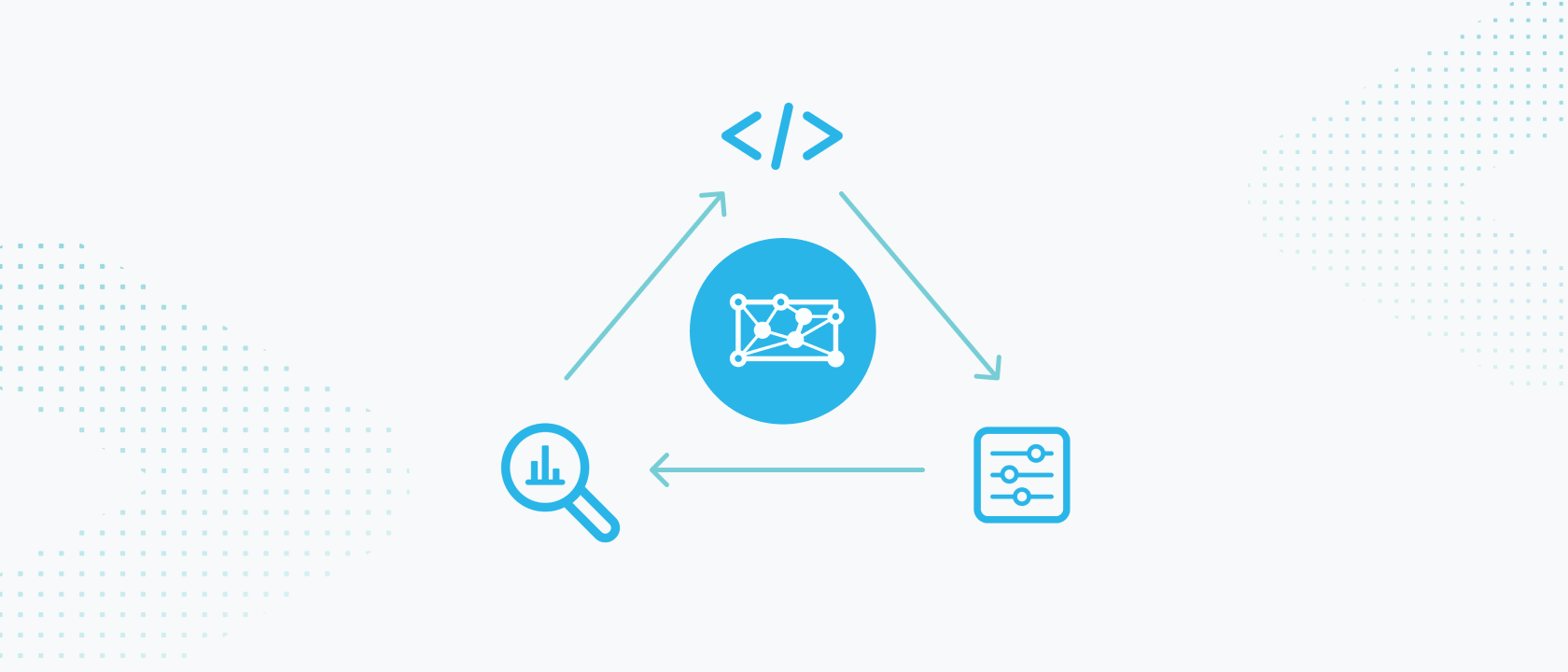
The architecture follows four steps:
- Describe: A resource publisher creates a standard manifest (
ai-catalog.json) that describes what the agent does, what tasks it handles and how to invoke it. The manifest lives on the publisher’s own domain. - Curate: A discovery service builds its collection by crawling published catalogs, ingesting internal inventories or applying its own policies. Enterprises control exactly which agents are included.
- Search: Clients query the discovery service with natural-language text and optional filters. The service returns ranked entries with schemas and endpoints.
- Execute: The client connects directly to the selected resource over its native protocol (MCP, A2A, REST). The discovery service never sits in the invocation path; authentication and data access stay between client and agent.
Discovery services can also compose. An enterprise can run one ARD endpoint that merges internal agents with selected vendor and public resources so employees see a unified answer set, while the organization retains control over what is included.
What this means for Snowflake Cortex Agents
Here is how we envision ARD working with Snowflake Cortex Agents: A team builds an agent in Snowsight, Snowflake CoCo or through the Cortex Agents SDK in the same way they do today. On publish, Snowflake could register the agent in the organization’s discovery endpoint automatically, a catalog entry with a domain-anchored identifier, representative queries drawn from its semantic model and the MCP endpoint. No extra steps for the builder.
Here’s what this could look like in practice: An AI interface in the company searches the registry, finds the relevant Cortex Agent for the question at hand, and invokes it through MCP, with Snowflake’s role-based access control governing the call, exactly as it does today.
This means the agent a data team ships would become discoverable almost immediately across the entire enterprise. A knowledge worker asking a question in Snowflake CoWork or a homegrown application can be routed to a relevant Cortex Agent, without knowing it exists by name. And because AI tools only surface what the registry indexes, the registry becomes the place where governance capabilities and approval decisions are reflected.
ARD also addresses a friction point. Today, configuring MCP connections for one AI client does not automatically make those agents available in the next one. With ARD, that changes. Publish once to your organization’s discovery endpoint, and ARD-compatible AI interfaces, including Snowflake CoWork, Claude, Copilot or your own application, can find and invoke the same Cortex Agent without re-registration.
Why open standards matter here
ARD is a protocol, not a product. Any number of discovery services can implement it, each with its own index, curation and ranking. This is part of Snowflake’s dedication to open standards, from MCP to Apache Iceberg™ and the Open Semantic Interchange. These standards let customers connect to a broad range of AI interfaces while keeping governance controls, permissions and data security inside the Snowflake environment. ARD could extend that philosophy from invocation to discovery, making every Cortex Agent an enterprise citizen from the moment it ships.
Get started
- Learn more in Microsoft's ARD announcement blog and the official ARD specification.
- Get started today: Follow the quickstart guide to publish your AI catalog in minutes
- Build: Create your first Cortex Agent and use it in Snowflake CoWork with this quickstart
- Read: Check out the Snowflake CoWork blog and Snowflake CoCo blog to learn more