

AI Agent Orchestration: How to Control Agentic Workflows
AI agent orchestration controls how model-driven work moves through tools, workflows and, when needed, multiple specialized agents. Learn how modern orchestration architectures manage execution, state, context and operational control.
AI AGENT ORCHESTRATION DEFINED
AI agent orchestration is the application logic and runtime control that determine how an agentic system executes a task. It governs when models and tools run, what context they receive, how state changes, which transitions are permitted, and when execution retries, pauses, transfers responsibility or ends.
Agentic systems become less reliable when weak outputs are allowed to pass unchecked into later decisions. In a Google Research evaluation of 180 agent configurations, independent agents amplified errors by 17.2x. Adding a centralized orchestrator reduced the amplification of errors to 4.4x by catching weak results before they propagated through the system.
This finding illustrates why agent orchestration isn’t simply a mechanism for connecting multiple agents. It provides the execution control that determines how model-driven work is routed, checked and carried forward. In a single-agent application, orchestration governs the model-and-tool loop. In a multi-agent system, it also controls how work, context and responsibility move between separate agents.
What is agent orchestration?
An AI agent typically operates in a loop: interpret the task, select an action, call a tool, inspect the result and decide whether to continue. The application around that loop must supply tools, preserve relevant state, enforce limits and determine what happens when an operation succeeds or fails. Agent orchestration provides that surrounding execution control.
In a relatively simple application, orchestration might support a single agent using several tools. In a larger system, it typically coordinates deterministic workflow steps, human approvals and multiple agents with different instructions or permissions. The number of agents changes the coordination problem, but not the underlying need to control execution.
This broader definition helps separate three related concepts:
- Agent runtime: Executes the model-and-tool loop for an individual agent.
- Workflow orchestration: Connects agentic and deterministic operations into a controlled process.
- Multi-agent orchestration: Coordinates execution, context or responsibility across more than one agent.
The terms aren’t used uniformly across every framework. OpenAI describes orchestration as the flow of agents through an application, including both model-directed and code-directed control. LangGraph distinguishes workflows with predetermined code paths from agents that dynamically select their own actions. Microsoft uses multi-agent orchestration for defined collaboration patterns such as sequential execution, concurrent execution, handoffs and group chat.
For system design, however, the useful distinction isn’t whether orchestration applies only to one agent or many, but rather where control resides and which decisions are delegated to a model.
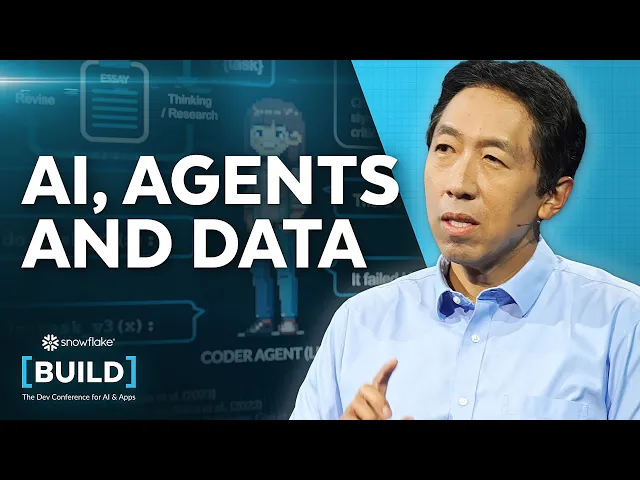
Watch leading AI researcher Andrew Ng explore the rise of AI agents and agentic reasoning:
Agent orchestration vs. the agent loop
The agent loop is the repeated interaction between a model and its available tools. The model receives context, selects a tool or produces an answer, then processes the resulting observation. The loop stops when the model returns a final response or reaches another termination condition.
Orchestration determines the conditions under which that loop operates. It may define:
- Which tools the agent may use
- How tool inputs and outputs are validated
- What state persists between turns
- How many iterations or tool calls are allowed
- Which actions require approval
- What happens after a timeout or invalid result
- Whether another workflow or agent should run
- What constitutes successful completion
Some SDKs package part of this behavior into an agent runner. Other platforms provide it through a managed agent runtime, while more complex applications may distribute control across application code, graph runtimes, workflow engines or durable execution systems.
An agent shouldn’t be expected to govern every part of its own execution. Access checks, schema validation, resource limits and fixed business rules are generally more reliable in code. Model-directed decisions are most useful when the next action depends on interpreting language, assessing newly retrieved information or adapting a plan.
Agent orchestration vs. AI orchestration
AI orchestration is the broader coordination of models, data pipelines, infrastructure, deployment systems, governance controls and business applications. It may cover many kinds of AI workloads, including predictive models and generative applications that don’t use agents.
Agent orchestration operates within that environment. It controls the execution of a particular agentic application or workflow: which model or agent acts, what tools it may invoke, what information reaches the next step and how the run progresses.
The two are interdependent. Agent orchestration can’t compensate for stale data, missing permissions or unreliable model infrastructure. Nor should it bypass the policies attached to underlying data and systems. The wider AI environment supplies those operating conditions, and agent orchestration applies them while work is underway.
How agent orchestration works
An orchestrated run begins with a task and an initial execution state. That state may include the user request, identity and permissions, retrieved records, intermediate outputs, unresolved questions, completed actions and current workflow status.
The runtime then chooses an eligible operation. Depending on the architecture, that choice may come from:
- Application code
- A workflow or graph definition
- A rules engine
- An agent’s model
- A combination of deterministic and model-directed control
The operation might invoke a model, execute a tool, start several independent branches, request human input or call another agent. Its result is validated and written back to state before the next transition begins.
An orchestration layer commonly handles:
- Execution routing: Determines which operation runs next and whether work proceeds sequentially, concurrently or conditionally.
- State management: Records durable facts about the task and execution rather than relying on the conversation transcript as the sole source of state.
- Context assembly: Selects the instructions, history, retrieved information and working data supplied to each model call.
- Tool control: Defines which tools are available, validates their inputs and enforces the permissions attached to their underlying systems.
- Recovery: Applies bounded retries, fallbacks, timeouts, checkpoints and escalation paths.
- Human interaction: Pauses for clarification, review or approval when the workflow reaches a decision that shouldn’t be delegated to a model.
- Termination: Stops when the task reaches a valid terminal state or exceeds its permitted limits.
- Tracing and evaluation: Tracing records the execution path, and evaluation measures both the final outcome and the decisions that produced it.
This isn’t necessarily one distinct software component. The responsibilities may be distributed across an SDK, application service, graph runtime, workflow platform and the systems that execute tools.

Single-agent and multi-agent orchestration
A single agent with a well-designed toolset is sufficient for many applications. The agent can interpret the request, select among tools and revise its approach as new information appears. A surrounding runtime can supply state, validation, retries, approvals and observability without introducing another agent.
Multiple agents are useful when the system requires a separation that tools alone can’t provide. That separation might involve:
- Different instructions or specialized reasoning strategies
- Independent context windows
- Distinct permissions or tool access
- Parallel ownership of separable work
- Transfer of a continuing conversation to another specialist
- Independent review of a result
Even then, an additional agent is an architectural cost. It introduces another model interaction, context boundary, state transition and source of nondeterminism. Modern framework guidance generally favors the simplest composition that meets the requirement.
For this reason, the key architectural consideration isn’t whether an application is sophisticated enough to deserve multiple agents, but whether separate agents produce a measurable benefit that can’t be achieved as reliably with one agent, ordinary functions or a deterministic workflow.
QUICK TIP
Use a simple test: If a decision has one objectively valid outcome, enforce it in code. Use a model when the correct choice depends on interpreting language or incomplete information.
Common agent orchestration patterns
Several approaches can be used for agent orchestration. Production systems frequently use a combination of these approaches.
One agent with tools
This is the default pattern for many agentic applications: one agent retains responsibility for the task and chooses among functions, retrieval systems and business services. It keeps instructions, working context and final responsibility in one place. The surrounding runtime still manages limits, state, validation and tool execution.
A separate agent is unnecessary when a capability can be represented as a bounded tool with a clear input and output.
Deterministic workflow with agentic steps
In this approach, a workflow defines the major execution path in code, while agents or model calls handle the steps that require interpretation. For example, code may control intake, permission checks, record retrieval, approval and transaction execution, while an agent classifies the request or prepares a recommendation. The workflow owns the process, and the model supplies judgment within specified boundaries.
This pattern is often preferable when the business process has known states, auditable transitions or high-impact actions.
Manager agent with specialists as tools
A primary agent can own the task and call specialist agents for bounded subtasks. The specialists return results to the manager, which retains the user-facing context and produces the final response.
This approach suits applications where one component needs to combine several specialist outputs or apply common instructions and guardrails to the final answer. The architecture resembles ordinary tool use from the manager’s perspective, but its distinctive feature is that the called tool contains another model-driven agent rather than deterministic code.
It works best when specialist assignments have clear boundaries. A manager that repeatedly delegates vague tasks may spend more compute coordinating work than completing it.
Handoff
A handoff transfers active responsibility from one agent to another. A triage agent might recognize that a request concerns account billing and transfer the interaction to an agent with the relevant instructions and tools.
Unlike an agents-as-tools design, the original agent doesn’t remain responsible for synthesizing the specialist’s work. The receiving agent becomes the active participant.
Handoffs are especially useful in interactive applications where specialists should respond directly or maintain their own focused instructions. The design must still define which transfers are permitted, what context accompanies them and whether responsibility may move back.
Parallel workers
With this approach, independent tasks run concurrently, and their results are collected for comparison or synthesis. The workers may be agents, model calls or ordinary application components. Parallel execution can reduce elapsed time when the branches don’t depend on one another. It may also support independent analysis from different sources or perspectives.
The tradeoff is greater total model use and an added reconciliation step. Parallelism should reflect actual independence rather than an assumption that several agents will automatically produce a better answer.
Dynamic orchestrator-worker
In the dynamic orchestrator-worker pattern, the orchestrator determines at runtime which subtasks are required, creates bounded assignments and combines the results. This differs from fixed parallelism because the number and nature of the assignments aren’t known in advance.
This approach can help with work whose structure emerges only after inspection, such as modifying an unknown number of files. Its reliability depends on the quality of the decomposition and the controls applied to worker outputs.
Collaborative review
The collaborative review approach is also called group chat. Several agents might contribute to a shared revision or review process, while a coordinating component selects the next participant and enforces a stopping condition.
It may support adversarial review, iterative refinement or the comparison of distinct perspectives. Microsoft’s implementation uses a manager to choose speakers and synchronize shared conversation context.
This pattern should be used selectively. Shared histories grow quickly, repeated turns add cost and agents may reinforce one another’s unsupported assumptions. A fixed writer-reviewer workflow can often provide clearer control.
State and context are different problems
State records what the application currently knows and where execution stands. Context is the subset of information assembled for a particular model call.
Treating the entire conversation as both state and context creates several problems. Old conclusions remain alongside updated ones, temporary reasoning is mixed with approved facts and every downstream call receives information it may not need.
A better design stores task state in explicit structures. These might include retrieved entities, tool results, validation status, approvals, pending actions and versioned artifacts. The context-building layer then selects the relevant portions for each agent or model call.
In a multi-agent system, this distinction becomes even more important. Separate agents don’t automatically share a reliable common understanding. The application must decide whether information is:
- Written to shared state
- Passed directly with an assignment
- Summarized for another agent
- Kept private to one agent
- Revalidated before downstream use
The safest default is selective context transfer rather than broadcasting every message and tool result to every participant.
COMMON PITFALL
A common mistake is treating a full conversation transcript as the system’s source of truth. This allows obsolete conclusions, temporary reasoning and approved facts to become mixed together.
What should remain deterministic
Agent orchestration doesn’t require every routing decision to come from an LLM.
Code is generally more appropriate for:
- Access and policy checks
- Mathematical calculations
- Schema and type validation
- Known dependencies
- Fixed routing conditions
- Rate and resource limits
- Retry counters and timeouts
- Transaction boundaries
- Required approval gates
Models are better suited to decisions whose inputs are unstructured or whose correct handling depends on interpretation — classifying a request, choosing among semantically similar tools, revising a research plan or deciding whether retrieved information answers the question.
The strongest systems combine the two. The model may propose an action, while deterministic logic verifies that the action is valid, authorized and permitted in the current state.
Reliability challenges in agent orchestration
Orchestration gives agentic systems structure, but it also concentrates several of their hardest engineering problems in one layer. State can drift, weak outputs can propagate, execution can continue too long and permissions can expand in ways the design didn’t anticipate. Organizations must address these challenges for the orchestrated system to remain reliable once it begins operating across real data, tools and workflows.
Compounding uncertainty
A model output may be syntactically valid and plausible while also being incorrect. If that output enters shared state as an established fact, later tools or agents can compound the error.
Validation should happen at the boundary where an uncertain result becomes an input to consequential downstream work. Depending on the task, that may require structured-output validation, comparison with source records, execution in a sandbox, a second evaluation step or human review.
Context drift
Long-running workflows accumulate instructions, retrieved material, prior decisions and tool outputs. Without deliberate context management, later model calls may rely on stale information or give excessive weight to irrelevant history.
Explicit state, versioned artifacts and task-specific context assembly help maintain a current working view.
Unbounded execution
An agent may repeat a tool call, alternate between agents or continue revising after the result has stopped improving.
Limits on model turns, tool calls, elapsed time, delegation depth and total compute should be part of the runtime. Termination must be represented as an application condition, not left entirely to the model’s judgment.
Permission expansion
Combining several tools or agents can create an effective level of access that no individual component was intended to possess. A routing decision should never substitute for authorization.
Each tool invocation should be evaluated under the identity, privileges and execution context appropriate to that action. Agents should receive only the tools required for their role, and high-impact operations should require stronger controls.
Operational recovery
An agentic workflow may pause for user input, wait for an external process or fail after several completed steps. Restarting the entire run may duplicate actions or lose important state.
Durable checkpoints, idempotent tools and explicit transaction boundaries allow the application to resume safely rather than reconstructing progress from a conversation transcript.
Evaluation
Final-answer quality is only one part of system performance. An agent may produce an acceptable response after selecting the wrong source, making unnecessary calls or attempting an unauthorized action.
For this reason, evaluation should examine both outcomes and execution behavior. Useful measures include task completion, factual accuracy, tool selection, tool inputs, policy compliance, latency, cost, recovery behavior and the frequency of human escalation.
Agent orchestration framework landscape
Agent orchestration frameworks are difficult to compare because they don’t all solve the same layer of the problem. One may provide a lightweight agent loop and tool interface, while another manages durable state, workflow transitions, human review and multi-agent execution. When selecting from the framework landscape, teams should consider which runtime responsibilities the application needs it to own.
Agent SDKs
Agent SDKs package the agent loop, tool calling, sessions, guardrails, handoffs and tracing. For example, OpenAI Agents SDK supports agents-as-tools, handoffs and either model-directed or code-directed orchestration. The application may mix those approaches rather than delegating the full execution plan to a model.
These SDKs suit teams that want a relatively direct programming model and are prepared to supply wider application state, deployment architecture and business controls.
Graph and workflow runtimes
Graph runtimes represent execution through nodes, transitions and shared state. They’re useful when the application needs explicit branching, checkpoints, loops, human review or long-running execution.
LangGraph describes itself as a low-level orchestration framework and runtime for long-running, stateful agents. It supports both predetermined workflows and dynamic agent behavior.
Microsoft Agent Framework also supports explicit workflows alongside built-in multi-agent patterns, including sequential, concurrent, handoff, group chat and manager-directed designs.
Data- and application-oriented frameworks
Other frameworks emphasize particular parts of the stack: retrieval over enterprise data, typed Python interfaces, TypeScript development, event-driven workflows or role-based agent teams.
The right comparison is operational rather than purely functional. Teams should determine whether the framework must provide:
- A basic agent loop
- Durable state and checkpoints
- Workflow branching and concurrency
- Multi-agent composition
- Human approval
- Tool and model portability
- Typed interfaces and validation
- Tracing and evaluation
- Deployment and scaling
- Security and access-control integration
No framework removes the need to design state, permissions, termination conditions and recovery around the requirements of the application.
The role of MCP and A2A
Model Context Protocol (MCP) provides a standard interface through which an AI application can discover and invoke tools or retrieve context from external systems. Agent2Agent provides mechanisms for independently implemented agents to exchange tasks and results.
These protocols can make a system easier to compose, but they don’t determine its execution path. An orchestration layer may use MCP to reach tools or A2A to communicate with a remote agent, but the application still owns the control logic surrounding those interactions.
Designing an agent orchestration strategy
An effective orchestration strategy begins with architecture, not framework selection. Teams need to decide where control should reside, which decisions require model judgment and which parts of the workflow must remain deterministic before choosing the components that will implement that design.
Start with the smallest controllable architecture
Begin with a direct model call for bounded generation or transformation. Add tools when the application needs external information or action. Introduce a workflow when execution requires explicit stages, state or approvals. Add another agent only when separate instructions, context, permissions or task ownership provide a demonstrable advantage. Complexity should follow a requirement rather than an ambition to build a multi-agent system.
Define ownership
Every stage should have a clear owner. In a single-agent design, the primary agent may own the task throughout. In an agents-as-tools pattern, the manager owns the result. In a handoff, ownership moves to the receiving agent. In a deterministic workflow, the application owns the process even when agents make local decisions. Unclear ownership leads to duplicated work, conflicting answers and workflows that do not know which component may declare completion.
Model the workflow state
Represent the objects and decisions that matter to the process: the task, retrieved records, proposed actions, approved outputs, unresolved issues and execution status. Don’t rely on narrative history to indicate which version is current or whether an action has been authorized.
Limit model discretion deliberately
Define where the model may choose freely and where the application imposes a transition. A model may select among approved research tools, for example, while code prevents it from executing a transaction before validation and approval. The objective isn’t to eliminate model-directed behavior, but to place that behavior inside a system whose boundaries are observable and enforceable.
Design for interruption and recovery
Assume that tools will time out, models will return invalid results and users will leave workflows unfinished. Use checkpoints, idempotent operations and explicit retry policies to enable the system to recover predictably.
Evaluate the path as well as the result
Build evaluation data from representative tasks, expected outcomes and, where important, expected tool behavior. Review traces to determine whether the system reached the result through an acceptable route. A correct answer produced from the wrong data source or through an unauthorized action is not a successful run.
Agent orchestration with Snowflake
Snowflake provides a managed environment for building and using agents that work with governed enterprise data, semantic context and approved tools.
A Cortex Agent contains a base model, instructions, tools and an orchestrator model built to interpret intent, select tools and plan a sequence of actions. Cortex Analyst can answer questions over structured data through semantic models or semantic views, while Cortex Search retrieves relevant information from unstructured content. Custom tools connect the agent to application logic and additional operations.
This is principally a single-agent orchestration model: one Cortex Agent manages the task and selects among its configured tools. Those tools may themselves expose complex services or even other agents, but adding them does not require every capability to become a peer in a multi-agent conversation.
Tool execution remains subject to Snowflake’s security model. Access to an agent or orchestration layer does not automatically grant access to the data and objects behind its tools. Snowflake privileges, caller context and tool-level grants continue to determine what an operation may reach.
MCP extends the architecture in both directions. Cortex Agents and Snowflake CoWork can connect to remote MCP servers and invoke tools in external applications. A Snowflake-managed MCP server can also expose Cortex Analyst, Cortex Search, Cortex Agents, custom tools and approved SQL capabilities to compatible external clients.
This gives teams several composition options:
- Use Cortex Agents to orchestrate work over Snowflake data and tools.
- Connect a Cortex Agent to external systems through MCP.
- Expose Snowflake-governed tools or agents to an external orchestration framework.
- Keep a wider business workflow in application code while using Cortex Agents for bounded data analysis and tool selection.
Cortex Agent evaluations provide ground-truth and reference-free measures of agent performance. Snowflake’s Goal-Plan-Action framework evaluates the path from user intent through agent planning, tool use and the final answer. Current metrics include answer correctness and logical consistency, with tool selection and tool execution metrics available in preview.
Snowflake has also added runtime guardrails for Cortex Agents and Snowflake CoWork, which are designed to detect prompt-injection and jailbreak attempts, including indirect attacks arriving through tool calls.
Together, these capabilities allow orchestration to remain connected to the enterprise context, permissions and evaluation data required to operate the agent reliably.
The future of agent orchestration
Agents will increasingly be packaged as callable components, workflows will be exposed through agent-compatible interfaces and common protocols will reduce the custom work required to connect tools and remote services.
That composability will make architectural boundaries more important. A system needs to know which component owns the task, where durable state lives, what permissions apply and which transitions a model may initiate.
For this reason, the most reliable agentic systems will use dynamic reasoning selectively. They will allow models to interpret and adapt where that ability adds value, while retaining deterministic control over the states, policies and actions that the organization cannot afford to leave ambiguous.
KEY TAKEAWAY
Agent orchestration is not merely the connective tissue between agents and tools. It’s the operating layer that determines whether agentic systems can reason over trusted context without escaping enterprise controls.
Frequently Asked Questions
Your common questions about AI agent orchestration, answered by Snowflake experts.
Does agent orchestration require multiple agents?
Agent orchestration may control a single agent’s interaction with tools, state and workflow steps. Multi-agent orchestration is the narrower case in which the system coordinates more than one agent.
What is the difference between an agent and a workflow?
An agent dynamically chooses actions based on its instructions and current context. A workflow defines some or all of the execution path in code. Many production systems place agentic steps inside a larger deterministic workflow.
When should an application use multiple agents?
Multiple agents are most useful when the task requires separate instructions, context, permissions, independent parallel work or a transfer of responsibility. One agent with tools is usually preferable when it can complete the task reliably with less coordination.
What is the difference between a handoff and an agent used as a tool?
In a handoff, responsibility moves to the receiving agent. When a specialist is used as a tool, the primary agent retains responsibility and incorporates the specialist’s result into its own response.
Is MCP an agent orchestration framework?
MCP standardizes how an AI application discovers and invokes tools or accesses external context, but it’s not an orchestration framework. The application still needs orchestration logic to decide when those tools run, manage state and control the rest of the workflow.
Explore AI Resources
Explore AI Topics
Deep dives into every aspect of artificial intelligence
