blog
Cortex Training Announcement
Learn about the latest capabilities available in public preview.
FEATURE IN PUBLIC PREVIEW
Own your intelligence within your enterprise boundaries. Customize open-weight models on your own data to improve accuracy and cut cost on domain-specific tasks.
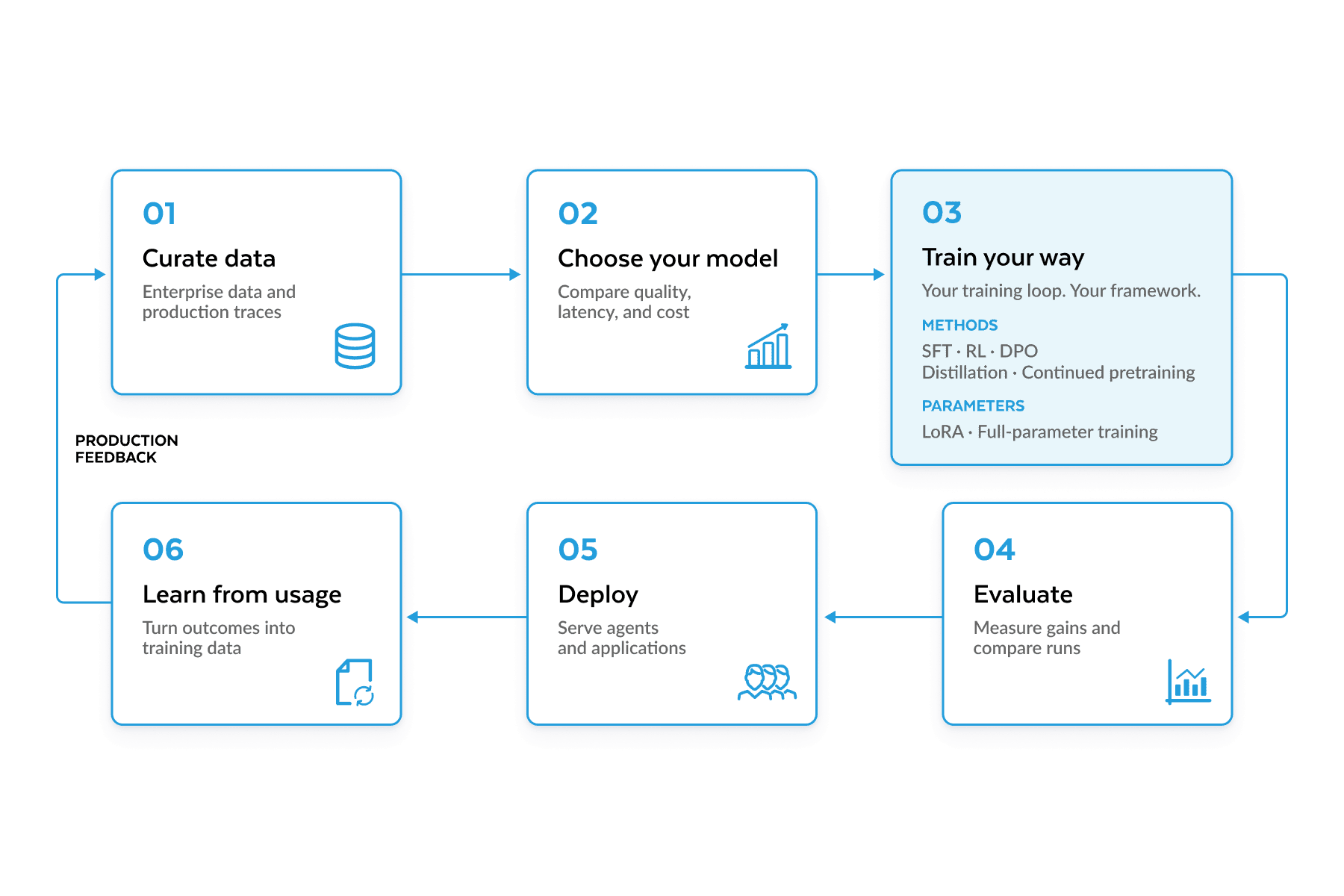

Use serverless APIs to post-train and deploy on fully managed GPUs, so AI teams can focus on model training and customization, not infra management.

Innovate faster with popular models, methods (e.g. LoRA, full parameter), frameworks and custom architectures, plus an open-source backend.

Built-in optimizations such as redundancy elimination, model specific fwd/bwd kernel selection and fusion can help lower training cost by up to 61%.1
Governed training and inference workflow
Data preparation
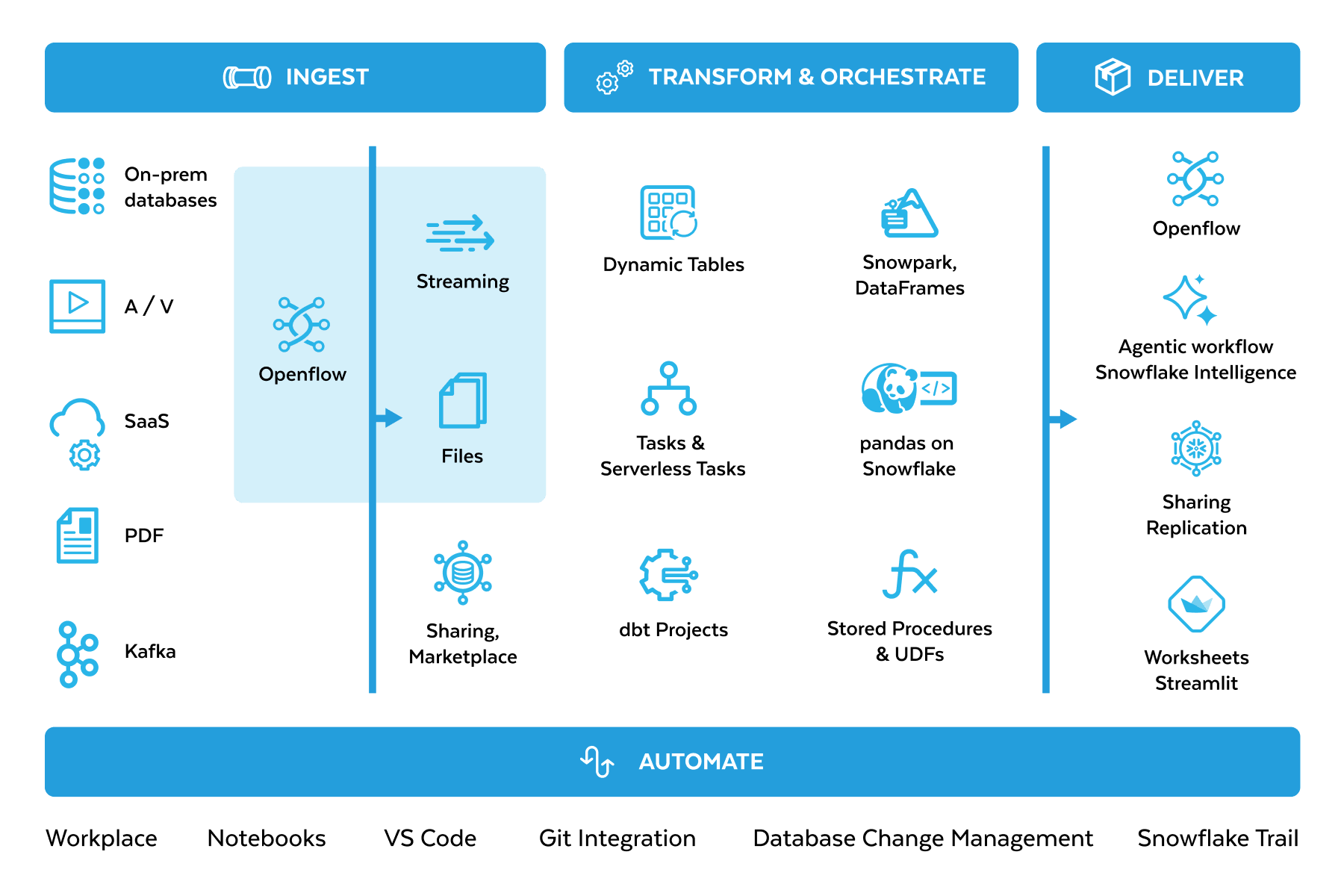
Bring your own training data sets, or use Snowflake’s native data processing and AI capabilities to clean, deduplicate, filter and transform them right where your enterprise data lives. Capture agent traces, logs and model interactions with Cortex AI Gateway.

Post-training
Build on open-weight models like Qwen, GLM or Gemma with a complete set of post-training capabilities, from supervised fine-tuning and reinforcement learning to distillation and continued pre-training, with both full-parameter and LoRA-based approaches.
Evaluate and deploy
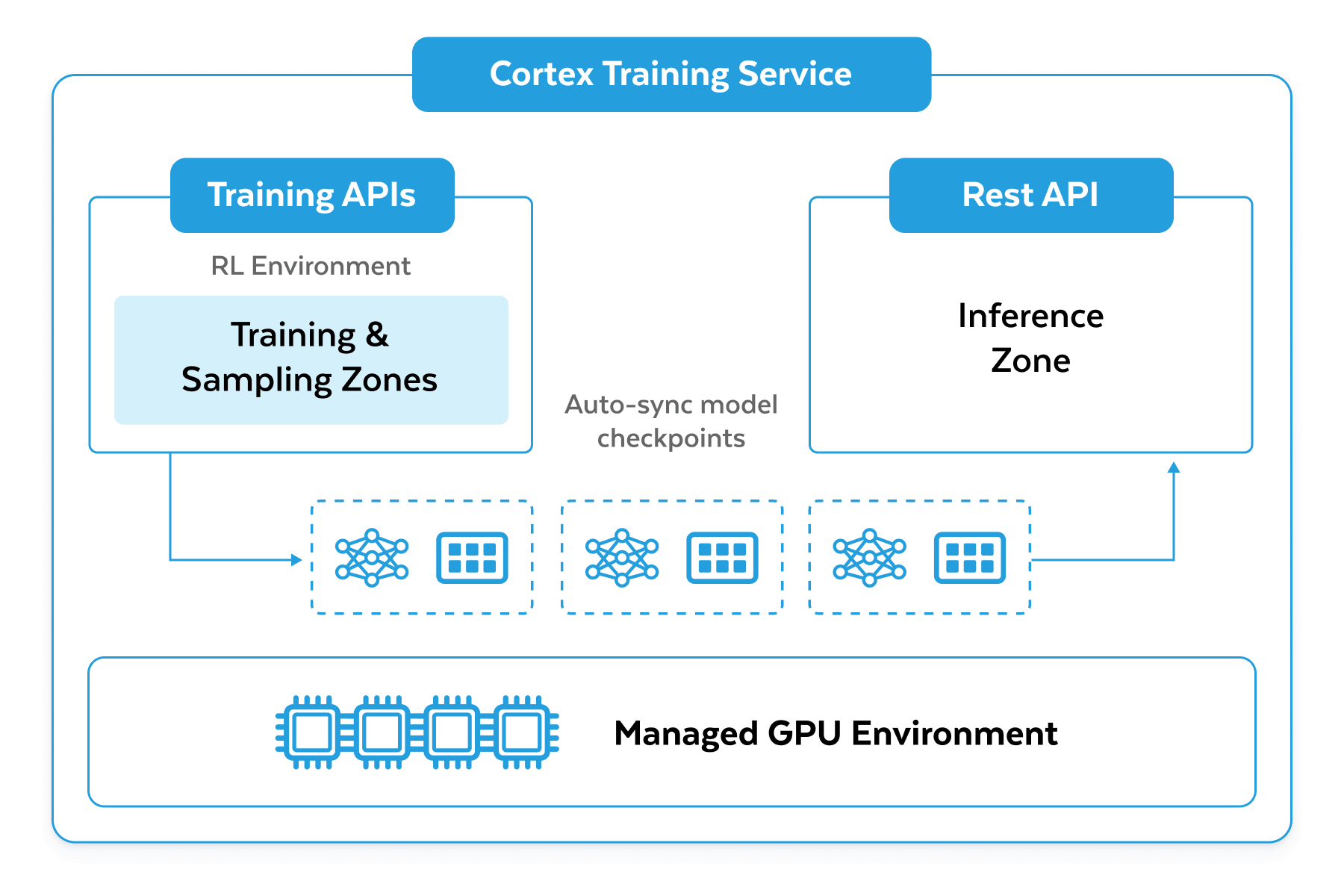
Load post-trained models for batch inference or deploy them as REST API endpoints for evaluation, testing and agent development. During production, create OpenAI-compatible inference endpoints backed by dedicated GPUs.
Execution modes
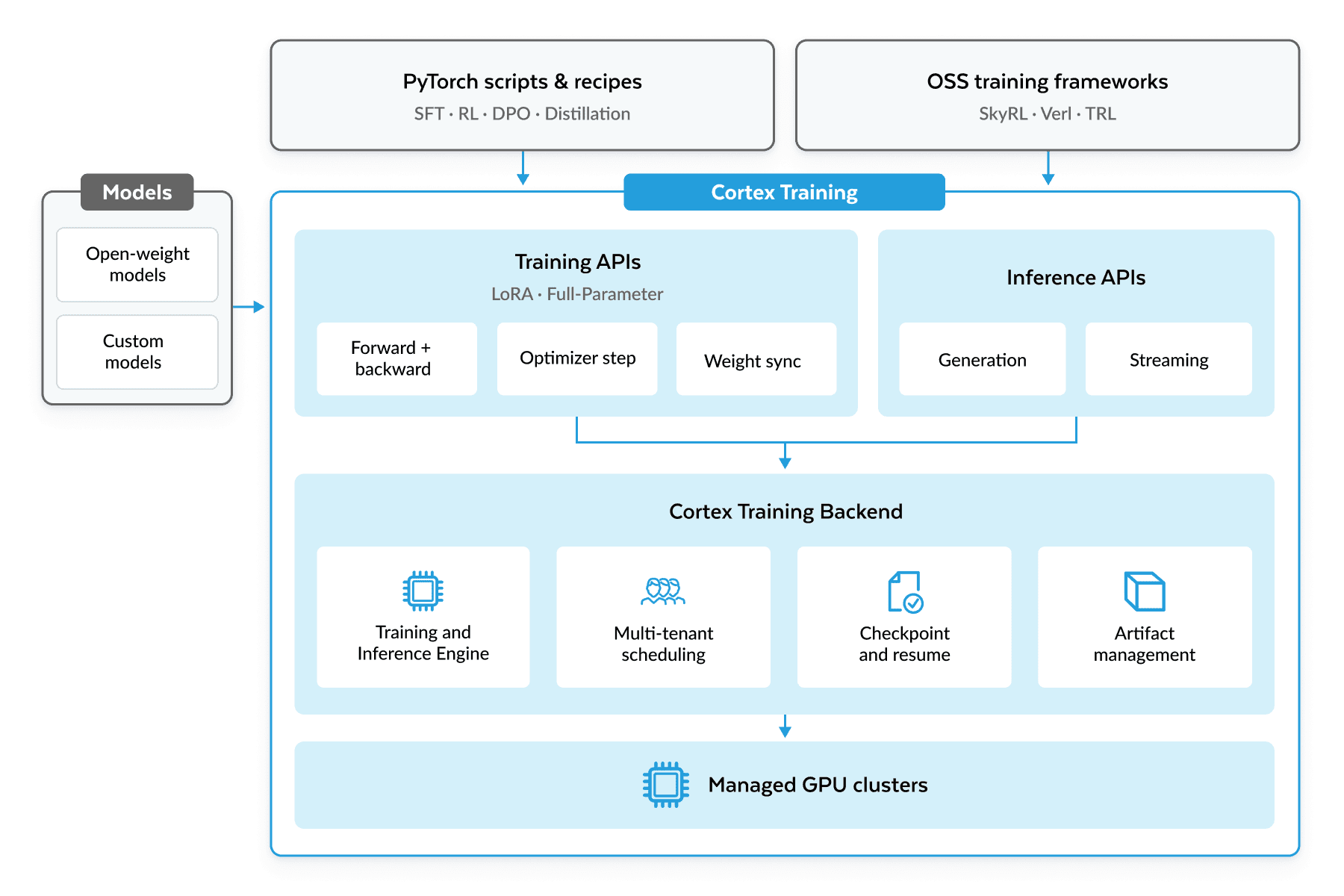
Bring existing scripts built with popular open-source SFT and RL frameworks.
REST API endpoints support weight synchronization, forward and backward passes, optimizer steps, generation, inference and evaluation workflows.
The serverless runtime executes distributed training and inference jobs with Snowflake optimizations that provide up to 61% lower cost.1
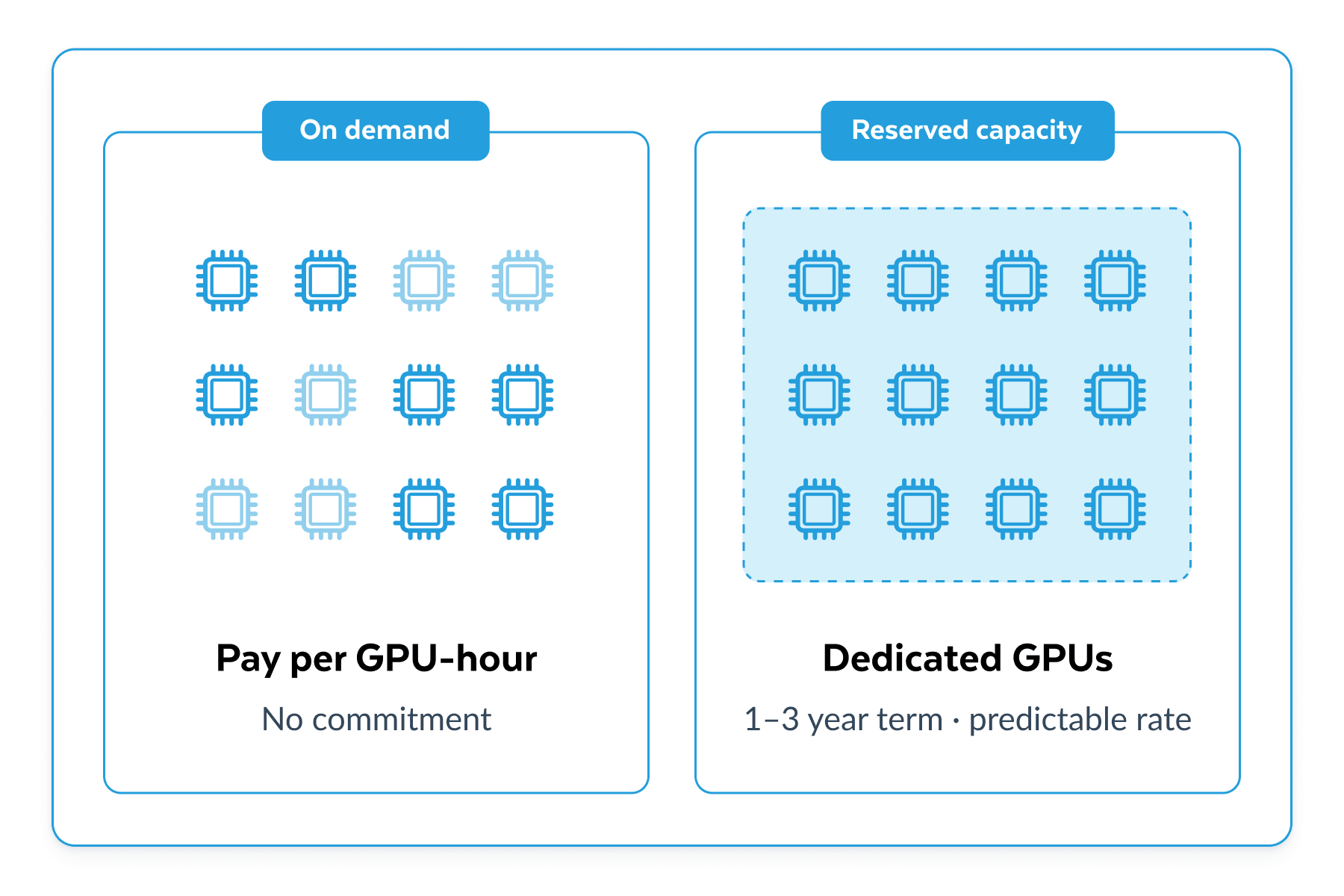
Pay for the GPU hours you use instead of holding idle capacity while non-GPU parts of your pipeline run.
Cortex Training
Answers to common questions about fine-tuning open-weight models with Cortex Training.
As access to frontier models becomes commoditized and costs continue to rise, companies are increasingly adopting open-weight foundation models such as Qwen, GLM, DeepSeek and Gemma for greater performance, control and cost efficiency.
Open-weight foundation models are generic out of the box and need to be customized to a company's specific domain, data and budgetary needs.
Enterprises are looking to have full self-determination and control over their own artificial intelligence tools, data and infrastructure, resulting in greater interest and adoption in open-weight models.
Fine-tune when prompting and retrieval stop improving accuracy, when you need consistent output format or behavior, or when a smaller tuned model can replace a larger, costlier one. Retrieval is still the better fit when answers depend on information that changes often.
LoRA trains small adapter layers on top of frozen base weights, so it needs less GPU memory and runs faster. Full-parameter fine-tuning updates every weight, which costs more but can lift accuracy further on demanding tasks. Cortex Training supports both.
Cortex Training supports a curated set of open-weight models, including the Qwen3 family. See the supported models list in the documentation for current availability.
