In Practice • 6 MIN
The work an AI agent can’t do is your next design brief
When an AI agent hands a problem back to a person, the work isn't over. For Snowflake CIO Mike Blandina, that handoff is also a chance to improve what the agent can do next.
Overview
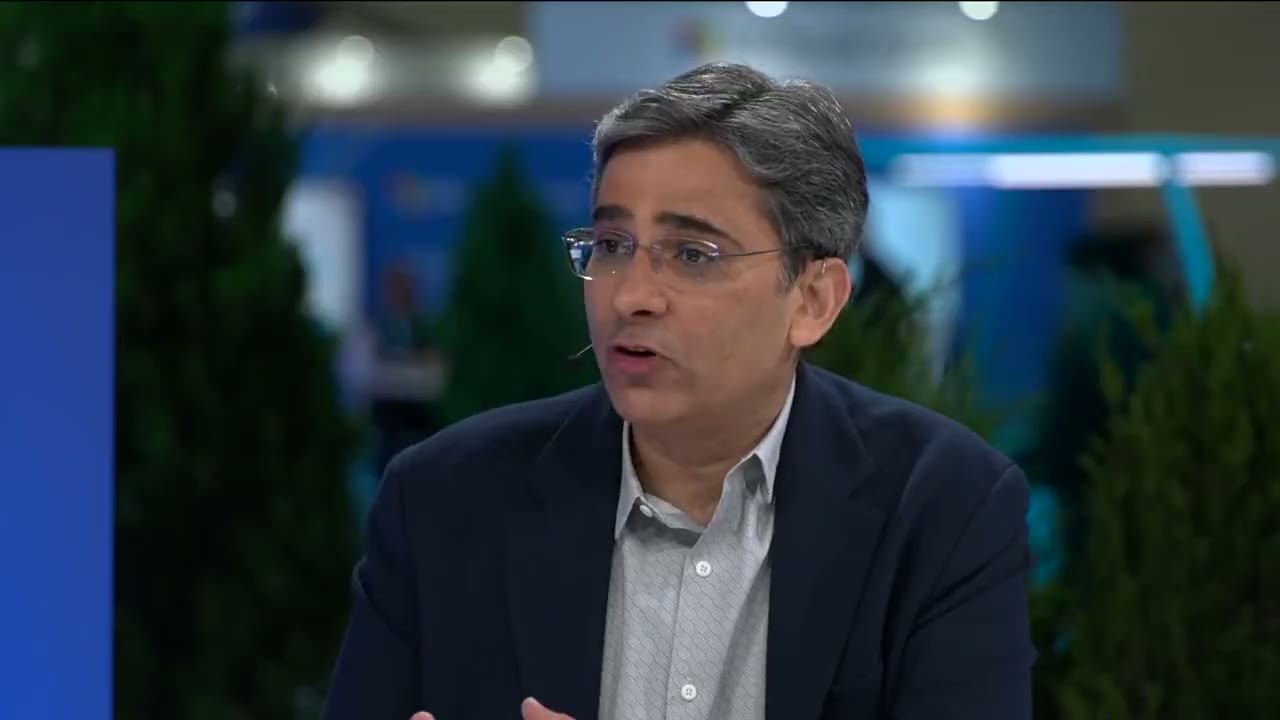
An IT-support question lands in Slack. An agent answers — or a person steps in when it can't handle the problem. For Mike Blandina, CIO at Snowflake, that division of work gives the team something to build on: the questions the agent still can't answer.
“Where the human gets involved is when [the agent] can't do something. We learn from when it can't do something. We add to the agent and then roll that back out.” Mike Blandina, CIO, Snowflake
Keeping a human in the loop takes on a different meaning when the agent handles routine execution. In this conversation with Data Cloud Now’s Ryan Green, Blandina connects that shift to practical choices about where to start, what to keep experimental and how much model a task really needs.
They cover:
Where people enter the workflow when agents take on routine IT support
Which use cases to deliver now — and which to keep as proofs of concept
When a simple task calls for a different model choice
Mike Blandina: One of the things we're providing and we've talked about at this show is really our control plane. It's this idea of how do I manage the models? How do I manage the cost of tokens? Not overusing a really expensive model to do a really simple thing, right? And also taking some of what people are doing with an LLM today, like trying to understand the difference between the same piece of data and three systems. They're asking an LLM to do that when our Horizon catalog can do it for them. And you're not shipping that off to an LLM to burn tokens with it.
Ryan Green: Hello, everyone, and welcome back to Data Cloud Now. We are currently in Sydney, where I'm now delighted to be joined by our CIO, Mike Blandina. Mike, such a pleasure to sit down with you. The buzz and energy is absolutely amazing in here.
Mike Blandina: Yeah, it's terrific, isn't it? It's so exciting to be on the road again and meeting with customers and just got done doing a keynote on stage. It was a blast.
Ryan Green: Well said, you just came off the main stage here at Sydney at the World Tour. What were the highlights and what excites you most about where Snowflake is going in the APJ region specifically?
Mike Blandina: I think we've hit a sweet spot in a number of industries and we're providing the right capabilities around governance, security, trust, that's really laying a foundation on top of AI with our data cloud that is just really sitting well with people and they understand the value of it.
Ryan Green: I absolutely love it, Mike. And I want to dive a little bit deeper into your role as CIO and a reoccurring theme this year is that AI is a business strategy fueled by data, not a technology initiative. As CIO, how do you keep AI investment anchored to business outcomes rather than experimentation for its own sake?
Mike Blandina: Well, I think one of the things you have to do is we definitely move past the proof of concept stage in AI. We're deep past it at this point. Yeah, and so the idea now is really to take a bunch of repetitive use cases and go solve them with AI.
Ryan Green: Oh, well said.
Mike Blandina: Take a couple of really complex ones and try them as a proof of concept, but deliver on the smaller, simple ones to gain momentum, right? And we see a lot of customers doing that. We've done it. It's a good road to success. You build knowledge and understanding about how to best build these use cases. But I encourage people to jump out, get the really repetitive use cases, get the human in the loop, but out of the main driver, let the agent drive the work, let the agent drive the workflow, and get some of those knocked out really quickly.
Ryan Green: No, very well said. And I love those key takeaways for the audience. And similarly, Mike, how is the role of IT and engineering teams changing as agents handle more of the routine execution, specifically as your function as CIO?
Mike Blandina: In the long world ago of a year ago, an IT ops person would be answering Slack messages. Right. We now have an agent answering Slack messages, right? And the IT ops person gets involved when the agent can't handle the problem, right? And you get better at that. So we started, we were at like 40% of the questions. We're now our agents answering 60% of the questions. We'll get up to 70, 80. And where the human gets involved is when it can't do something, we learn from when it can't do something, we add to the agent and then roll that back out.
Ryan Green: And Mike, as more users and more data flow into the platform, how do you keep cost, quality and security under control at the same time?
Mike Blandina: One of the things we're providing and we've talked about at this show is really our control plane. It's this idea of how do I manage the models? How do I manage the cost of tokens? Not overusing a really expensive model to do a really simple thing. So use case-based model management and also taking some of what people are doing with an LLM today, like trying to understand the difference between the same piece of data and three systems. They're asking an LLM to do that when our Horizon catalog can do it for them, and you're not shipping that off to an LLM to burn tokens with it.
Ryan Green: No, very well said, and I love that practical advice. Now, let's take a step back and examine the enterprise as a whole. How do you design for cross-functional workflows so data isn't trapped in departmental silos?
Mike Blandina: Well, I think one of the things you need to do is we all have a sprawl, right? Every enterprise has a sprawl, including Snowflake. We're a younger company, maybe it's a smaller sprawl than others, but you really want to build your controls, your AI controls into Snowflake, into the control plane, including things that are outside of Snowflake. So you don't need to move that data, but you can have metadata about it. You can have catalog information about it. You can have contextual information about that. So when you pull it in from various systems, your AI is acting consistently across those rules.
Ryan Green: I love that consistency, and I always enjoy our sit-downs. Mike, thank you again for making the time. Before we go, what is your primary focus and why for the remainder of 2026?
Mike Blandina: You know, our primary focus is to continue to build content into our tools. So more skills for our customers, more sample applications. My team has done so much with Snow on Snow and we're moving that into the AI realm. And so we want to show customers how we do it internally. They can template that, but they can reuse some of what we've done. Much of what my team is doing now is making it into the product as base skills. And I think when you see that, it allows companies like Westpac to get up and running really, really fast because we built some of the basic stuff and it's already in the tool and they don't have to rebuild it.
Ryan Green: Well said, Mike. I can't wait to see what comes next. Thank you so much for sitting down with me here in Sydney.
Mike Blandina: Yeah, it was a pleasure. Enjoyed it.
Ryan Green: And for the audience watching, I'm Ryan Green. Thank you so much for tuning in. We'll see you next time.