The Reality Check • 12:40
What if your weakest channel is just your worst-measured one?
Audio holds a big share of media time and a sliver of ad budgets. The usual explanation is that it doesn't perform. Lizzie Collins of SiriusXM Media says the models were looking in the wrong place.
Overview
Measurement standards built for display and video assume a click, and audio rarely produces one. Its effect is what Lizzie Collins, Senior Vice President, B2B Marketing and Ad Innovation at SiriusXM Media, calls "an attitudinal moment": hearing about a product for the first time, or falling for it because your favorite podcaster told you to try it.
A year ago, advertisers looking at their marketing mix models would tell her audio just wasn't doing well. Then they fed those models organized exposure data showing who heard the ad, where they lived and which creative ran. The impressions had been undercounted, and reach and frequency were off. At Cannes Lions, Collins tells Snowflake CMO Denise Persson what those advertisers found once they could finally see it.
"If the data in is not organized, the data out is not going to be organized." Lizzie Collins, Senior Vice President, B2B Marketing and Ad Innovation, SiriusXM Media
In this conversation:
Why a format with 30% of media time gets less than 10% of ad dollars
What changes when exposure data finally reaches the model
Why the celebrity host read is no longer the only way to buy a podcast
How agentic co-piloting could bring back the long brainstorm
The inbox habit that turns her read file into a personal podcast
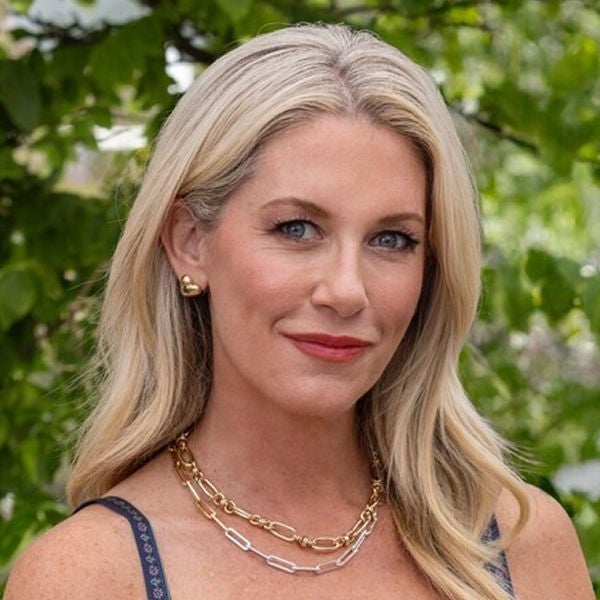
Denise Persson: Welcome to the CMO Blueprint. This week we're at Cannes Lions. I'm excited to sit down with Lizzie Collins, Senior Vice President of B2B Marketing and Ad Innovation at SiriusXM Media, the advertising arm of SiriusXM and the largest digital audio advertising ecosystem in North America. Wow.
Lizzie Collins: Crazy.
Denise Persson: You did well. That was a lot.
Lizzie Collins: That was a lot.
Denise Persson: I'm so excited to sit down here with you today, Lizzie. You spent 20 years building Pandora and now SiriusXM Media. You know so much about the audio industry. What drew you to the industry from the beginning, and why are you still excited about it?
Lizzie Collins: Well, I think what draws you to anything is usually the team. Tim Westergren, who was the founder of Pandora — I just fell in love with his vision, with his mission. You have to remember, this is pre-iPhone when Pandora was coming onto the scene to say, "Can we make a personalized experience on the internet?" This is no mobile. And it completely changed the face of what it means to listen to radio, to listen to music. So I just loved the idea of him inventing something that didn't exist.
I started at Pandora. I was the very first salesperson. Oh, that was rough. That was rough. To be selling something that no one understood. And audio had only ever been radio. So this idea of dynamically inserted advertising, impression-based media, all the things that we know to be just normal today, was completely new.
Denise Persson: You truly built an industry from scratch.
Lizzie Collins: Yeah, so you had to believe in the team. You had to believe in the team. And now, 20 years later, I'm still in audio. People ask me why. It's the team. We have the most amazing team at SiriusXM. So it's been a long 20 years, but a really fun one.
Denise Persson: You've done so much. You've actually hosted your own podcast as well.
Lizzie Collins: I was OG in the podcast space.
Denise Persson: How was that? And what did you learn that is helping you today?
Lizzie Collins: Well, gosh. It was called Lady Space, so if you want to look it up, go for it. I just felt like there wasn't enough of a voice out there of working moms, and shuffling everything you had to shuffle, and also being an executive, and just sort of talking about all the things we talk about but don't show up in your normal executive profile. So it was just fun. A girlfriend of mine who was in venture capital [co-hosted]. We had a really fun run, but it's hard to do everything. So no more Lady Space for now.
But I just loved storytelling. I think that's at its core what drew me to podcasting. And I think what draws all creators to podcasting today is — it's great to be on social media, it's great to be posting everything that's great about Cannes, but to really tell a story and to get into some subject matter that you believe in, the podcast format still does that best.
Denise Persson: And also, we have more time for podcasts as well. I spend more time on podcasts than any other media myself.
Lizzie Collins: Like the average American — average, frankly, citizen in the world today — where so much growth is happening in audio because of that trend. You want to go deep on subjects. You want to do it while you're moving around. You want to multitask. And so we've seen significant growth in audio even in the last five, six years without really any new device or new moment in the world of technology. It's just been about consumers loving the content they're finding in this audio — I don't know. It's not a renaissance. It's just really having a moment where everyone's paying attention.
Denise Persson: It's so hard to predict the future right now, but what do you see as the big predictions for the world of audio moving forward?
Lizzie Collins: I think it's twofold. I think we're going to continue to see diversification of storytelling. Anybody can grab a mic. Anybody can tell their story. We will continue to see creators gravitate to this format because they feel like they can go deeper with their audiences. So that's sort of on the content side.
On the advertising side, I do believe the spend is going to catch up. The statistic that is very well understood by anyone in the audio space is that 30% of all time spent in media is with audio, but less than 10% of advertiser dollars come into this format.
And that is because it is hard to take the sort of legacy measurement standards of display, of video, and bring them into audio, because you're not clicking, right? You're having an attitudinal moment most likely with audio, where you're having awareness for a product you're hearing about. You're falling in love because your favorite podcaster is telling you you must try this product. And we can't capture how you're feeling and how you're processing that in a click.
So where we sit today, with the ability to take all of the data we see — we see one in three Americans across SiriusXM Media every month; AdsWizz, which is our technology layer, touches the bulk of the United States and international population in terms of serving ads. So think of all those data points. Being able to leverage a partnership like we have with you guys to organize all that data and finally effortlessly get it to advertisers, allow them to pull it into their workflows, I think is going to finally get us where we need to be on spend.
Denise Persson: When I talk to many of my peers now in B2B, we're all hearing more and more that they're going to invest in podcast advertising and sponsorships. I think we're going to see a lot more B2B marketing really moving towards audio as well.
Lizzie Collins: I think you'll see a diversification of advertisers. I think we all remember the beginning years of podcasts, where it was the same mattress ad over and over and over again. Well, what those direct-to-consumer brands found is value in the podcasting format. But they were early.
The blue-chip brands, all of the big enterprise brands, and even just any brand, frankly — because there's enough scale — can buy locally into these shows. You don't have to buy the whole show anymore. In fact, our network offering allows you to buy a collection of shows. You can buy just LA, for listeners in LA. There's enough scale now. So that changes the game in terms of advertisers that, A, can come into the space, and then, B, that will see value from it because of the measurement that we'll be able to provide for their agencies, or into their workflows, that will sit alongside social, will sit alongside display.
Denise Persson: You talked about the partnership we've had for many years now. We're very excited to be working with all of you. What can advertisers do today thanks to the data infrastructure you have at SiriusXM?
Lizzie Collins: Our partnership has been great. A year ago, we would walk into an advertiser's office, and they would be leveraging an MMM model, and they would say, "Gosh, audio's just not doing well." And with our partnership with you, we've worked so hard to organize our data so that we can give them exposure data — on which users was your ad exposed to, where did they live, which piece of creative was delivered to this end user — and organize it in a way that they can actually pull it into their models.
They're now seeing that they were counting audio wrong. They were often undercounting impressions. They were often attributing exposure files, or exposure, to audiences that weren't exposed, or the reach and frequency was off. So all of those data points impact an advertiser's return on ad spend. If the data in is not organized, the data out is not going to be organized.
So it's been a great partnership. You're like our closet organizer. And so finally those advertisers are saying, "Oh my gosh, we're so under-spent in audio." We were completely misreading the value of the spend — and then also learning things like which shows were underperforming or overperforming, audiences, what is the right reach and frequency.
Denise Persson: The segmentation you can do today is completely different than a few years ago.
Lizzie Collins: 100%.
Denise Persson: And again, you mentioned 30% of media is really audio today. I think audio is just going to grow and grow, especially with probably thousands of new podcasts coming out every single day. What has been the biggest change in how advertisers think about podcasts specifically?
Lizzie Collins: I would say it all started with the host read, and you felt like if you were in a show, you had to have that endorsement. And now advertisers are really seeing the value of the medium overall: announcer-read creative, showing up at live shows with creators, buying across many shows, buying just at a genre level, or, like I was saying, from a geo-targeting standpoint. Those are all required attributes to really make a very large marketplace valuable for both creators that want to make money and advertisers that want to see value.
So I think it's the diversification of what you can buy in podcasting, and pulling away from just — look, the host read's amazing. It's great if you can have Alex Cooper or Conan O'Brien or SmartLess voice your ad, but that's not what every advertiser can do with every campaign. It's a very high-value and often expensive asset to invest in.
Denise Persson: Exactly. I really enjoyed talking to you, and I have a few questions here to end our conversation. Podcast, music or audiobook?
Lizzie Collins: Oh gosh, for me? You know what? I am cheating these days. I take all the written word and turn it into an audio podcast just for myself. So, like, this briefing doc that you probably got coming here — I turn that into audio, and then I just listen to everything that comes into my inbox. I turn almost everything in my inbox into audio. So I'm creating my own podcast just to get through my read file. So that was me coming into Cannes, but me leaving Cannes will be all about music. I'm going to Saint-Tropez for the weekend, so we will be all about music.
Denise Persson: What is one marketing trend you are watching closely right now?
Lizzie Collins: Co-piloting. Like, the hands-on keyboard — getting away from all of the minutiae tasks that marketers often are weighed down with in terms of analyzing data, understanding leading indicators of success. I think AI and just agentic co-piloting is really going to free us up to be more creative, to be able to get back into long brainstorms like we all used to do 15, 20 years ago, before we all got stuck in spreadsheets. I'm very excited for that.
And then I'm excited for salespeople, because at my heart — I'm sure at your heart, too — we're storytellers and salespeople, and we want to be out with our customers. And the last 10 years has felt like we've all been a bit chained to the analysis of the data.
Denise Persson: But even agentic co-piloting is becoming audio as well, right? With natural language. You don't need to type anything more. You can just talk to your co-pilot.
Lizzie Collins: I hear of these friends of mine who just have pedals under their desk that enable a lot of their co-pilot activities with, like, their Claude Cowork, and, like, I need to take a week off just to re-set up my entire system, my whole office, to be like, how many co-pilots can I turn on at once?
Denise Persson: Twenty years in the audio industry — what's the piece of career advice you received early on that still guides you today?
Lizzie Collins: Gosh, I just love your people. I have had the greatest team — I mentioned it at the beginning of the show. I would not be in the same place for 20 years, because the job — let's be honest — the job's been a hundred jobs in 20 years. But many of the team that is here with me have been with me over a decade. We've laughed, we've cried, people have had babies, people have been married and then married again, and it's just the people. It's the best part of this industry.
I think that's what I like most about Cannes, too. You walk the street and you run into someone that I did a deal with in 1999. How amazing is that, that this industry still attracts some of the most creative, thoughtful, empathetic, just amazing people?
Denise Persson: I agree with you. It's all about the connections you make. The friends you make for a lifetime.
Lizzie Collins: For a lifetime.
Denise Persson: We've all seen each other live a lifetime, I feel like, at this point. If you can say you were in digital in the '90s, you know where all the skeletons are buried.
Lizzie Collins: I was indeed in the '90s, yeah.
Denise Persson: I, too. Thank you so much, Lizzie, for joining me on this CMO Blueprint today.
Lizzie Collins: Thank you. Lovely to be here.