The Reality Check • 9 MIN
Attackers are getting AI. You have a breather, not a reprieve.
Frontier labs are releasing cyber models, and attackers will use them. Snowflake's Chief Security and Trust Officer Mayank Upadhyay on how security leaders should maximize this closing window of opportunity.
Overview
Security teams now face AI from two directions. Inside the company, leaders hesitate to deploy agents because they can't be sure what an agent might do with their data. Outside it, attackers have cyber models that can poke and prod at systems and surface weaknesses that were always there but never exposed.
"You're going to be attacked at the speed of AI; you have to defend at the speed of AI. And you can't possibly do that with the human workforce." Mayank Upadhyay, chief security and trust officer, Snowflake
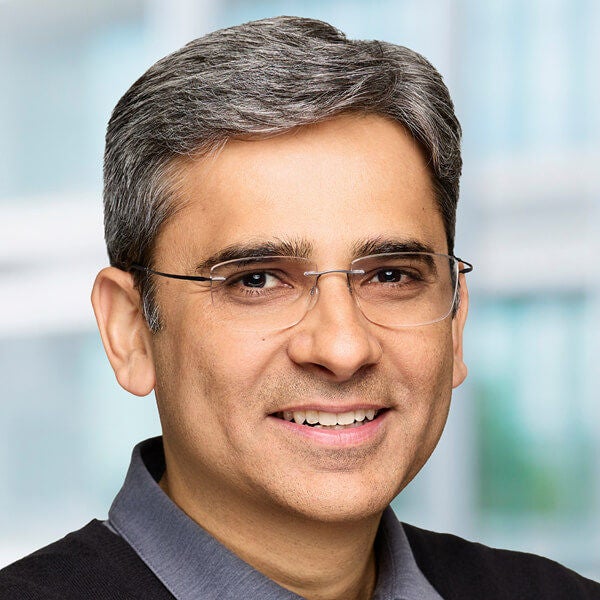
Both threats move at machine speed, and Mayank Upadhyay doesn't think people can keep up alone. He spent 21 years building security at Google before becoming Snowflake's Chief Security and Trust Officer. His answer is to put AI on defense now and use the window before adversaries catch up to find your own vulnerabilities first. That includes the ones inside: the access employees quietly accumulate over a long tenure, which nobody ever takes back and which an agent will poke at the moment it arrives.
In this conversation:
- Why he says every person on a security team now has to 10X themselves
- What he'd do with the breather before attackers get the same AI you have
- Why he thinks it's only a matter of time before open source models can do it too
- How a security team stops being "the department of no"
- What agents uncover about the permissions your people didn't know they had
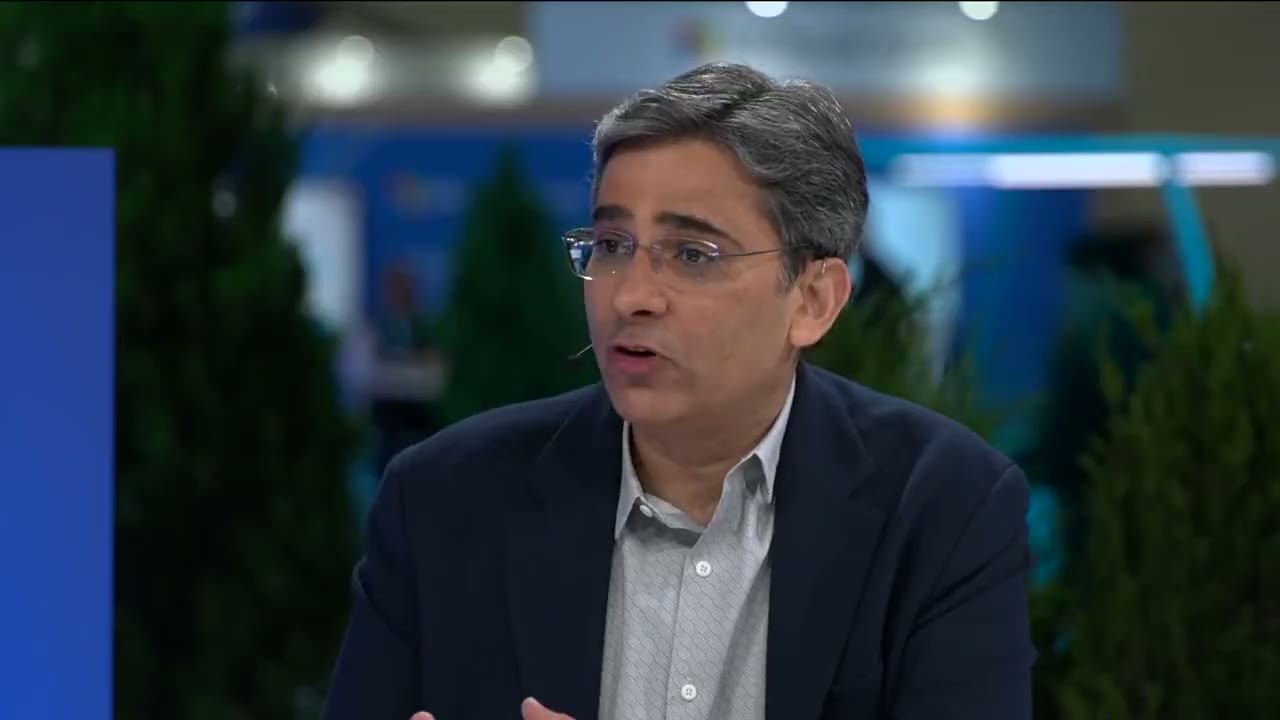
Ryan Green: Hello everyone and welcome back to Data Cloud Now. I'm currently in San Francisco where I'm delighted to be joined by Mayank Upadhyay, Chief Security and Trust Officer at Snowflake. Mayank, such a pleasure to sit down with you.
Mayank Upadhyay: Thank you, Ryan. It's a real pleasure to be here myself. This is my first summit and the energy is phenomenal.
Ryan Green: We have 20,000 of your closest friends walking around and really looking forward to diving in. For the audience watching, you are relatively new into your role as CSTO. Tell us a little bit about yourself and how you ended up at Snowflake in your current position.
Mayank Upadhyay: Yeah. It's true. It's my first summit, as you know. I've been here about four and a half months after spending 21 years at Google, building most of their consumer and enterprise security stack. I had a blast there, but I realized this company was snowflake, is at the center of the AI and data revolution, and this was definitely the place to be. I had worked with some of the folks before in a past life, and I started talking to them and realized every single conversation was even more energizing So before I knew it, I decided to move over. And I'm definitely having a blast here.
Ryan Green: I absolutely love it. And let's dive in. I want to start with an examination of the current landscape and environment within cybersecurity, as agentic systems remain a primary focus for just about every organization. How is cybersecurity and threat detection evolving to keep the bad actors at bay?
Mayank Upadhyay: Yeah. The way to look at it is there's two sides of the same coin. You can take the inside-out view and the outside-in view. From the inside-out view, people are afraid to deploy agents because they don't know if something might go wrong and these agents might actually exfiltrate data or do something destructive. On the outside-in view, there's a whole lot of people who now have access to cyber models who are able to poke and prod at your systems from outside and find weaknesses which might have always been there. but were unexposed until now. Given that all of this is happening at the speed of AI, it's really important to also evolve your defenses to be using AI so you can fight back at the speed of AI. That is the big thing going on right now in the cybersecurity world and it's super exciting.
Ryan Green: I love that advice and that macro perspective. As you mentioned, in an ever-changing world, if you're not innovating, you're very much leaving your organization vulnerable. How is your team leading from the front in order to safeguard the AI Data Cloud ecosystem?
Mayank Upadhyay: Yeah. We had some really cool launches which just happened at Summit. There's all the way from protecting the LLM to having what's called input-output prompt injection protection, something really cool and innovative. It doesn't add any latency to the requests you're making. We're using an LLM ourselves to tell if your LLM is being attacked. That was one part of it. The second part of it, when you look at stuff out surrounding the LLM, what's called the harness, there's a number of concepts such as identity and permissions. We launched something called agent identity. It's really important to be able to tell, is this Ryan doing something or is this Ryan's agent doing something? Because an agent is basically like an intern. You give it a credit card, you say, go buy me this pair of shoes, it may come back with a car. So you have to set these very tight constraints on what agents are allowed to do. So that's the stuff that goes into the harness where the agents are built. And third and foremost, it's the data, the foundation. The data platform is so strong at Snowflake with everything we have around governance. You have to start on that really, really solid foundation to build the rest of it. So the team is innovating in all three of these spaces and it's been amazing to watch the momentum.
Ryan Green: I love those examples very much breaking down the technical to make it very relatable to the audience. Thank you for that. Now let's dive into the details and let's get into the tactics for the audience watching who are very much eager to remain at the forefront. What consistent steps or say hygiene should they be doing in order to best safeguard their most valuable assets?
Mayank Upadhyay: Yeah, look, I think the most important thing you can do right now is to take an automation mindset. As I said before, you're going to be attacked at the speed of AI. You have to defend at the speed of AI. And you can't possibly do that with the human workforce. So every single person has to 10x themselves. So I'm pushing my team very hard, and I'd encourage every CISO out there to do the same. Get your team to automate as much as they can so you can fight AI with AI. That is perhaps the most important thing you could do. The second thing I might also add is we didn't talk about the weakest chain in the link, which is the human in this. There's lots and lots of interesting things around cleaning up permissions that humans have. When you stay at a job for a very long time, you accumulate a lot of permissions. Nobody ever goes back and takes away those permissions. When you throw an agent into the mix, it's going to poke and prod at every single thing it can, and you may not even realize that you had permission to do something that the agent is going to uncover. So that kind of hygiene, getting to what's called least privilege in the security world is very important right now.
Ryan Green: Very well said. Thank you for that. And I want to shift to some exciting news. Snowflake recently closed its acquisition of Natomo. For the audience watching, could you walk us through what Natomo does and why this was the right move for Snowflake and its customers?
Mayank Upadhyay: Yeah, yeah. So a big shift that's happened between last year and this year, we have moved from chatbots where you could just go in and type a query to agents who are actually performing actions on your part. And it's really, really important that two things work out over here. If I'm an engineer, I need access to say, you know, to Jira and I need access to GitHub, but I don't necessarily need access to Salesforce. If I'm a salesperson, on the other hand, I want access to Salesforce. I want access to Slack, but do I need access to GitHub? Maybe not. What started to happen in the enterprises as every single persona interacts with their agents, they have started to wire up something called Model Concepts Protocol, or MCP, to lots of different SaaS apps. And all of a sudden there's like this mushrooming of MCP servers, pretty much bootlegged MCP open source servers that people are running. So as a user, many times they're frustrated because these MCP servers are not reliable, they're not able to get their job done. But as a CISO, there's a sense of, oh my god, this thing is out of control. People are talking to stuff all over the place, and I don't have visibility. So we decided to acquire, we signed our intent to acquire this company in the space called Natoma, which basically makes what's called an MCP gateway. So all these calls are routed through a choke point, and as a user, we give you all the support you want in terms of the MCP servers, which are managed and baked in, so you don't have to run the bootleg version. And as a CISO, we give you complete visibility in who's talking to what. and you can create governance rules around what the sales team is allowed to do, what the engineering team is allowed to do, and make sure that common sense prevails in all of this.
Ryan Green: It's wonderful to hear. Now, let's look at what's next. How do you see the cybersecurity landscape evolving as we enter the back half of 2026?
Mayank Upadhyay: Look, I think continuing to invest and innovate in AI-related security is very important. You're seeing what's called cyber LLM, cyber models coming out from various frontier labs. These cyber models are going to be used by adversaries to attack lots of companies, so I think getting ahead of that curve right now, there's a bit of a breather, so using this time to start scanning your own code, your own surface area in a continuous way so you can find these vulnerabilities with AI and get ready for when the adversary also has access to the same AI and can attack you. um i think it's just a matter of time before open source models get smart enough to do that as well so this is happening i would encourage everybody else just to do exactly what we're doing right now to get prepared for that very well said before we wrap now i want to end on a personal note what are your key priorities over the coming months and why I think, look, on a personal note, you know, I'm still, I'd say, I would have said settling down at Snowflake, but the four and a half months I've been here does feel like a year already. The momentum is just phenomenal. So I want to make sure that we're able to keep up that momentum. I think a security group should not be the department of no. A lot of people look at security that way. I think security is actually an equal stakeholder in innovation. Our job is to create that paved road where you can all sort of move really fast and you've got all the right security guardrails built in. So that is a really high priority for me from converting the security team to being a roadblock to actually being the partner in genuine innovation happening safely.
Ryan Green: I really enjoyed our conversation. Thank you again and welcome to Snowflake.
Mayank Upadhyay: Thank you, Ryan. Real pleasure talking to you as well.
Ryan Green: And for the audience watching, I'm Ryan Green with Data Cloud Now. Thank you so much for tuning in. We'll see you next time.