The Human Factor • 9 Min read
What competing at the Olympics taught me about turning data into decisions
Olympic gold medalist Elana Meyers Taylor on why winning starts before the run, and what leaders can learn from trusting data when it defies instinct.
The work happens before the run
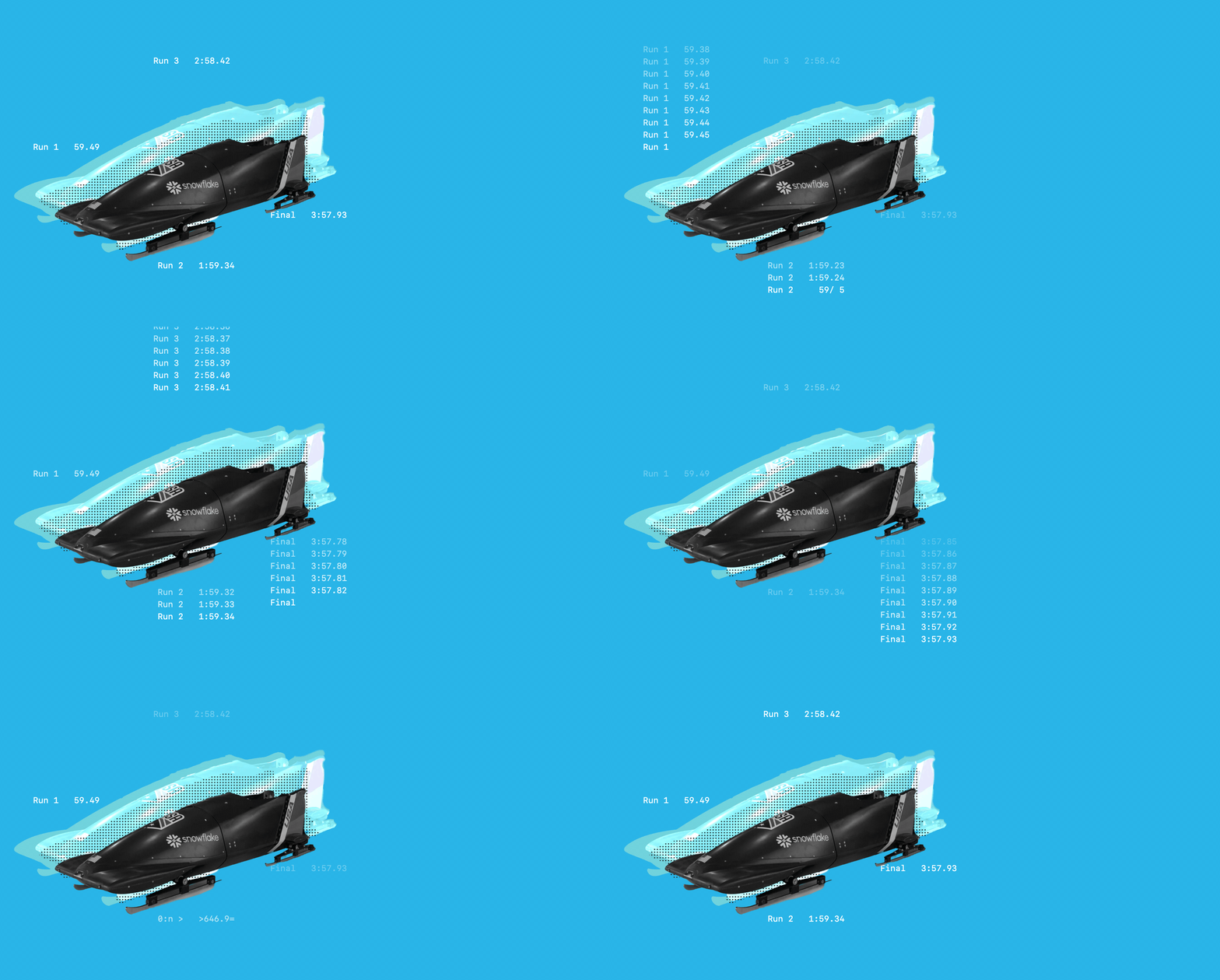
Four-hundredths of a second separated gold from silver in the women’s monobob at the 2026 Winter Olympics. Twenty years of training came down to less than a blink.
By the time we got to that point, we had studied the data, talked through what it meant and made a plan for the track. Once you’re in the sled, you can’t sit there and consult a chart. You’re going 80 miles per hour, trying to process every curve and make adjustments that happen in a fraction of a second.
Once you’re in the sled, you can’t sit there and consult a chart. You’re going 80 miles per hour, trying to process every curve and make adjustments that happen in a fraction of a second.
That’s why we work with the data before we get in the sled. You take it off the ice, analyze it, figure out what you can actually use and then do the best you can with that information when you get on the track.
As I’ve gotten older, that preparation has become even more important. I have less wiggle room and less room for error, so we have to find every hundredth of a second we can.
What instinct misses
When I first started, we relied a lot on our coaches’ instinct. That was hard because the coaches weren’t in the sled with us. They watched from trackside as we moved through the curves and tried to tell us how to go faster based on what they could see.
After a run, I’d try to explain what happened while my mind was still catching up with my body. Most of us could clearly remember only one to three curves on a track that might have 20. We were trying to improve with only a fraction of the run in view.
Data changed that. Now coaches and athletes can analyze every curve, study the start and look at what the competition is doing. We can see the full run together and decide where we need to improve.
Better measurement can bring that same clarity to the equipment. Every time we go on the ice, the driver has to choose equipment and make decisions about sled setup. For years, it was like a gross science: We knew what we’d used before and how it had performed, but the temperature, ice conditions and humidity had changed. We couldn’t compare all those variables at once and know whether the same setup would work again.
Data gives everyone a better picture of what happened, so you can spend your time working on the parts that will actually make you faster.
What the data revealed
At Milano Cortina, the data changed what we were spending our time on. We had focused heavily on certain curves because they looked like the key to winning or losing the race. But when we ran the data, we realized they weren’t the curves making the biggest difference.
For that track, it came down to curves 1, 2 and 4. Once we knew that, we could focus our time and energy on getting those curves right. That’s what made the world of difference.
We found the same thing in the push. A 5-foot-10 brakeman is going to push the sled differently than a 5-foot-3 brakeman. Your body is different, so how you get the sled moving fast is different, too. Data lets us look at those differences and dial in the push technique for each athlete instead of asking everyone to do it exactly the same way.
Everyone involved also had to stay willing to learn. Our head pilot coach has been in the sport for 38 years, and he was willing to understand what the data was showing us. When it showed we needed to make a correction, he was willing to update and change. That was so key.
When data contradicts instinct
Some of the hardest data points were the ones that went against my instinct. At Milano Cortina, the data said I needed to be high on a particular curve. Instinctively, I thought, “No, that doesn’t make sense.” But I had to fight through that reaction.
It’s one thing to have the data available. It’s another thing to understand what it means and be able to use it.
It’s one thing to have the data available. It’s another thing to understand what it means and be able to use it. The data might show that you’re losing half a kilometer per hour through a curve, but you still have to figure out what that means for how you drive it. You have to take that information and translate it into what you actually do in the sled.
That’s where the work is. We can do the analysis off the ice, but once you’re in the sled, you have to trust the work you’ve already done and execute.
Curiosity makes reinvention possible
Nearly 20 years in bobsled have taught me to adapt and stay resilient. You can’t expect perfection all the time. That’s just not possible. What matters is being able to look at a situation and figure out not if, but how.
What’s really helped me do that is curiosity: the willingness to learn and the willingness to see what’s possible. I started bobsled when I was 21, and now I’m 41. I can’t train the way I trained when I was 21. My body has changed, my recovery has changed, and I’ve had to change how I train for the sport every single year. I’m really proud of that.
You have to learn how to look at the data, too. Sometimes there’s so much that it can be overwhelming. That’s why great coaches and staff matter. They help us figure out what’s actually relevant, what we can use, what we can implement and what’s just more noise. Some data becomes noise in the moment even though it still has value. We just can’t use it in practical time.
This past year, we collected data on every track in the world and built that data bank. I couldn’t use all of it in real time during a race weekend because there was too much to process. But when younger athletes come back to those tracks next year, they’ll have more data mapped out.
Data opens the door wider
I’m excited about what AI could do on the equipment side. Every time we go on the ice, the driver has to choose equipment and sled setup based on the ice conditions, humidity and a lot of other factors. For a long time, drivers have relied on educated guesses. You know what worked before, but the temperature is different or the conditions have changed, and you’re trying to figure out whether it will work again.
Hopefully, we’ll put that information into a system that studies what we’ve historically done and recommends the best equipment for those conditions. That can take some of the burden off the driver and take some of the guesswork out of the equation, so we can go into a race more confident in what we’re using.
I’m also really excited about how data can bring more people into sport. Every medal I’ve won has had so many people behind the scenes who helped make it happen, even if they don’t get to hang a medal around their neck. As we collect more data, we’ll need more people to work with it, interpret it and give athletes the information they need. That’s true beyond sport, too: More data creates more ways for people with different strengths to be part of the work and the outcome.
People who are blind or deaf can work with data sets and help interpret that information, too. People who may never compete can still be part of an Olympic medal, the Olympic and Paralympic movement, and the sport I love.
The decision before the decision
Four-hundredths of a second can look like one detail on the results sheet. But it was built on a decision I almost didn't make — the moment I trusted the data over my gut on that curve. That's the part nobody sees on the podium.
Your team has a version of that curve: the number that contradicts what everyone in the room believes. The question isn't whether you have the data. It's whether you'll trust it when it points somewhere you weren’t planning to go.