The blueprint is here. The next move is yours.
The unfiltered playbook from Snowflake's own leaders: how AI drove 37% revenue growth and 38% less marketing spend in 18 months.

Video
Featured Speakers


Video Overview
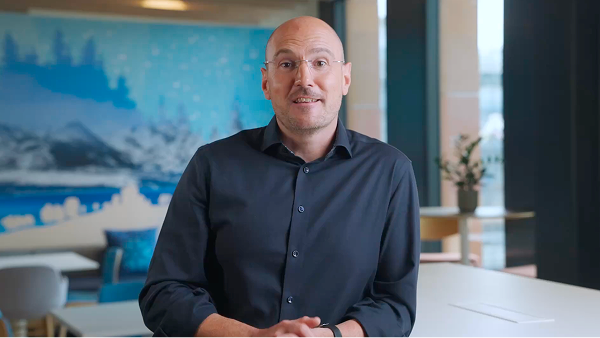
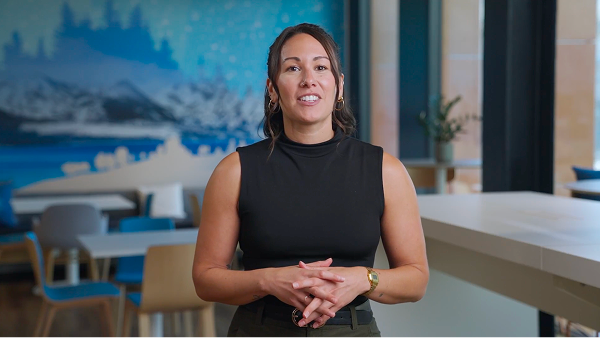
Nicola Tagoe (Line of Business PMM, Snowflake) and Margaux Bouche (Manager, Demand Generation) show how AI changed the way they build campaigns together.
They cover the shift from two-week positioning cycles and data scattered across five tools to a shared Snowflake foundation where PMM and Demand Gen now build in real time. Plus their honest take on the 80/20 rule: AI handles the research and structure. The last 20%, brand voice, bold bets, and the judgment that comes from years in the job, stays with the humans.
Series intro VO: This is the AI Blueprint for Go-To-Market, a five-part series where Snowflake's own marketers and sales leaders show honestly how they use AI day-to-day. No theory, no hype, just what's actually working and what isn't yet.
Nicola: Hi, I'm Nicola and I lead line of business product marketing for EMEA at Snowflake. I own the positioning and messaging for how we bring Snowflake's AI story to the market. And I spend a lot of time working across sales, demand gen and the product teams, making sure that the story we tell is consistent, credible and actually fits the market that we're going after.
Margot: And I'm Margot and I lead the EMEA demand generation team here at Snowflake. My team is in charge of creating fully integrated campaigns that are going to drive awareness and generate pipeline opportunities. To craft these campaigns, we need an understanding of who our ideal customer is, the go-to-market strategy, and the product positioning. And that's exactly why Nicole and I wanted to do this together today, because these campaigns truly work when product marketing and demand generation are joined up together. And honestly, AI has changed the way we collaborate in the past couple of years. Very true.
Nicola: To appreciate what's changed, you have to remember what it used to be like between us. And it was really slow. I'd spend two weeks building out the positioning for one audience by hand. And the nuance of, say, a CFO of financial services or a marketing lead trying to reach consumers, thinking about their actual pressures, the language they use and what keeps them up at night, you know, that was really hard. And the bind for me was, as an EMEA PMM, is that you're covering dozens of markets and industries and different personas. So you physically can't do that in the level of depth you need for all of them. So the honest truth is the further you got from the priority audience, the more the messaging flattened out and you default to something generic enough to travel and hope it landed. And then I'd write up the brief and I'd hand it over to your team.
Margot: And let's be honest, there was a lot of guessing. On both sides, by the way. You were guessing what would resonate well in a given market. I was guessing which segments to push it to. Because just the data on what had actually worked before was living across five different tools that were not talking to each other. So by the time the brief reached my team, we had to interpret it, translate it into channels and targeting, and that took a few more weeks. So there was this constant lag between product marketing and demand generation teams.
Nicola: And a lot of the time, we were just going off of what somebody had remembered working last year. And in all honesty, that isn't really a strategy, is it? It's not.
Margot: So what actually changed is that we now work of the same foundation. All of it lives in Snowflake, from intent data to historical campaign performance. So we're not handing a static brief back and forth anymore.
Nicola: And the clearest example of that for me is our quarterly go-to-market planning. So, you know, where we're working out what we're running to which audiences and for which markets. That shift is that I'm no longer doing my bit and then throwing it over to you. I bring my context, so the personas that we're going after, the signal that I've picked up from sellers and field marketing and what we're backing this water and why. And then Coco pulls all that data straight from Snowflake behind it So things like responses by region, pipeline, win-loss against our competitors. All of that comes back into a first draft with the evidence already baked in, not a blank page. And essentially, I think I've gone from a researcher to an editor. And you're seeing all of this while it's still forming, you know, before it's already set.
Margot: Which is great because what that means is I'm not reverse engineering your intent anymore. We're actually building the same thing at the same time, which is really exciting.
Nicola: So let's talk through how we'd actually build a campaign now. Say we're targeting CMOs in retail and consumer goods in Germany. I set the persona, the region, and the product angle that we're going with. And because the data is already underneath it, what comes back is a positioning statement tailored to what that CMO actually cares about. Things like unifying their customer data across online and in-store, proving marketing ROI to their board, plus a few messaging variants. for us to react to. So my job is now reacting and sharpening and not starting from scratch.
Margot: I don't want us to oversell this because it's not magic. AI tools like CoCo and CoWork are really great at generating the first 80%. So the research, the structure, the variations, but what about the last 20%?
Nicola: That last 20%, that's still completely us. The brand voice, the read on a sensitive market, the bulb creative big bet that we want to take, AI plays it safe by definition. And that's what we want it to do. It's drawing on the data that already exists. But that's where the organizational judgment comes in. It doesn't know how our field teams actually work or that a recommendation that it gives us that looks logical on paper just won't land in practice. That comes from years of experience and being inside the business. But that's exactly why having a human in the loop is not an option. It's the whole point. The tool takes out the grind, you know, of our work and it frees us up for the more creative, strategic work that we actually want to do and that actually cuts through.
Margot: And which is actually why the collaboration matters more now, not less. The tool raises the floor, but your judgment and my read on demand are really what take it from good to great.
Nicola: And we had to give ourselves room to experiment for a bit. You know, honestly, the first few campaigns we co-created in this way were rough. The wrong tone and a couple of outputs just missed the mark completely.
Margot: And in a lot of organisations, that's where it dies. Someone sees one bad output and they jump to the conclusion, AI doesn't work, but what saved us was having a leadership team that gave us the confidence to build, to experiment, be a little bit rubbish while we figured out what good inputs looked like. And culturally, the whole thing only works because we are genuinely willing to be in each other's part of the process and learn from each other.
Nicola: That's a really good point. You know, it was the blurring of those lines and the collaboration between our teams that was the real unlock. It wasn't just the tech, it was the trust. And on the data side, our rule is simple. No number goes into a campaign until a person has verified it against a source we trust. I let it do the grunt work, you know, pulling research, structuring a brief, drafting the first version of a positioning statement.
Margot: Yes, completely. And it's exactly the same on my side with the numbers. That trust in the output is really key to make the AI work. As you know, we are using different skills in Cocoa based on specific marketing roles. You use a product marketing skill to craft messaging variants that align with our brand tone of voice. I have a demand generation skill to analyze full funnel metrics for my campaigns. And I've shared feedback with relevant teams on how to improve the skill I'm using and make it work harder for me. Because as we train AI with our input, it gets better over time so that we can trust what we're getting from AI for our specific use cases. The tool drafts, but the two of us own what actually ships with our name on it. So if you think about what soft skill matters most, I would say it's not the technical stuff. Everyone in the team adopted the tools in the fortnight and that's great. Not just the tech savvy marketers, because with Snowflake Cowork, you have this ability to talk and ask more of our data in natural language with no technical skills are needed. So for me, the key skill is about knowing which signal to trust and which segment a message will actually move, which is a demanding skill you build over time, right? But I'm curious now, what do you think is the most valuable skill?
Nicola: Yeah, for me, it's sort of similar. It's about the editorial judgment when there's more than one way to say something. I know almost immediately which one lands in this market versus another market. And that's the thing. Everyone sort of assumes that the skills that we need now is prompting the AI, prompt engineering. But I don't think that's necessarily the case. It's the judgment to know what's right, which only you can build by being in a job for a number of years. Two years ago, I'd have guessed the complete opposite.
Margot: That's one piece of the blueprint. The rest of the series covers campaign creation, digital mix, account targeting, forecasting, and sales personalization. Watch the next one. And if you want to see how this runs on your own data, the link below is where to start.