Snowflake Postgres vs. Databricks Lakebase
Snowflake Postgres is production-ready from day one. Databricks Lakebase is not.
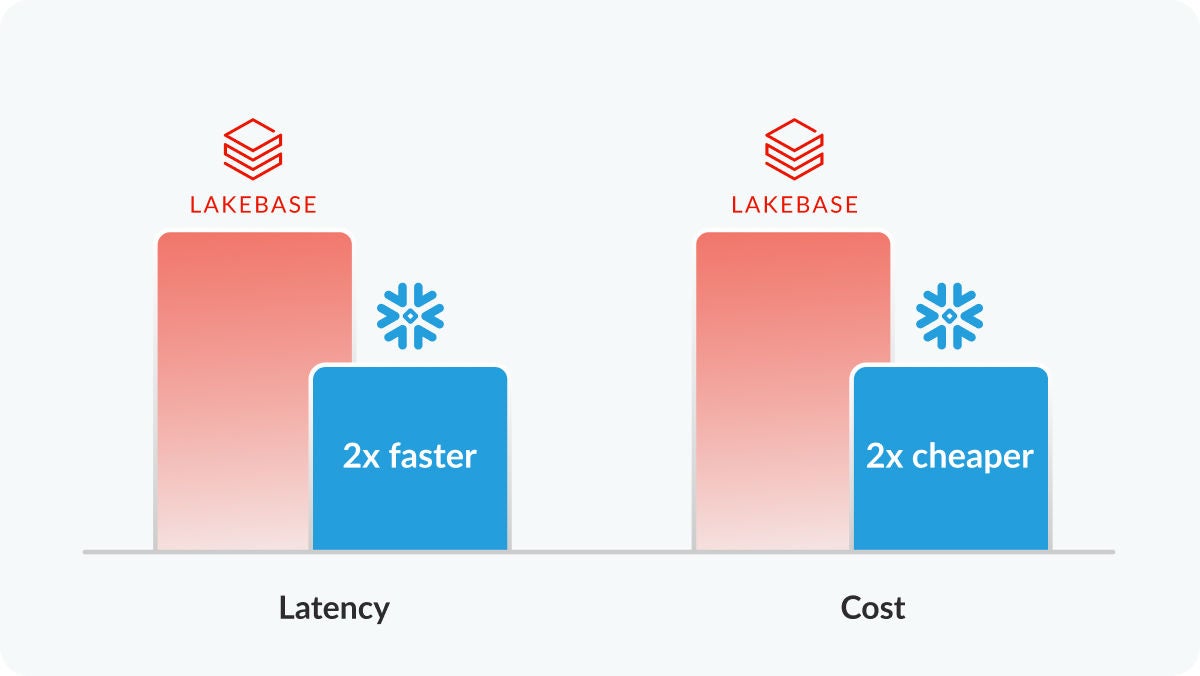
>2x better performance
At half the cost
Enterprise-ready by design
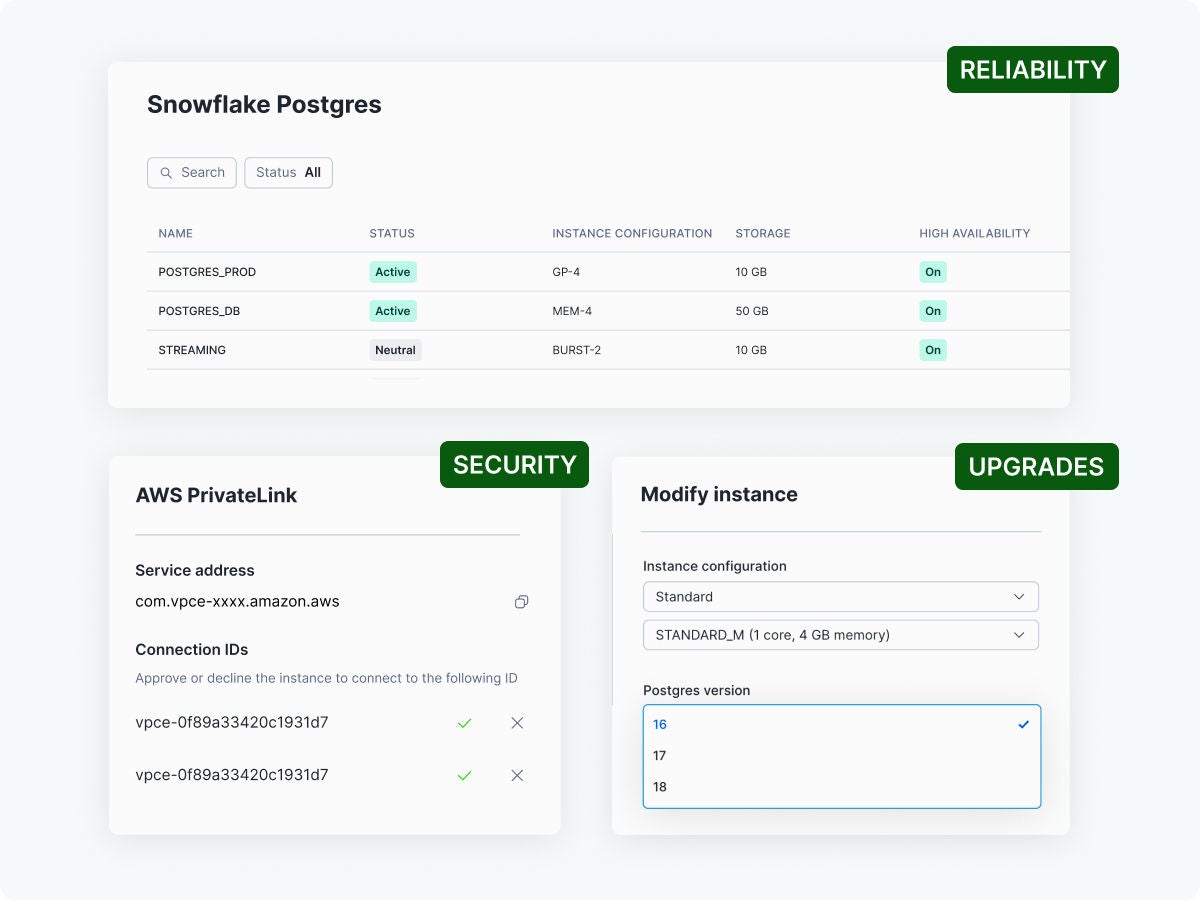
Backed by a 99.95% SLA with high availability & advanced security capabilities
No pipelines
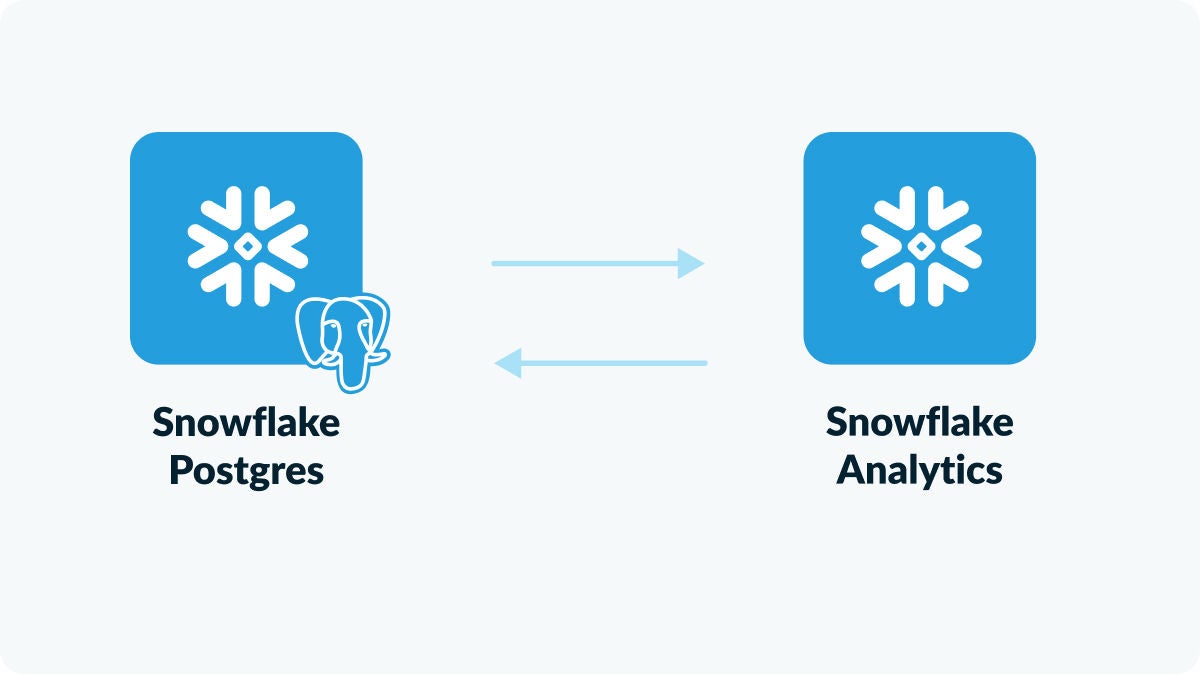
Seamless integration of transactional and analytical data
Over 12,000 Companies Power their AI, Apps and Data on Snowflake’s AI Data Cloud



Snowflake Postgres vs. Databricks Lakebase at a glance
Your database shouldn’t come with compromises.
Snowflake Postgres is production-ready for your most mission-critical workloads. Databricks Lakebase is not price/performant for enterprise production workloads, lacking published uptime guarantees and limiting advanced security controls, while still requiring complex pipelines.
|
Snowflake |
Databricks |
|
|---|---|---|
|
Price/Performance |
Faster performance at enterprise scale |
Slower and higher cost |
|
Enterprise-Readiness |
True open source commitment |
No public uptime SLA, limited advanced security capabilities, disruptive downtime for upgrades |
|
No Pipelines |
Faster performance at enterprise scale |
Requires additional pipelines |
* As of April 3, 2026
Snowflake Postgres is double the performance at less than half the cost

“SimCorp's core apps require thousands of updates per minute, managing complex workflow states and applying fine-grained locking. Snowflake Postgres handles this high transaction volume easily.”
Mike Willett
Senior Principal, Head of Data Platform, SimCorp
- 10x Faster disk operations compared to SimCorp’s previous Postgres solution

Snowflake Postgres has proven enterprise-readiness

SLA-backed uptime
Snowflake Postgres offers a 99.95% uptime SLA with high availability and backups to recover from failures. Databricks Lakebase has no known public SLA commitment.

Always on
Snowflake Postgres supports in-place Postgres version upgrades with minimal disruptions. Lakebase version upgrades may result in disruptive downtime.

No forced migrations
Snowflake Postgres gives you one, comprehensive offering. With Lakebase, existing customers face breaking changes to connection strings, networking and API surfaces when forced to move to Databricks' current offering.

“With Snowflake Postgres, we can deliver low-latency transactional workloads alongside analytics and AI on a single platform, reducing overhead and helping our customers be more agile in meeting their business goals.”
Rob Sandberg
SVP and Head of Advisory Consulting, BlueCloud

Snowflake Postgres eliminates complex pipelines

Seamless data movement
Snowflake Postgres moves data between Postgres and analytics in near real time — without brittle pipelines.

Connectivity with external ecosystem
Snowflake Postgres supports logical replication to easily move data across your ecosystem. Lakebase doesn't support standard Postgres replication, making it costly and complex to integrate with external systems.

"Our customers expect live analytics on the most current business data. With Snowflake Postgres, we can work directly on fresh transactional data inside Snowflake without relying on complex pipelines or external systems.”
Jake Hannan
Head of Data, Sigma Computing

The Snowflake AI Data Cloud
Frequently Asked Questions
Snowflake Postgres provides a 99.95% uptime SLA, compared to Databricks Lakebase, which has no published uptime guarantee. Snowflake is engineered for demanding, mission-critical enterprise workloads.
Snowflake Postgres offers near-instant, fully managed cutovers for major version upgrades. In contrast, Lakebase requires potentially disruptive downtime for upgrades, which can be problematic for business-critical, production applications.
Yes. Snowflake provides HA and enterprise-grade compute alongside support for the latest Postgres 18.
Snowflake supports up to 64 TB of storage, providing 4x more headroom than Lakebase, which is capped at an 16 TB ceiling as of June 2026.
Internal testing shows Snowflake Postgres delivers >2x higher throughput at half the latency and cost of Lakebase.
Snowflake provides PrivateLink, VPC peering and customer-managed keys. These essential enterprise protections are either limited or missing in Lakebase.
Yes. Snowflake runs Postgres without middleware modifications and supports standard extensions like pg_vector and PostGIS. Lakebase uses a middleware layer that limits extension support to only those validated within that specific architecture.
Snowflake Postgres enables seamless, bidirectional data movement in near real time without the need for complex pipelines. Databricks offers unidirectional movement only, runs on separate pipelines and requires third-party tools for any other target than Databricks’ own managed Postgres.
Yes. Snowflake supports native logical replication, allowing you to sync and move data across your entire ecosystem. Lakebase lacks this capability, creating a data island that is expensive and complicated to integrate with external systems.
