Video
Your supplier changed a spec. Would you know?
Life sciences has mostly looked at quality issues in the rear view. Bio-Rad now catches them at the supplier, before they reach customers. Its CIO, with leaders from Veeva and Snowflake, on how.
Overview
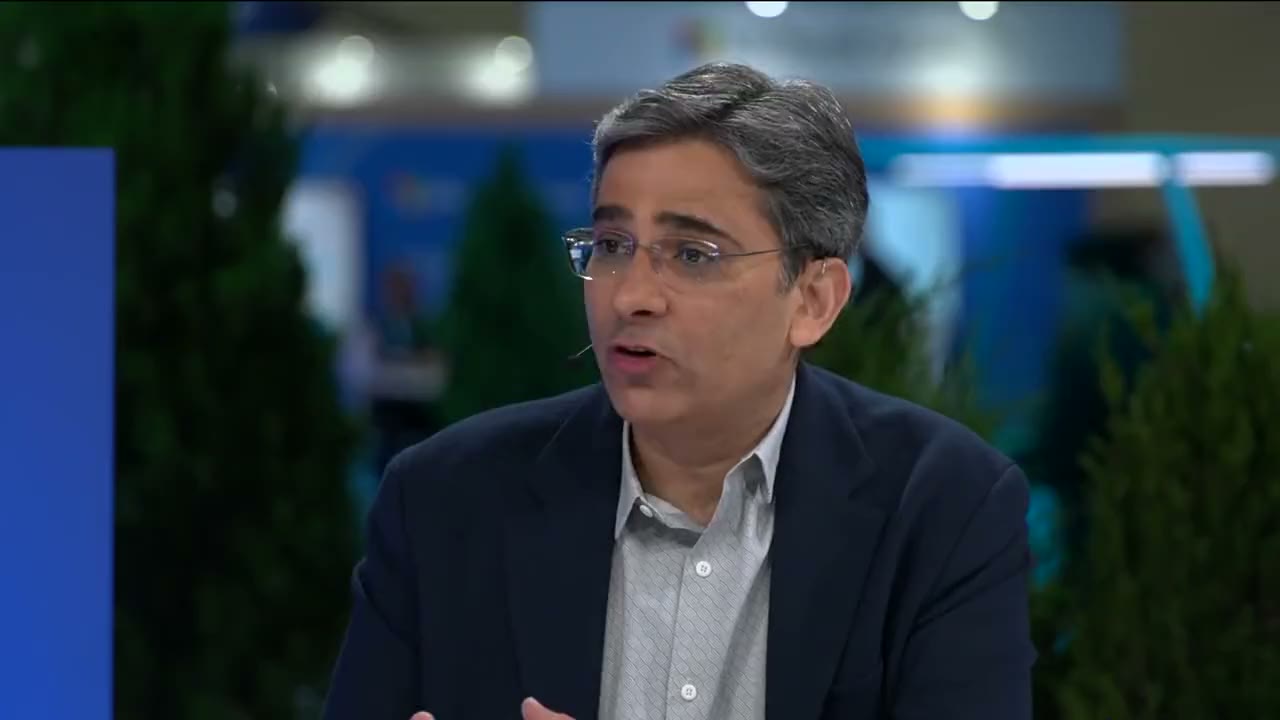
When a vendor changes a specification, the effects can ripple through Bio-Rad's supply chain and into the products its customers rely on. Bio-Rad can now see that change and trace its downstream impact before it becomes a customer issue, which CIO Erik Molitor calls “something we couldn't possibly do before.” That’s critical when the company’s high-stakes work supports cancer research, quality diagnostics and beyond.
"We have, I think, a moral obligation because companies like Bio-Rad are producing life-saving devices and compounds. They have a load-bearing element of healthcare." Arno Sosna, President, CRM Suite, Veeva Systems
In this conversation:
What Bio-Rad can see now when a vendor changes a specification, and what its quality team does with it
Why most data time goes to engineering instead of business problems, and what it takes to flip the 80/20 split
The "technical fun and games" Veeva's president says provide no extra value
Why Bio-Rad's CIO is focused next on adoption and AI literacy for his users
What comes after the data foundation: agents working across platforms and unstructured data
[00:00:00]
Hello, everyone, and welcome back to DataClet Now. I'Editor's note: Speaker labels, names and product names were reconstructed from the auto-generated transcript. Passages marked [check audio] could not be confirmed from the text.
[00:00:00]
RYAN GREEN (HOST): Hello, everyone, and welcome back to Data Cloud Now. I'm currently in San Francisco, where I'm delighted to be joined by Erik Molitor, SVP and CIO of Bio-Rad Laboratories, along with Kelci Miclaus, head of Life Sciences AI at Snowflake, and Arno Sosna, President of CRM Suite at Veeva Systems. I've been really looking forward to having this conversation. Thank you so much for making the time.
ALL: Thank you.
RYAN GREEN (HOST): So, let's dive in. Erik, let's start with you. Life sciences generates enormous amounts of data: clinical, quality, regulatory, commercial. But it's all siloed. What friction was your team hitting, and what made you decide it was time to fix it?
ERIK MOLITOR (Bio-Rad): Well, like you said, we've got a lot of different data that we've got to pull together, and Bio-Rad is all about product quality and customer experience. And so what we needed to do was be able to pull
[00:01:00]
together these different silos to understand how to drive product quality better, right? To be proactive. With our business, it's all about patient results. It's all about life science results. These are things that affect people's lives. And so we've got to be able to give accurate answers, accurate information to our internal employees, to be able to really drive the product quality that our customers expect.
RYAN GREEN (HOST): Very well said. Kelci, now over to you. Erik just described the problem. Walk us through what Snowflake and Veeva built together. What is the Openflow connector for Veeva Vault? What does it do, and how does it work?
KELCI MICLAUS (Snowflake): Yeah, Erik, you hit it on the head. You know, there's a serious disconnect sometimes in life sciences between the processes, characterizing those critical processes (quality, regulatory, clinical), and then being able to tie them to your cross-functional, interoperable analytics. What we wanted to do is remove that friction, remove that block, right? And so what we did is take our alliance with Veeva and say, we want to do something tangible and flip the 80/20 rule.
[00:02:00]
Typically, you're spending so much of your time on data engineering. How do you actually bring that rich process data from Veeva into something within Snowflake, where you can tie it into broader cross-functional analytics? For example, to be able to look more proactively, instead of in the rear view, at quality issues. And that's exactly what the Openflow connector for Veeva Vault now does. It's a seamless, scalable, managed integration service that allows you to have near-real-time data connected to your Snowflake data. And this is the unlock. It means that now, instead of the 80/20 being spent on complex pipelines and engineering, you can focus on business outcomes, business problems, and proactive instead of rear-view analytics.
RYAN GREEN (HOST): I absolutely love it. Thank you, Kelci. And Arno, from your perspective, what is this unlock for joint Veeva and Snowflake customers? And how does it fit into Veeva's broader vision around interoperability?
ARNO SOSNA (Veeva): I think it's very important that the mission-critical platforms in the life sciences industry work well together.
[00:03:00]
We have, I think, a moral obligation, because companies like Bio-Rad are producing life-saving devices, compounds. They have a load-bearing element of healthcare. And if platforms such as Snowflake and Veeva, with our Vault platform, can remove those friction points and make sure that, you know, companies like Bio-Rad can actually focus on their mission and are not distracted with technical, you know, fun and games [check audio] that provide no extra value, I think that's very, very important. And I think that's also what we are responsible for. And it's a, you know, delight and pleasure, right, to partner with Snowflake to make sure that the platforms seamlessly work together, so that companies like Bio-Rad can focus on their mission.
RYAN GREEN (HOST): Great perspective. Thank you, Arno. And Erik, for Bio-Rad specifically, what's been the tangible impact of this collaboration, and what are your teams able to do now that they haven't been able to do in the past?
ERIK MOLITOR (Bio-Rad): Yeah, a real tangible example is, you know, our suppliers provide us product, and it's important to have crucial quality in those things
[00:04:00]
that go into our supply chain. And so today, with the capabilities that Snowflake AI brings us and Veeva data brings us, we're able to see when a vendor changed their specification, and we can see all the downstream impacts that that can potentially have. And we can proactively deal with those potential product quality issues before it becomes an issue for our customers. That's something we couldn't possibly do before. We've been able to redeploy several quality resources to do much more proactive monitoring of our supplier base, so that we can really identify those types of issues before they become a customer issue.
RYAN GREEN (HOST): It's wonderful to hear, and I've really enjoyed this conversation. To close things out, I thought we might change it up a little bit and talk more about the roadmap [check audio]. What are you collectively most excited about for what's to come? Arno, why don't we start with you?
ARNO SOSNA (Veeva): We're all talking about AI right now, so where we start is the data foundation. But I think the next step is leveraging all the agentic capabilities, both on the Veeva side and the Vault platform,
[00:05:00]
with all the AI. And we just announced Falcon [check audio] as a whole new ability on the development side. But then also in Snowflake, right? You will have deep, rich new agentic capabilities, and they also produce different data sets, more unstructured information, unstructured data sets. And being able to leverage across them, I think that's the next step: to go from unstructured data sets and leverage agentic capabilities across both platforms seamlessly. I think that's where we're heading.
RYAN GREEN (HOST): Well said, Arno. And Erik, from your seat?
ERIK MOLITOR (Bio-Rad): Yeah, I'm really excited about driving the adoption of the tools that these kinds of great companies are bringing to bear, you know, helping our users with AI literacy and being able to use these tools to do things that are important to our customers, for cancer research, for quality diagnostics. That's the kind of stuff that really gets us excited every day. And being able to, you know, make these tools easy to use for our end users is what's really crucial, and both these companies
[00:06:00]
have done a great job with that.
RYAN GREEN (HOST): I love it. And Kelci, from Snowflake's perspective?
KELCI MICLAUS (Snowflake): Yeah, I love our partnership with Veeva, and it's building the connected life sciences ecosystem. We started with the crawl, this idea of data connectivity and interoperability, but we're already ready to be at the run stage, right? Bringing the critical processes and workflows that are in Veeva and connecting them to the operational analytics data that lives in Snowflake. Now we have that unlock that allows us to use things like Snowflake CoCo to have that agentic builder experience, to rapidly build business outcomes instead of just focusing on the ETL. And we have Snowflake CoWork, right? And the idea of not just delivering business insights in an agentic control plane, and insights that are near real time, but insights that allow you to have the same system that takes action. And that's what we're connecting together to build: this interconnected [check audio] ecosystem that is creating more business outcomes for people like Erik and Bio-Rad. And that's why I'm excited about the partnership.
RYAN GREEN (HOST): Well, I can't wait to see what comes next.
[00:07:00]
Thank you so much for joining me here. [check audio: "It's stuff like summer"]
ALL: Thank you.
RYAN GREEN (HOST): And for the audience watching, I'm Ryan Green with Data Cloud Now. Thank you so much for tuning in. We'll see you next time.
ALL: Thank you.deo