
REPORT
Putting Agentic Analytics to Work
AI analytics agents are generating recommendations faster than organizations can evaluate them. New global research, based on a survey of 400 data and technology executives, explores what separates the organizations getting real business value from agentic analytics from the rest.
According to research by MIT Technology Review Insights:
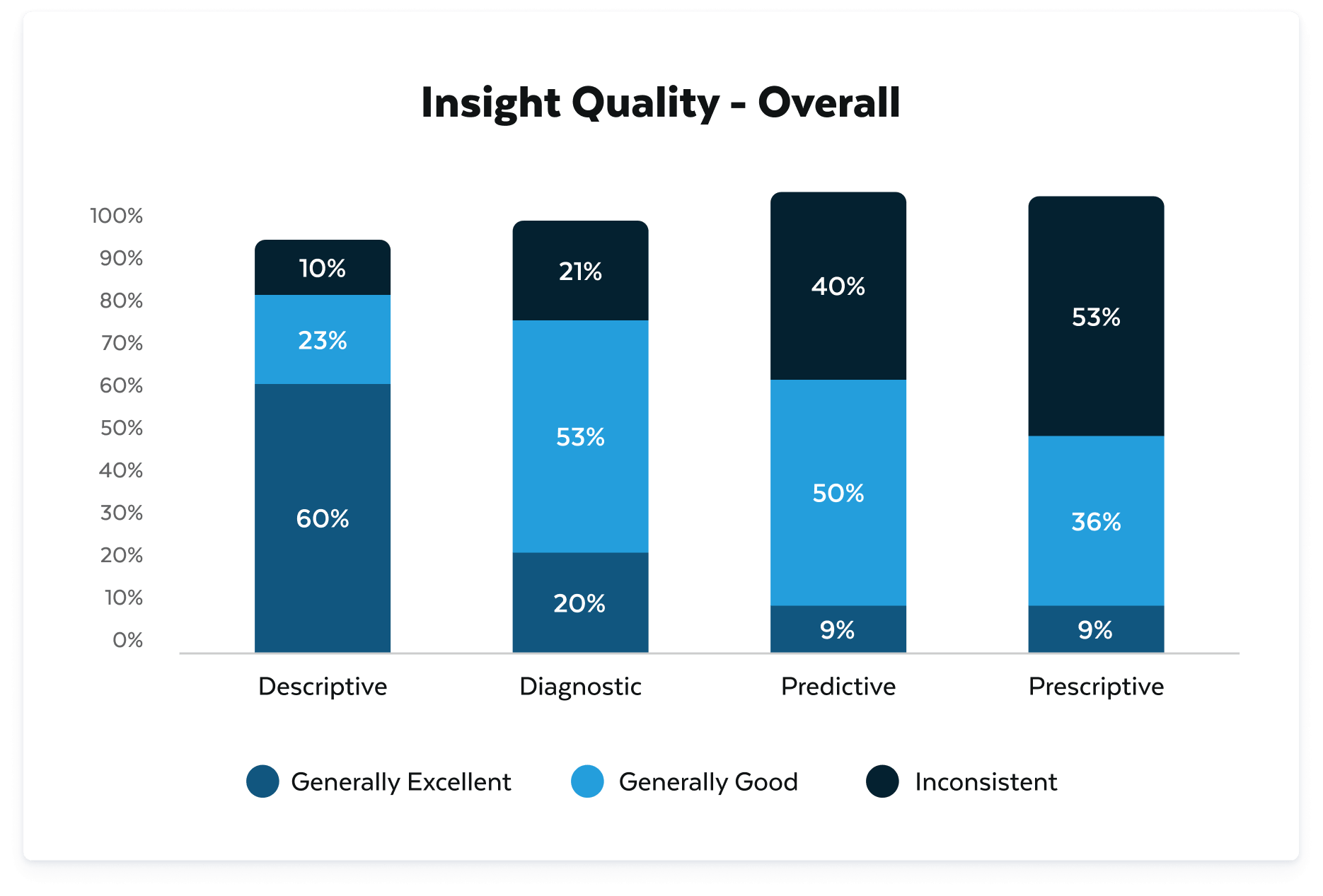
48% of agent-generated insights lead to actions that improve the business — up from 37% a year ago, but still leaving more than half unused or not helpful.
55% of executives cite lack of business context as the primary reason agent insights fall short.
60% say orchestrating teams of AI agents will be a primary analyst role within two years.
Agents Are Delivering — but Unevenly
Agentic analytics has made real progress, but performance varies sharply depending on the type of insight.
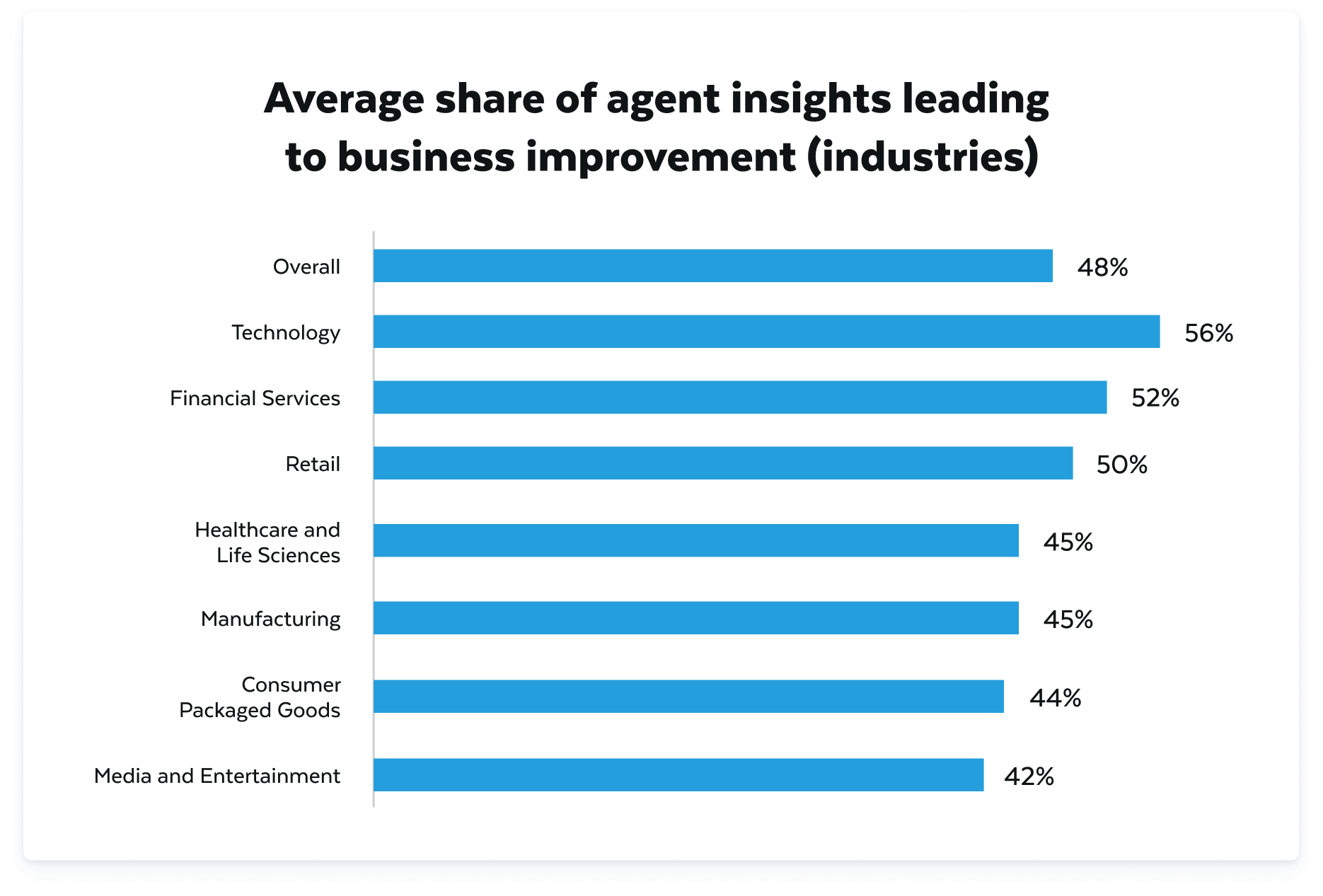
When it comes to describing what happened, agents perform well: 83% of respondents rate their descriptive insights as good or excellent. For prescriptive insights — recommendations on what to do next — only 45% say the same.
A small group of organizations, 7% of those surveyed, report that 77% of their agent insights lead to actions that improve the business. What sets them apart isn't a matter of technology.
What’s Missing: Business Context
When analytics agents deliver substandard insights, the most common explanation is straightforward: They lack sufficient understanding of the business.
55% of executives say insufficient business context is the top reason for poor insight quality.
45% cite fragmented or inaccessible data.

“When agents don't have enough understanding of the business needs, requirements and priorities, they struggle to determine the true value of the insights they generate."
Carl Perry
Where Agents Are Working Hardest
The research examines how eight industries compare on agent performance. Technology, financial services and retail organizations outperform others in key dimensions — including the share of insights that lead to business improvement.
Evaluating Agent Insights Is the Bottleneck
Even when insight quality improves, organizations face a second challenge: determining which insights to trust and act on. Only 24% can evaluate all the insights their agents generate. Most decide on a case-by-case basis, prioritizing by risk or reviewing only when resources allow.
That's beginning to change. Two years from now, 53% of executives expect automated evaluation by AI agents to be their primary method — up from 29% today.

“Many organizations still rely on expert review and anecdotal testing because evaluating insights' quality is fundamentally harder than evaluating traditional software. The challenge is not just determining whether an answer is correct, but whether it is trustworthy, contextual and valuable."
Bogdan Crivat
The Analyst RoleIs Changing
Two years ago, the primary analyst activities were documenting requirements and mapping processes. Today, analysts spend more of their time interpreting AI-generated insights, validating agent outputs and feeding corrections back into the system to improve accuracy over time. The role is shifting from producing analysis to governing, directing and refining it.

“Prescriptive insights are hard, because they require a translation step: from 'what will happen' to 'what we should do about it.' This requires the agent to incorporate business constraints, risk preferences and decision authority that are frequently undocumented and contextually variable."
Raghu Ramakrishnan
Download the Report
Methodology
In July and August 2026, MIT Technology Review Insights conducted a global survey of 400 chief data and analytics officers, chief information officers, chief technology officers, chief AI officers, and other senior data and technology executives. The survey respondents work in organizations across eight industries. All their organizations earn $500 million or more in annual revenue, with 36% earning over $10 billion annually.
In addition to the survey, in-depth interviews with senior technology executives offer firsthand insights into how organizations are striving to improve the quality of AI agent insights.