Jan 29, 2026/7 min readAI & ML
Bringing the Engine to Data: How 3 Big Brands Power Analytics and AI on Lakehouses

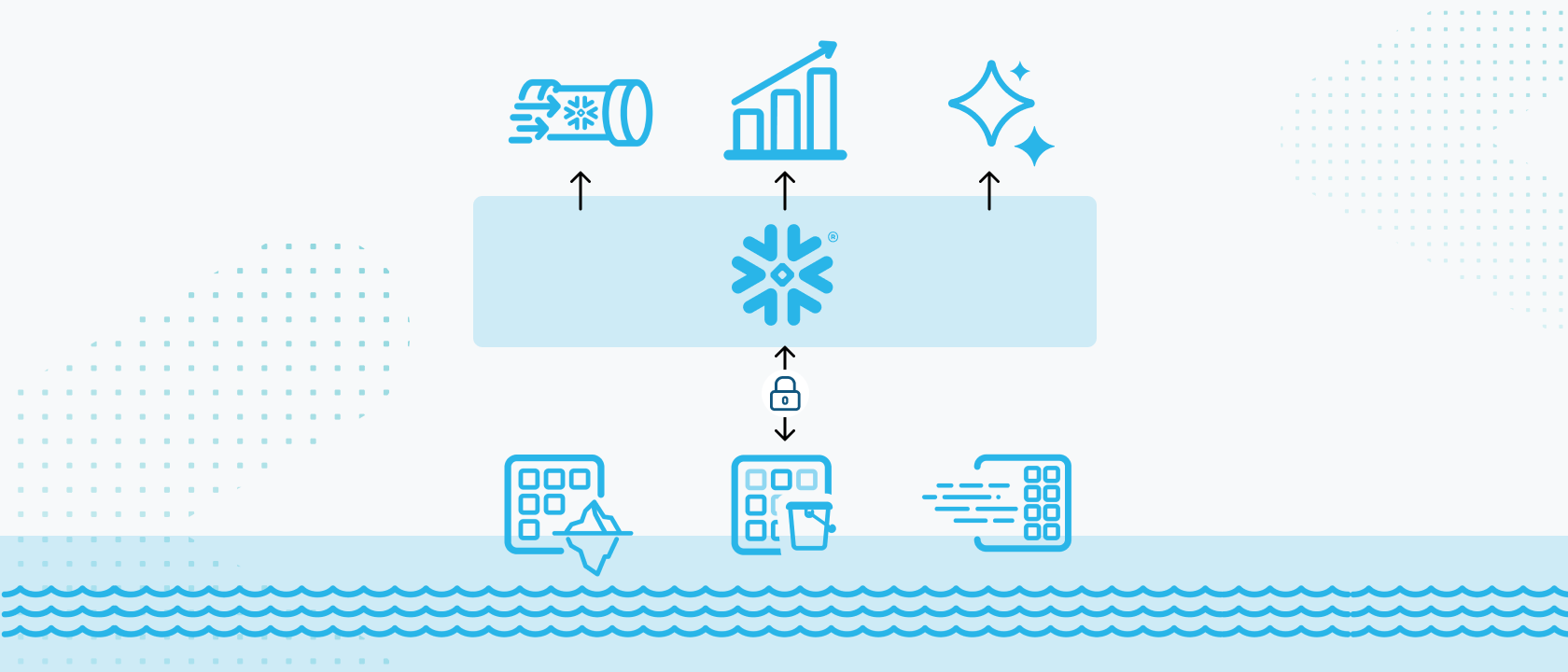
With more access to data than ever before, enterprises are finding that delivering reliable analytics and AI at scale has never been harder. As data lakes become shared foundations for business-critical analytics and decision-making, challenges around reliability, concurrency and cost predictability surface quickly.
Open table and data formats have addressed part of this challenge. By standardizing how data is stored and accessed, formats such as Apache Iceberg give organizations greater control over their data and create a foundation for interoperable analytics across engines. But openness alone does not solve the analytics problem.
As data spans clouds, catalogs and tools, many teams still struggle to deliver analytics that meet business expectations. Performance tuning, operational overhead and fragmented security models often stand between raw data and dependable insight.
Increasingly, organizations are rethinking their analytics architecture with efficiency in mind. The motivation to bring tools to the data is rooted in maintaining a single governed copy in open storage, so teams can focus on extracting value rather than moving or duplicating data sets.
This is where a new approach is taking shape. Grounded in open table formats such as Apache Iceberg, with support for additional formats such as Delta, Snowflake brings a powerful analytics engine designed for business-critical workloads directly to the data itself. Instead of migrating data into yet another system, teams can work with all of their data where it lives without sacrificing performance, reliability or cost confidence.
As exciting as this approach is in principle, it's even more powerful to see it in practice. In this roundup, we highlight how three customers — BMW Group, Indeed and WHOOP — are applying this approach to power analytics and AI across their entire data estate and turn open data architectures into measurable business outcomes.
From vision to proof
Indeed scales self-service data access while cutting costs by 43%
Indeed operates a 52-petabyte data lake that supports mission-critical reporting, analytics and experimentation across the business. As demand for self-service access (i.e., the ability to read and write Apache Iceberg™ tables) grew, the data engineering team needed a way to scale analytics without creating a bottleneck.
By converting its data lake from Hive-ORC to Apache Iceberg, Indeed adopted a “write once, read anywhere” approach aligned with its open data strategy. Snowflake enables analysts to directly read and write Iceberg tables while maintaining security and governance controls through the Horizon Catalog, including column-level security and masking.
During internal testing, Indeed observed 43%–74% lower query costs when using Snowflake on Iceberg tables, compared with other analytics engines evaluated in that environment. . This combination of open formats, governed access and performant analytics allows Indeed to accelerate experimentation, product analytics and insight generation on a lakehouse built to scale.
With Snowflake’s native support for Apache Iceberg, Indeed turned a massive data lake into a governed, self-service analytics platform.
WHOOP slashes compute time while powering real-time health insights
WHOOP analyzes billions of biometric signals every day from its wearable devices to power member insights, product innovation and business forecasting. As the company scaled, it needed a way to unify data across systems while preserving strong governance for sensitive health information.
By consolidating data on Snowflake and using Apache Iceberg, WHOOP simplified data access and management while maintaining security through the Horizon Catalog. The company found its new AI/ML financial forecasting model runs 3x faster, and by reducing operational complexity, the team now saves 20 hours of compute every day.
With Snowflake, WHOOP turns analytics and AI into a competitive advantage by powering faster financial forecasting and more personalized experiences for members.
BMW Group keeps 10,000 users connected to global insights while finding 25% efficiency gains
BMW Group operates a large, global data environment through its Cloud Data Hub, bringing together data from manufacturing, service, supply chain and sustainability use cases across the organization. The platform spans more than 6,000 data sets across 15 business domains and serves over 10,000 monthly users, requiring both flexibility and consistent governance at scale.
To support this best-of-breed architecture, BMW uses Apache Iceberg alongside AWS-native tools to manage open, distributed data, and integrates Snowflake where fast, reliable analytics are required. Snowflake brings high-performance compute to BMW’s existing data estate, enabling complex operational analytics without disrupting established systems or copying data unnecessarily.
This approach has delivered measurable results.
BMW reports achieving 25% average cost savings on certain service-data workloads, and it has brought more than 60 data use cases into production on Snowflake, helping teams access insights faster while maintaining consistent governance across regions and workloads.
From complexity to clarity
While BMW Group, Indeed and WHOOP faced different pressures, a common pattern runs through their stories. Each prioritized bringing tools to their data to preserve architectural efficiency, maintaining a single, open, governed foundation. The shift to open table formats such as Apache Iceberg made this possible, providing the structure, consistency and interoperability needed to manage data at scale. Snowflake then delivered what was missing: a reliable analytics and AI engine that can run directly on that open data with features intended to help teams manage concurrency and cost as usage scales.
Rather than stitching together multiple engines and governance layers, these organizations brought Snowflake to their data to complement work already happening in Snowflake. They applied a unified powerful analytics engine across their data estates, working directly on open data in place and stored in Snowflake. This shift allowed them to move faster, simplify operations and deliver trusted analytics and AI without re-architecting their data platforms.
Across these examples, three core architecture principles consistently show up:
Access data in place: Work with data wherever it lives, including Iceberg, Delta tables or Parquet files, without moving or duplicating it.
Deliver high performance at scale: Support concurrent, business-critical workloads with speed, reliability in performance and predictability as usage grows.
Unify analytics and AI: Supercharge decision-making for teams throughout the organization, regardless of where data lives, with one analytics platform.
Snowflake didn’t replace these organizations’ open architectures — it brought the performance and reliability they needed to their data, eliminating the trade-offs between openness and operational confidence. It helped WHOOP meet SLAs, BMW lower costs, and it increased the impact of Indeed’s data team.
The capabilities below illustrate how teams bring a production-grade analytics engine to open data, without changing where that data lives.
Feature |
What it does |
Business impact |
Read/Write/Manage capability in any Iceberg table |
Centralizes operations and lifecycle management for all Iceberg data assets, regardless of their physical location or catalog source |
Accelerate insights and reduce costs by analyzing data in place, enabling consistent global security and performance at scale |
Automatic optimization |
Continuously tunes file sizes, partitions and queries in the background |
Improve query speeds and lower total cost of ownership automatically |
Business continuity and replication |
Provides cross-region failover for critical Iceberg tables |
Maintain uptime and protect business continuity |
Snowflake Cortex AI and Snowpark |
Runs ML inference and data apps directly where the data lives |
Shorten the cycle from raw data to actionable insight |
Semantic views |
Defines and stores business metrics and entity relationships centrally to serve consistent logic to AI agents, BI dashboards and SQL queries |
Bridge the gap between raw data and business context, facilitating accurate LLM responses and unified, governed insights across all tools |
A simpler way to run analytics and AI wherever your data lives
As organizations explore architectural efficiency, a consensus is emerging: Rather than move data between systems, keep a single governed copy of the data and bring analytics and AI engines to it. Snowflake provides the unified engine and world-class platform that turns that data into trusted analytics and AI. BMW, Indeed and WHOOP illustrate how different industries can unlock faster decisions, stronger governance controls and efficient operations.
Your data is ready. Now it’s time to put it to work.
